Can the Supreme truly relate, respond, and participate in the changing world? Vedānta offers two influential answers through Śaṅkaracharya’s Advaita and Ramanujacharya’s Viśiṣṭādvaita. Each preserves non-duality while interpreting “change” and “reality” differently—and together they illuminate a path that deepens devotion, ethics, and unity across Dharmic traditions.
Advaita Vedānta holds that Brahman is nirguṇa—ultimately without limiting attributes—and that the empirical world is mithyā: dependent, neither absolute non-existence nor absolute independence. This vision affirms an unchanging Absolute while acknowledging lived experience as a veiling of the One. Many readers recognize in this view a profound inward calm, a reminder that beyond turbulence lies the changeless ground of being.
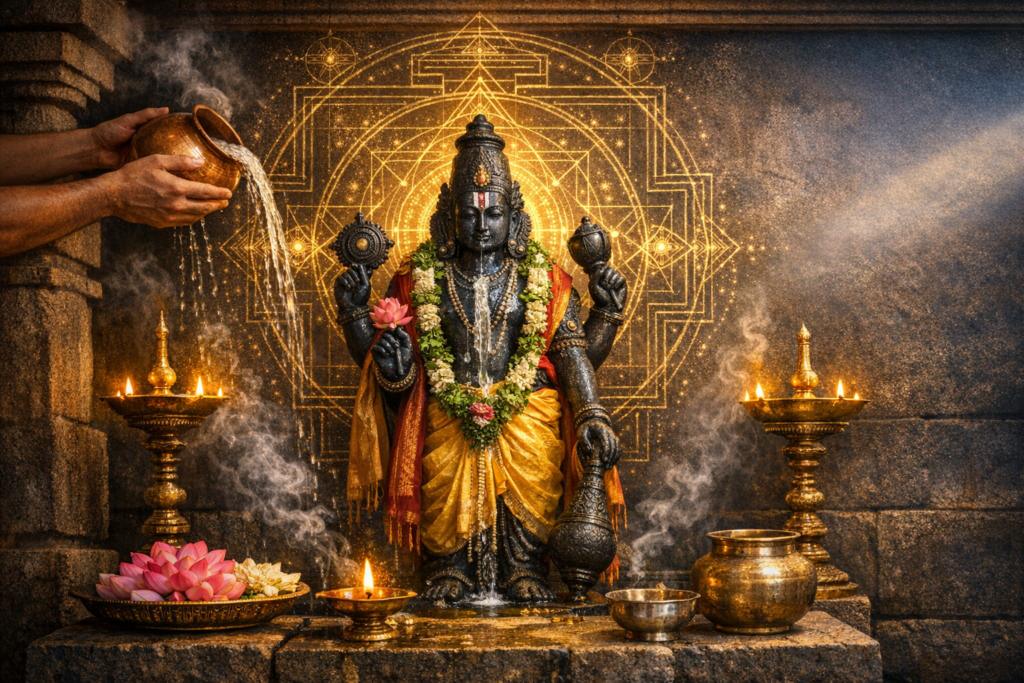
Viśiṣṭādvaita Vedānta, articulated by Ramanujacharya, agrees that reality is one, but insists that oneness is qualified (viśiṣṭa) by real diversity. Brahman—identified with Śrīman Nārāyaṇa—is endowed with kalyāṇa-guṇas (auspicious attributes) and inseparably related to cit (sentient beings) and acit (insentient matter). This relation is described as śarīra–śarīrī-bhāva: the universe and all souls are the “body,” and Brahman is the indwelling “Self.”
Why, then, is Ramanuja associated with a “change” of Brahman? The answer is precise: he does not claim that Brahman’s essential nature changes. Rather, the modes (prakāra) inseparably qualified to Brahman—namely cit and acit—undergo real transformation. In creation and dissolution, the body of Brahman changes state, while Brahman, as the substantive reality and inner ruler, remains perfect and immutable.
This position safeguards scriptural coherence. Upaniṣadic revelations—“sad eva saumya idam agra āsīt” (Chāndogya Upaniṣad) and “bahu syām prajāyeya” (Taittirīya Upaniṣad)—speak of emanation without denying the Supreme’s permanence. In the Śrī-bhāṣya on the Brahma-sūtras, Ramanuja affirms Brahman as both the efficient (nimitta) and material (upādāna) cause. Creation is thus real (satkāryavāda), and its changes reside in Brahman’s modes, not in Brahman’s essence.
Philosophically, this view resolves a practical question that seekers often feel: if the world of love, duty, and suffering were only a seeming, how could devotion (bhakti) and service (seva) carry ultimate weight? Viśiṣṭādvaita assures that devotion is addressed to the real Supreme, whose compassion, knowledge, and lordship are not pedagogical concessions but eternal qualities. Ethical life and worship gain ontological dignity because the relational world is truly Brahman’s body.
In lived experience, this understanding resonates deeply. Many find that moments before a temple mūrti, in kīrtana, or during quiet prayer, feel like an answered call—an interaction. Ramanuja’s framework explains that intuition: the Supreme’s responsiveness is not a compromise of perfection but an expression of it. Brahman’s immutability coexists with relational dynamism through the changing states of cit and acit.
The distinction with Advaita is complementary, not adversarial. Where Advaita emphasizes Brahman’s transcendence and the limitation of conceptual categories, Viśiṣṭādvaita emphasizes Brahman’s immanence and relational fullness. Taken together, they protect both the ineffable oneness and the sacredness of relationship, supporting a richer, more inclusive reading of the Vedas and Upaniṣads.
This inclusive lens also harmonizes with broader Dharmic wisdom. Buddhism’s pratītyasamutpāda (dependent arising) underscores interrelatedness without nihilism; Jainism’s anekāntavāda affirms many-sided truth; Sikh tradition holds the unity of nirguṇa–saguṇa Ik Oṅkār. Ramanuja’s insight—that the Supreme remains perfect while the divine body undergoes change—invites mutual respect among Hindu, Buddhist, Jain, and Sikh perspectives on reality and compassion.
For contemporary seekers, Ramanuja offers three practical benefits. First, meaning: if the world is the body of Brahman, every ethical act acquires sacred depth. Second, devotion: bhakti is a genuine relationship with an all-perfect yet responsive Lord. Third, unity: Vedānta can embrace inward non-dual realization and outward relational love without contradiction.
In sum, Ramanujacharya did not propose that Brahman’s essence changes; he taught that real change pertains to Brahman’s inseparable modes. This preserves scriptural testimony, grounds ethics and bhakti, and affirms a world worthy of reverence. The result is a compelling, compassionate Vedānta that encourages unity across Dharmic paths while anchoring seekers in both truth and love.
Inspired by this post on Hindu Blog.