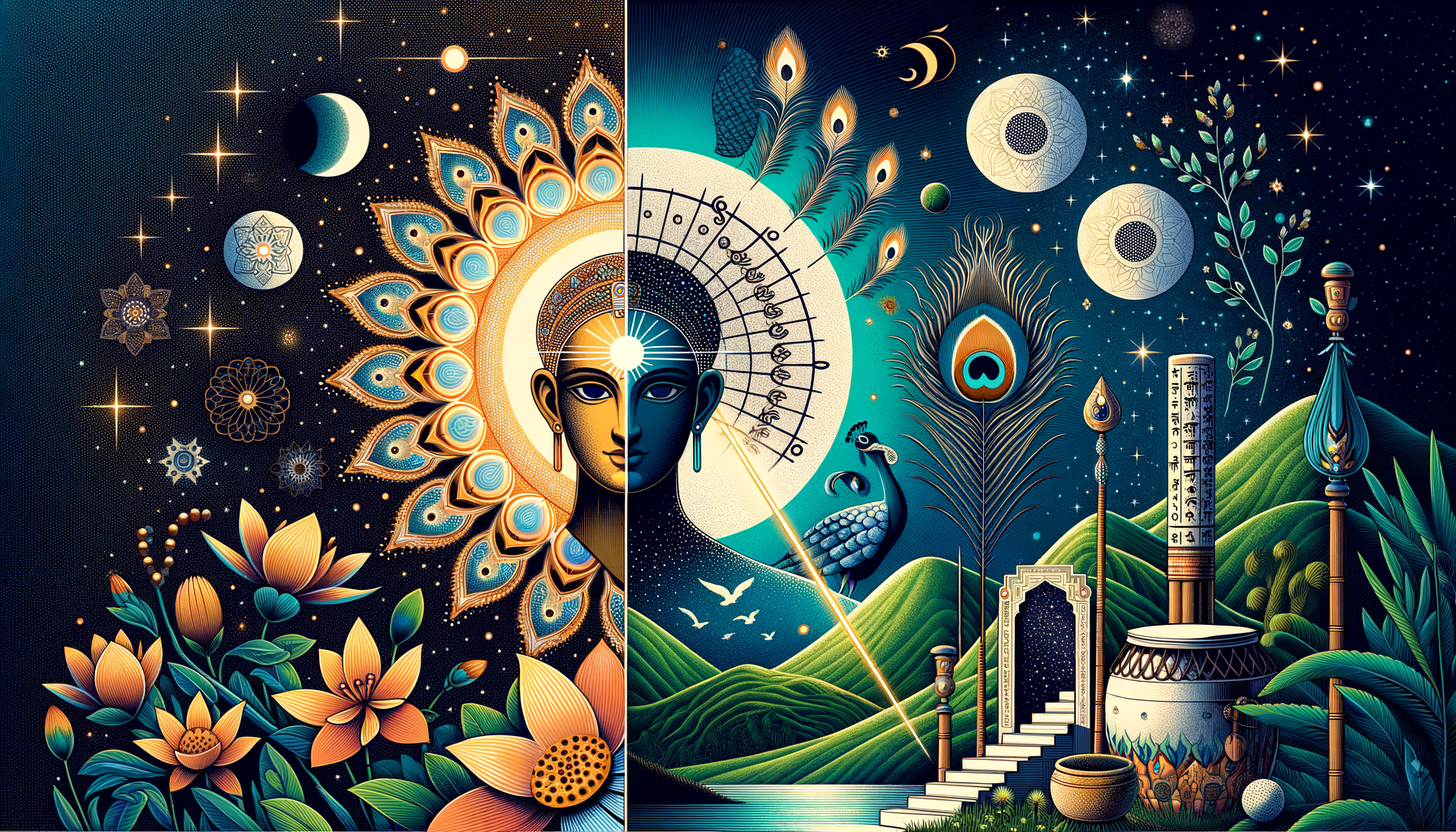
Murugan stands as a luminous example of how sacred consciousness moves across languages and regions while keeping its spiritual core intact. Comparing the portrayals in the Sanskrit Skanda Purana and Tamil Sangam literature reveals a striking paradox that is, in truth, a harmony: the same Subrahmanya/Kartikeya appears as both cosmic commander and intimate hill-god, a synthesis that mirrors the plural, integrative spirit of Sanatana Dharma.
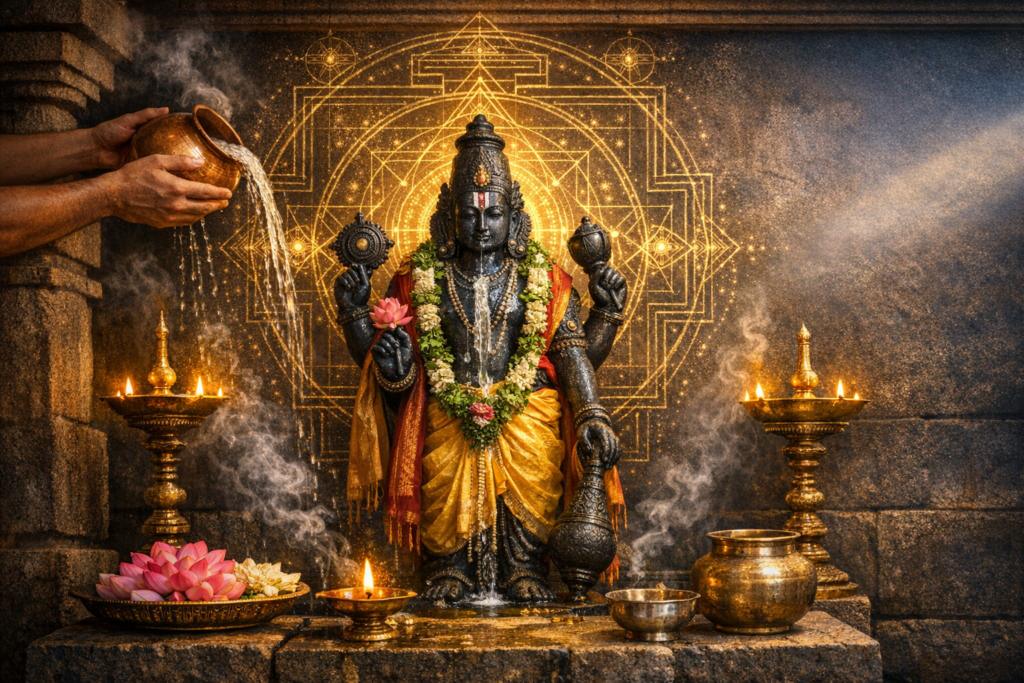
In the Skanda Purana, Murugan (Skanda, Kartikeya, Shanmukha) emerges as the deva-senāpati—the commander of the devas—born of Shiva and Pārvatī to restore dharma. The text emphasizes his universal guardianship, his six faces (Shanmukha) symbolizing all-seeing wisdom, and the vel as a radiant spear of knowledge that pierces tamas and avidyā. This pan-Indian vision situates Murugan within the metaphysical architecture of the Puranas, where cosmic order, ethical courage, and spiritual discernment converge.
Read through an interpretive lens, the Skanda Purana’s Murugan is not only a warrior-deity but also an ethical ideal. The peacock vahana becomes a sign of sublimated pride, the vel a disciplined intellect, and the slaying of adharma a metaphor for inner conquest. Such framing aligns with the broader dharmic insight that liberation requires both valor and wisdom—a theme that resonates with Hindu scriptures and finds conceptual kinship with the soteriological quests in Buddhism and Jainism.
Tamil Sangam literature, by contrast, places Murugan in the kurinji landscape—among hills, honey, and the pulse of love and valor. Poems in works such as Akanānūru and Paripādal celebrate Murugan as a youthful, approachable presence, cherished by pastoral and tribal communities. Here, devotion is tactile and local: the deity of the hill-shrine who hears the drumbeat of life, guards lovers and warriors alike, and lives close to the land and its rhythms.
This Sangam portrait softens the cosmic distance. Valli and Deivayanai (Devasena) symbolize Murugan’s embrace of both earthbound intimacy and celestial duty. The result is not a contradiction with the Skanda Purana but a complementary angle: the universal and the particular, the grand metaphysical and the deeply human, are two vantage points on the same sacred presence.
Hidden harmonies surface when these traditions are read together. The vel is simultaneously a spear of spiritual clarity and a beloved local symbol carried in festivals. The peacock is at once an emblem of disciplined majesty and a familiar motif of Tamil culture. The warrior who conquers asuras in the Puranas is the same guardian of hearts and hills in Sangam verse. Such continuities show how Hinduism’s sacred texts and Tamil cultural heritage converse rather than contend.
Historically, these layers reflect transmission across time, region, and language. As pilgrim routes linked shrines like Palani, Thiruchendur, and Thiruttani, narrative motifs intertwined. Rather than forcing uniformity, Sanatana Dharma allowed local genius to illuminate shared truths. The result is a living synthesis: Murugan as pan-Indian Subrahmanya and as Tamil Muruga, one deity with many resonant faces.
Anyone who has witnessed kavadi during Thaipusam, climbed the steps to Palani at dawn, or felt sea-wind devotion at Thiruchendur recognizes the emotional depth of this synthesis. The disciplined vow, the rhythm of drums, the sight of the vel—these experiences invite reflective courage and compassionate strength. In such moments, the Skanda Purana’s metaphysical truths and Sangam literature’s intimate poetics meet in lived devotion.
Seen through a dharmic lens, this plurality nurtures unity rather than division. The acceptance of multiple approaches to the divine (Ishta) is a hallmark of Hinduism and harmonizes with the wider dharmic ethos shared with Buddhism, Jainism, and Sikhism. Courage, clarity, compassion, and self-mastery—virtues associated with Murugan—speak to a common civilizational ethic that honors spiritual diversity while seeking ethical convergence.
The “divine paradox” is therefore a bridge. Skanda Purana and Tamil Sangam literature, far from competing, offer complementary insights: one systematizes cosmic meaning; the other grounds devotion in culture, landscape, and daily life. Together they present Murugan as a unifying light in India’s cultural heritage, strengthening social harmony, deepening scriptural understanding, and inspiring seekers across dharmic traditions to walk with both wisdom and love.
Inspired by this post on Hindu Blog.