A dharmic approach to prosperity integrates pragmatic niti with the puruṣārthas to offer a complete, time-tested framework for wealth management. Drawing on the Panchatantra, it emphasizes how ethically gained wealth supports individual flourishing and social welfare when aligned with dharma, providing a practical compass for contemporary economics, personal finance, and community well-being across Hinduism, Buddhism, Jainism, and Sikhism.
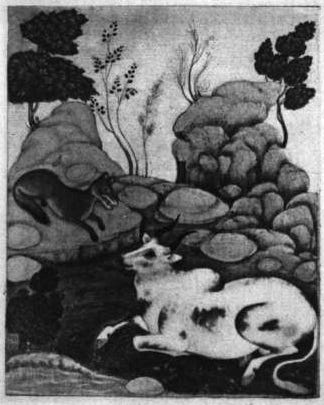
In the first book of the Panchatantra, the merchant Vardhamana departs from Mahilaropya and, due to circumstance, leaves his bull Sañjīvaka in the forest, setting in motion a sequence involving the lion Pingalaka and the jackals Karataka and Damanaka. After evaluating multiple vocations, Vardhamana selects inter-regional trade and becomes an exemplar of how great wealth follows good karma and sound judgment. The narrative presents the dharmic trader as one who not only accumulates wealth but also practices dāna, funds public and religious amenities, and continually generates new value for society.
This ethic is captured by a guiding principle: what has not been obtained should be pursued; what has been obtained should be protected; what is protected should be augmented and then expended on the deserving. Even carefully guarded wealth remains vulnerable to unforeseen calamities; wealth that cannot be deployed at the moment of need is functionally equivalent to wealth never earned. Consequently, acquisition, protection, augmentation, and wise application comprise a unified discipline of money management.
An accessible metaphor contrasts a container of collyrium (anjanam or kohl), which diminishes with daily use, with an ant hill that rises through small, steady contributions. The lesson is twofold: save and build capital patiently, yet avoid hoarding. Niti Shastra advocates capital formation while warning that static hoards can be lost to chance. Many households recognize this balancesecurity requires reserves, but resilience grows when capital is productively employed and replenished.
As discussed in Natural Enmity: Reflections on the Niti and Rasa of the Panchatantra [Book 1] by Ashay Naik, the following maxim clarifies why circulation preserves value: “Upārjitānām arthānāṃ tyāga eva hi rakṣaṇaṃ| Taḍāgodarasaṃsthānāṃ parīvāha ivāṃbhasāma||” [3.1] To protect the wealth that has been gained, one must let go of it like the outflow of stagnant water in a tank. Hoarded money is like stagnant waterit becomes a breeding ground for dregs and diseases. Just as water should be kept in circulation, money should also be constantly circulated. Readers often find this resonates with everyday experience: idle funds decay through inflation and missed opportunities, while thoughtfully deployed capital sustains livelihoods and community institutions.
The same work preserves a complementary insight on capital formation: “Arthair arthā nibadhyante gajair iva mahāgajāḥ| Na hi anarthavatā śakyaṃ vāṇijyaṃ kartuṃ īhayā||” [3.2] Wealth attracts more wealth, just as giant elephants attach to each other. Without the outlay of capital, it is not feasible to engage in commerce effectively. Use money to make money; wealth attracts wealth, much like elephants are drawn to other elephants. In other words, vanijya requires investment; prudently risked capital powers innovation, employment, and long-run prosperity.
Beyond acquisition and protection, the Panchatantra underlines application and augmentation: wealth is to be multiplied and then shared through dāna and the building of civic and religious amenities. This view harmonizes across dharmic traditionsdharma-guided artha in Hindu thought, samyag-ājīva in Buddhism, aparigraha and dāna in Jainism, and seva in Sikhismaffirming that enterprise and compassion are not rivals but partners in social uplift.
In phases of India’s economic history prior to the early 1990s, popular narratives at times cast wealth with suspicion, reflecting concerns about inequality and exploitation. Dharmic philosophy, however, places artha among the four puruṣārthasalongside dharma, kāma, and mokṣaso long as its pursuit remains ethically grounded. Gaining wealth is not inherently problematic; it becomes truly meaningful when anchored in duty, restraint, and service.
Historical estimates by Angus Maddison indicate that India and China together contributed the largest shares to world GDP until the early eighteenth century. Subsequent colonial extraction, coupled with global structural shifts and evolving domestic policy choices, altered that balance. A dharmic wealth ethicpursuing artha within the bounds of dharmaoffers a constructive pathway to rebuild broad-based prosperity without compromising moral integrity or social cohesion.
Practically, the framework is straightforward yet profound: pursue what is not yet obtained through skill and effort; secure what is obtained with prudence; augment wealth through productive investment; and expend on the deserving to sustain the social fabric. Keep resources flowinglike waterso they nourish households and communities rather than stagnate. By thinking like the patient ant, not the dwindling kohl jar, individuals and institutions can compound value across generations. When artha aligns with dharma and seva, prosperity transforms into shared well-being, reinforcing unity across dharmic traditions.
Inspired by this post on Varnam.