Austerity is widely revered within the Dharmic traditions, yet its precise role in devotional service (bhakti) requires careful distinction. In classical Gaudiya Vaishnava theology, austerity is not itself a limb of bhakti; rather, it functions as a stabilizing discipline that prepares mind and senses for the practices that directly generate devotion. This reframing transforms austerity from an end in itself to a stepping stone toward unwavering bhakti and spiritual realization.
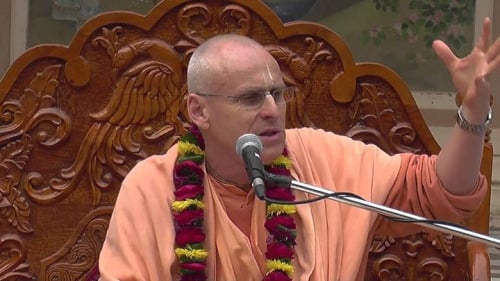
Kadamba Kanana Swami articulates this nuance clearly: while austerity (tapas) is esteemed in the shastras, it does not appear among the sixty-four primary limbs of bhakti catalogued in Rupa Goswami’s Bhakti-rasamrita-sindhu. Those limbssuch as hearing (sravanam), chanting (kirtanam), remembrance (smaranam), deity service and worship (seva, arcana), association with devotees (sadhu-sanga), and residence in holy placesbear direct devotional potency. Austerity, by contrast, fortifies determination (dhrti), simplifies one’s life, and channels energy into those primary acts of devotion.
Scripture simultaneously exalts sacrifice (yajna), charity (dana), and austerity (tapas) as purifying for all, including the saintly. A celebrated instruction encapsulates this ethos:
nayam deho deha-bhajam nrloke, kastan kaman arhate vid-bhujam ye, tapo divyam putraka yena sattvam, suddhyed yasmad brahma-saukhyam tv anantam (Srimad Bhagavatam 5.5.1)
In this passage, Maharaj Rsabhadeva instructs his one hundred sons that human life is not meant for unrestrained sense gratification; it is intended for purifying penance that elevates sattva (the mode of goodness) and grants access to brahma-saukhyam, the unending transcendental happiness beyond the three gunas. The teaching situates austerity as a means for inner purification and clarity, not as the ultimate goal.
Understanding austerity as preparatory illuminates early stages of sadhana-bhakti. Practitioners initially operate largely within sattva as they regulate diet, sleep, speech, and sensory intake. This regulation quiets rajas (agitation) and tamas (inertia), allowing the mind to stabilize so that hearing, chanting, and seva can act directly upon the heart. Over time, devotion matures from disciplined practice (vaidhi-bhakti) toward spontaneous attraction, where love of the Divine rather than effortful restraint becomes the primary driver.
Bhagavad Gita provides a careful taxonomy of austerityof body, speech, and mind (17.14–17)and warns against harsh, ego-driven extremes (17.5–6). Moderated, sattvic austerity cultivates truthfulness, gentleness, steadiness, and inner composure; excessive or ostentatious austerity depletes vitality, foments pride, and obstructs bhakti. The principle is clear: choose disciplines that reliably increase clarity and compassion while enabling consistent devotional service.
This preparatory role of austerity is consistent across Dharmic traditions. In Buddhism, the Middle Way rejects self-mortification while affirming disciplined effort (viriya) and renunciation (nekkhamma) in service of sila, samadhi, and paññā. In Jainism, tapas supports the shedding of karmic accretions when grounded in ahimsa and right vision. In Sikh teachings, external austerities are not ends in themselves; steadiness arises from simran (remembrance), kirtan, and seva expressed in truthful living. Across these paths, self-regulation empowers insight, devotion, and liberating wisdom when yoked to ethical intent and contemplative practice.
Practically, measured austerity can be framed as environment design for bhakti and contemplative growth. Simple commitmentswaking early for japa or meditation, maintaining a sattvic diet, observing digital minimalism, adopting a weekly fast (vrata) appropriate to one’s health, setting aside time for study of shastra, and prioritizing sevareduce friction and free cognitive bandwidth. Each restraint becomes an energy-conservation protocol that reallocates attention to the sixty-four limbs of bhakti and related contemplative disciplines.
Householders and monastics alike benefit from scalable, humane disciplines. For a household practitioner, balanced nutrition, adequate sleep, and time-bounded work are often more spiritually catalytic than severe deprivation. For a renunciate, simplicity, solitude, and measured speech may provide the needed clarity. In both cases, the qualitative test remains identical: does a given austerity increase steadiness in hearing, chanting, remembrance, and service while deepening humility and compassion?
From a psychological perspective, austerity trains impulse control and attentional stability. By interrupting habitual reward loops, it lowers noise in the nervous system and strengthens executive function, enabling focused sadhana. In Dharmic vocabulary, this is the cultivation of sattva, which naturally supports shraddha (faith), dhrti (fortitude), and samadhana (one-pointedness). When these qualities mature, devotion or insight becomes resilient to circumstance.
At successive stages of bhakti commonly described in Gaudiya literaturesraddha, sadhu-sanga, bhajana-kriya, anartha-nivritti, nistha, ruchi, asakti, bhava, and premaausterity progressively recedes as the primary engine. What begins as disciplined restraint to counter anarthas (unhelpful tendencies) flowers into effortless absorption born of taste (ruchi) and attachment (asakti) to the Divine. The practice then shifts from managing impulses to expressing love.
Because austerity can subtly inflate ego, traditional safeguards are indispensable. Guidance from guru and sangha, anchoring practices like nama-kirtana, daily introspection, and service to others neutralize pride and keep the discipline relational rather than performative. Scriptural study also preserves balance by continually re-centering the telos: devotion, wisdom, and compassionate action.
In summary, scripture highly esteems austerity as purificatory, yet bhakti’s direct generators are the sixty-four devotional limbs. Austerity should therefore be adopted as a strategic, sattvic scaffoldstrong enough to steady the mind, light enough not to burden the heart. Held in this way, it becomes a genuine stepping stone from regulated conduct to transcendental realization, harmonizing the shared aspirations of Hinduism, Buddhism, Jainism, and Sikhism toward liberation grounded in love, wisdom, and service.
Inspired by this post on Dandavats.