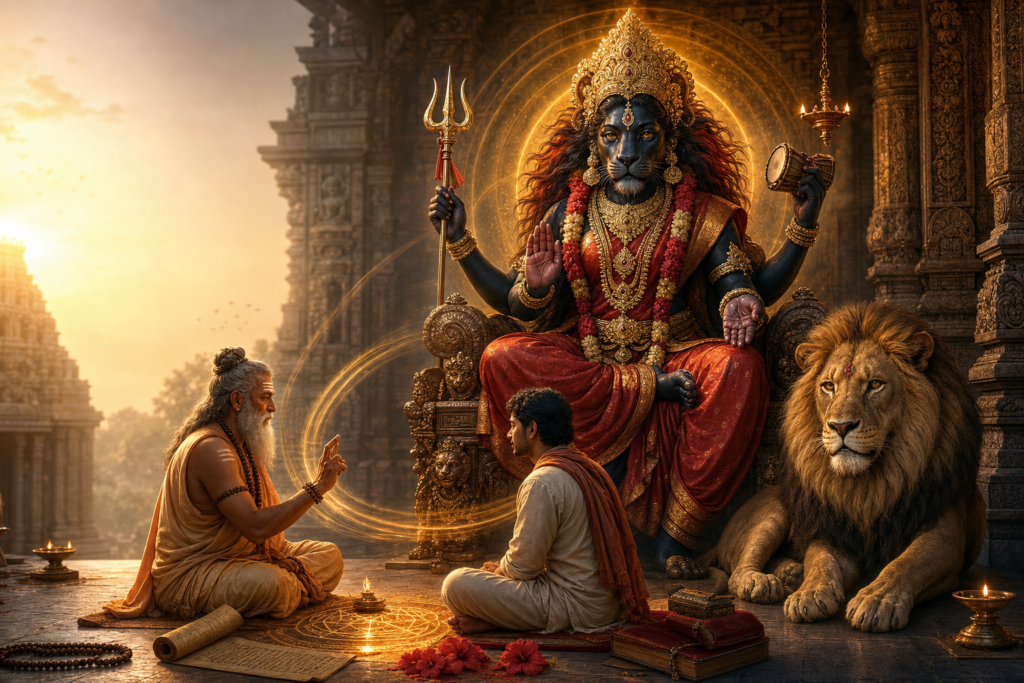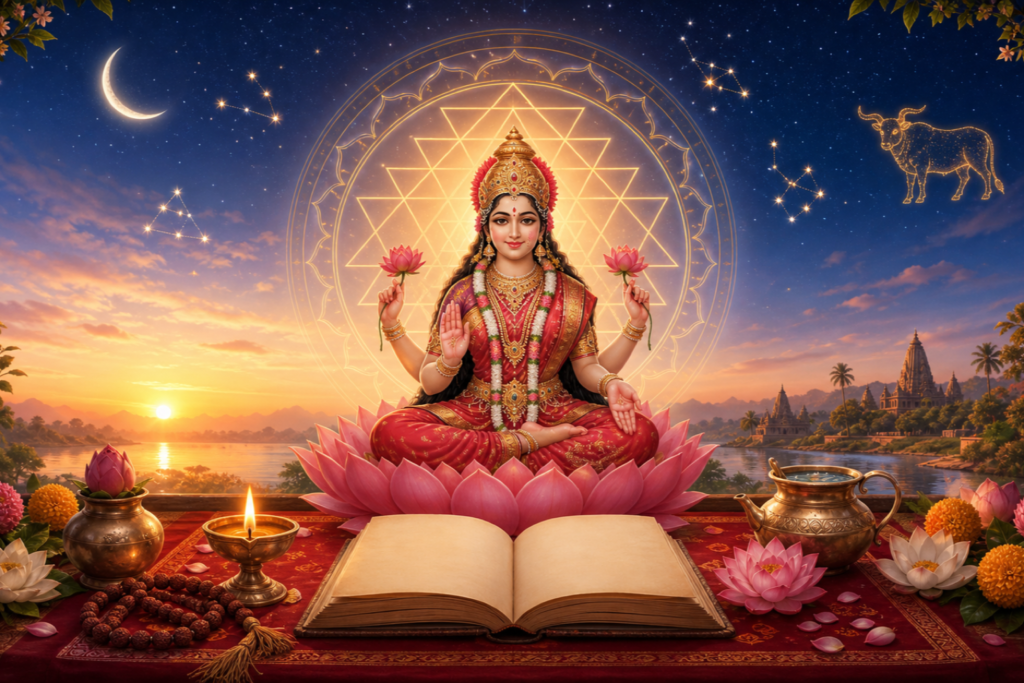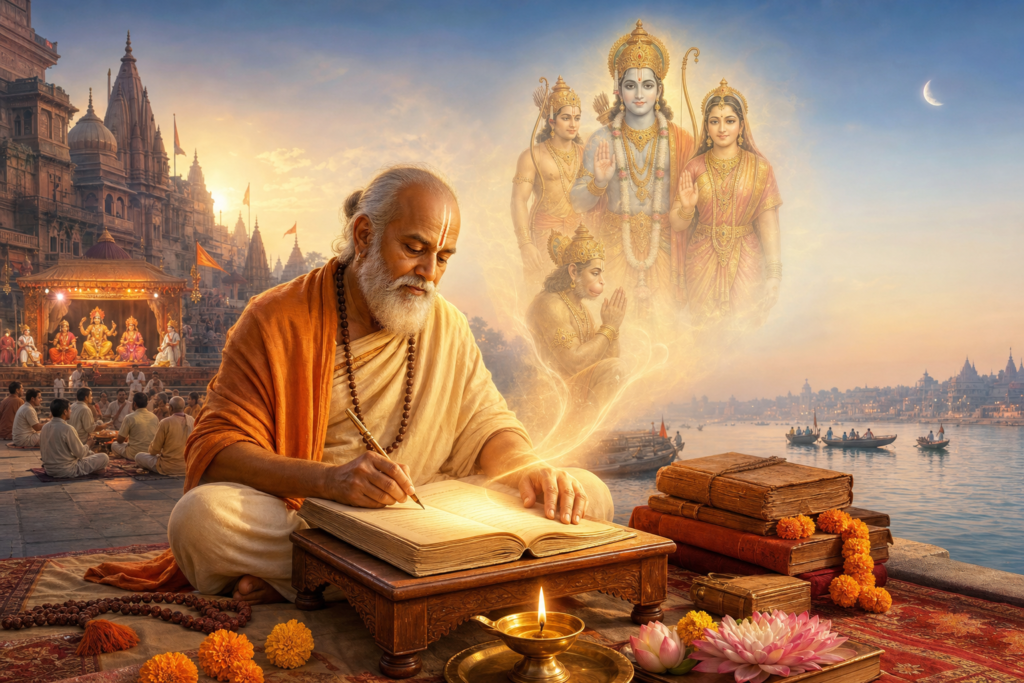
Eshanatraya (Sanskrit: एषणात्रय) designates the “three desires” that impede spiritual evolution in Hindu philosophy. Identified as Putraishana (desire for progeny and legacy), Vittaishana (desire for wealth), and Lokaishana (desire for recognition or heavenly status), these impulses are treated as attachments that sustain bondage to samsara and obscure the pursuit of moksha. Classical insight presents Eshanatraya not as a rejection of family, prosperity, or community, but as a rigorous examination of motive, attachment, and identity.
Putraishana historically referred to the desire for a son to continue lineage and ritual obligations; in contemporary ethical reading it encompasses the broader impulse for legacy, validation through family roles, and continuity of one’s name. Vittaishana concerns the persistent drive to acquire and secure wealth beyond rightful needs, often shifting artha from a means aligned with dharma to an end in itself. Lokaishana addresses craving for status, social approval, fame, or even celestial rewardsubtler because it frequently masquerades as virtue while serving egoic affirmation.
Philosophically, Eshanatraya functions as a diagnostic lens. These desires intensify raga (attachment) and ahamkara (ego-identification), reinforcing habitual patterns that perpetuate karmic entanglement. When unchecked, they recalibrate ethical choices around fear of loss and hunger for gain, clouding viveka (discernment) and weakening vairagya (dispassion). Properly understood, the framework invites a balanced ethic: fulfill responsibilities while cultivating inner freedom from clinging.
Modern relevance is evident. Family expectations can escalate Putraishana into perfectionism in parenting or legacy-building; consumer culture inflates Vittaishana through endless upgrades and security narratives; social media magnifies Lokaishana via performance metrics of likes and visibility. Many practitioners observe that when intention shifts from dharma to image-management, anxiety rises and clarity declinesprecisely the binding effect Eshanatraya cautions against.
Shared dharmic wisdom underscores this analysis. Buddhism critiques tanhā and upādāna (craving and clinging) as roots of suffering; Jainism elevates Aparigraha (non-possessiveness) to restrain accumulation and identity-fixation; Sikh teachings on māyā and haumai (ego) warn against ensnarement by wealth and fame; Hindu thought integrates artha and kāma within the governance of dharma to support moksha. Across these traditions, the ethical center holds: reduce attachment, serve compassionately, and realize inner freedom.
Practical disciplines align with this cross-traditional consensus. Vairagya and Aparigraha check the impulse to over-identify with family roles, possessions, and status. Seva (selfless service) redirects ambition into compassionate action. Mindfulness and dhyana stabilize attention, while japa and breath regulation support steady awareness. Satsanga (good company) nurtures values that honor responsibility without clinging, enabling wealth and recognition to be stewarded rather than worshipped.
Several reflective questions help operationalize the teaching: Is this pursuit aligned with dharma or driven by fear and display? Would the action remain worthwhile without recognition? Does wealth function here as a tool for shared well-being, or as a symbol of self-worth? Such inquiry, practiced consistently, transforms Eshanatraya from abstract doctrine into a concrete compass for ethical decision-making.
Importantly, Eshanatraya advocates wise engagement, not renunciation of life’s duties. Family, resources, and community honor are meaningful when guided by discernment and non-attachment. By reframing Putraishana, Vittaishana, and Lokaishana as sites for inner work, seekers across Hinduism, Buddhism, Jainism, and Sikhism can cultivate a unified path of restraint, compassion, and clarity that advances spiritual growth and social harmony.
In sum, Eshanatraya offers a timeless ethical grammar: fulfill roles with integrity, employ wealth as stewardship, and meet recognition with humility. When these desires are mastered rather than suppressed or indulged, they cease to bind and begin to serve. The result is a life attuned to dharma and oriented toward mokshainner freedom expressed as balanced living and shared well-being.
Inspired by this post on Hindu Blog.