Does God really exist? The question has animated seekers across ages and cultures, yet in many Dharmic traditions the most compelling answer is experiential rather than argumentative. During a satsang, Sri Sri Ravishankar emphasized a simple but profound assurance: the Divine existsand dwells within. This view harmonizes with core insights across Hinduism, Buddhism, Jainism, and Sikhism, which consistently guide seekers toward inner transformation as the reliable pathway to spiritual knowledge.
Dharmic wisdom counsels verification through lived experience. Instead of treating the Divine as a distant abstraction, the traditions invite disciplined practice that refines perception and quiets mental turbulence. When attention stabilizes and the mind becomes clear, the presence of sacredness is not merely believed; it is recognized as immediate, intimate, and self-revealing.
Breath awareness provides a foundational doorway. In Hindu yoga and Buddhist mindfulness alike, gentle attention to inhalation and exhalation steadies thought-streams and awakens clarity. Even two to five minutes of conscious breathing during daily transitionsbefore a meeting, after a commute, at duskcan cultivate calm, expand awareness, and make space for a felt sense of the Divine within.
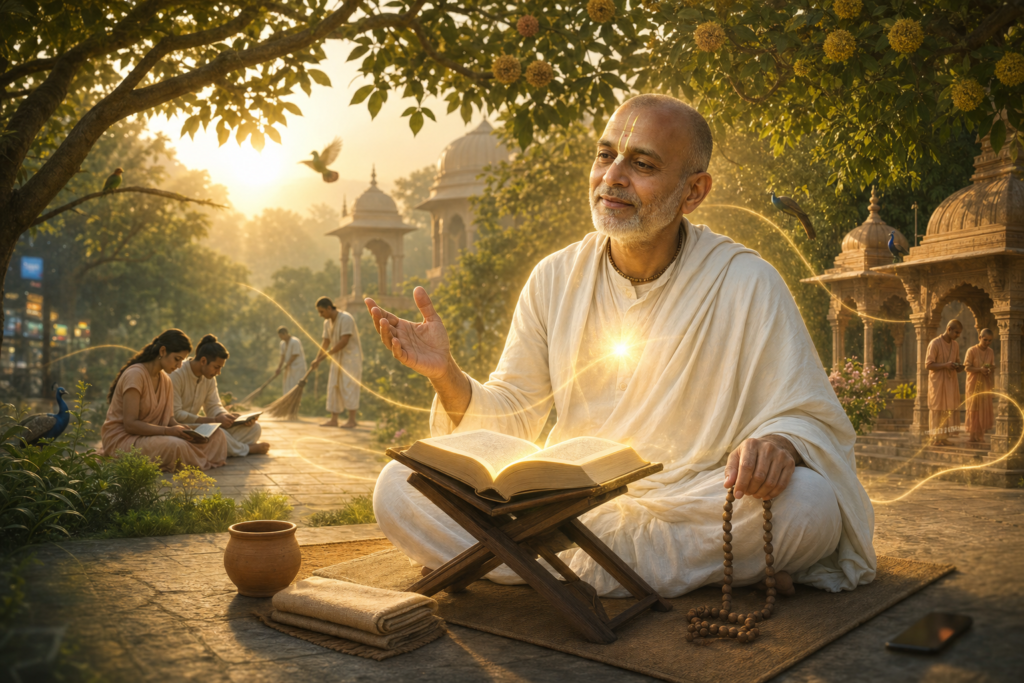
Dhyana (meditation) deepens this experiential turn. Many find that a short, consistent practicesitting with a mantra (japa), resting awareness in silence, or engaging in mindful observationprogressively reveals a quiet, luminous center. In Sikh practice, simran and in Jain practice, reflective pratikraman, likewise refine awareness and conscience, leading the mind from agitation to equanimity and insight.
Ethical alignment accelerates inner clarity. The yamas and niyamas in yoga, ahiṁsā and satya across Jain and Hindu traditions, śīla in Buddhism, and seva in Sikhism all emphasize that conduct conditions consciousness. When actions, speech, and livelihood are purified, the mind becomes more transparent to truth; the heart grows receptive to grace; and the intuition of the Divine within becomes more stable and trustworthy.
Community and guidance matter. Satsangcompany of truth-seeking individualsand the guidance of a Guru or a trusted teacher provide encouragement, guardrails, and tested methods. Across traditions, wise counsel prevents common pitfalls: forcing experience, chasing phenomena, or mistaking emotion for realization. Steady practice, gentle discipline, and humility tend to bear the most durable fruits.
Many seekers notice subtle signs of progress: a quieter baseline of mind, spontaneous compassion, ease in forgiveness, and a natural preference for truthfulness. Periods of doubt may still arise. In such moments, returning to breath awareness, brief silence, and simple acts of service restores balance, confirms continuity, and keeps the path experiential rather than speculative.
While terminology variesAtman, inner light, buddha-nature, the Divine Namethe underlying orientation converges: transformation of attention reveals what is already present. The invitation is practical and inclusive: begin where life is, refine breath and conduct, sit in stillness, serve selflessly, and allow insight to ripen. In this way, the question “Does God exist?” gradually yields to a more intimate recognition: the Divine is here, discoverable within, and verifiable through patient, compassionate living.
In summary, the Dharmic approach aligns assurance with method. It affirms the Divine within, offers clear practices to experience it, and honors unity in spiritual diversity. Through breath awareness, dhyana, ethical living, seva, and the support of community and Guru, the sacred becomes a lived realitynot a distant claim.
Inspired by this post on Hindu Pad.