Human experience reveals a recurrent pattern: sensory novelty promises happiness, delivers a flash of excitement, and then dissolves into restlessness. This cycleanticipation, consumption, and renewed cravingfeels urgent and modern, yet it is analyzed with precision in the shared wisdom of Hinduism, Buddhism, Jainism, and Sikhism. Each tradition maps how the senses (indriyas) can agitate the mind, bind attention to fleeting stimuli, and obscure the deeper strata of awareness where durable well-being is available. Read together, these traditions offer a coherent science of joy that neither denies the senses nor deifies them, but integrates, refines, and finally transcends their pull.
Hindu philosophy analyzes the “stack” of human functioning with unusual clarity: indriyas (senses), manas (mind), buddhi (intellect), ahamkāra (ego-sense), and ultimately ātman (Self). The Bhagavad Gita presents a hierarchy in which the senses influence the mind, the mind is guided (or misled) by intellect, and the Self stands as witness and ground. The Katha Upanishad deepens this insight through the chariot analogy: the senses are horses, the mind is reins, the intellect is the charioteer, and the Self is the passenger. When horses run unchecked, the chariot veers; when reins are steady and the charioteer is discerning, the journey is safe. The point is practical: mastery over the senses is not suppression but right governance.
The Gita also details the psychological chain by which the senses entangle: repeated dwelling on sense-objects strengthens attachment; attachment hardens into desire; obstruction of desire inflames anger; anger clouds judgment; and delusion leads to the loss of memory of one’s values, culminating in downfall. This causal loop resembles what contemporary psychology calls the “hedonic treadmill,” where baseline satisfaction rapidly resets, compelling renewed pursuit. Hindu discourse names the dual forces at the loop’s corerāga (grasping) and dveṣa (aversion)as the oscillators that keep attention outward, reinforcing samskāras (habit grooves) that make freedom increasingly difficult without deliberate practice.
Buddhist analysis converges with this model through the framework of the six sense bases (saḷāyatana): eye, ear, nose, tongue, body, and mind. Contact (phassa) conditions feeling (vedanā), which can spark craving (taṇhā), leading to clinging (upādāna) and suffering (dukkha). The intervention is methodological rather than metaphysical: indriya-saṁvara (sense restraint), sati (mindfulness), and samādhi (stability) interrupt the automaticity of contact-to-craving. When feeling is met with lucid, non-reactive attention, craving does not form; without craving, clinging is not fueled, and the wheel of dissatisfaction slows. This is not a rejection of the senses but a training in how to meet them skillfully.
Jain philosophy adds a finely grained ethics of perception and possession. It distinguishes jīva (consciousness) from ajīva (non-conscious categories) and explains bondage through the inflow (āsrava) and binding (bandha) of karmic matter propelled by passions (kaṣāyas). The remediessaṁvara (stoppage of inflow) and nirjarā (shedding)depend on disciplined attention to vows and conduct. Aparigraha (non-possessiveness) prevents the expansion of desire into identity; samayik (periodic meditative equanimity) and pratikraman (ethical self-review) function as systematic deconditioning. Through this lens, senses are not enemies; passion-driven misuse of the senses is the issue, correctable through reasoned restraint, compassion (ahiṁsā), and sustained introspection.
Sikh wisdom identifies allied obstacles: māyā (the bewitching play of appearances) and haumai (ego-centricity) find expression through the “Panj Chor” (five thieves): kām (lust), krodh (anger), lobh (greed), moh (attachment), and ahankar (pride). The antidotes are communal and devotional technologies that harness and refine sensory energy: Naam Simran (remembrance of the Divine Name), Kirtan (sacred music), Seva (selfless service), and living in Hukam (alignment with cosmic order). The result, sehaj (equipoise), is a settled ease that neither rejects the world nor is absorbed by it. Sensory life becomes transparent to a deeper presence, and joy stabilizes not as a mood but as a way of being.
A comparative picture emerges. Across these dharmic traditions, the senses are necessary interfaces with the world but unreliable arbiters of meaning. Left untrained, they amplify noise; trained, they transmit signal. The shared thesis is exacting and hopeful: lasting joy requires re-educating perception, maturing motivation, and reorganizing identity around principles deeper than stimulus and impulse.
Findings in cognitive science offer converging evidence. The brain’s reward circuitry is tuned to change rather than to constant levels of stimulation (reward prediction error), ensuring that the next novelty eclipses the last. Attention is “captured” by salient signals (especially threat and reward cues), while the default mode network rehearses self-referential narratives that can reinforce craving and dissatisfaction. Training that resembles dhyāna and mindfulnesssteady attention to breath, body, or mantrahas been shown to strengthen executive control networks, reduce amygdala reactivity, and increase interoceptive clarity in the insula. Practices such as slow, coherent breathing and prāṇāyāma can shift autonomic balance toward parasympathetic tone (vagal regulation), cultivating calm readiness rather than restless seeking.
Within this integrated frame, Patañjali’s aṣṭāṅga-yoga offers a rigorous protocol: yama (ethical restraints), niyama (observances), āsana (posture), prāṇāyāma (breath regulation), pratyāhāra (withdrawing the senses), dhāraṇā (one-pointedness), dhyāna (meditative continuity), and samādhi (absorption). Pratyāhāra is the hinge: it does not “shut off” the senses but loosens their tyrannical hold by reorienting attention from object to source. Once pratyāhāra stabilizes, dhāraṇā and dhyāna can mature without chronic distraction, and the mind becomes a precise instrument for insight (viveka-khyāti).
Bhakti traditions provide a complementary “alchemy of desire.” Rather than battling attachment head-on, they redirect it toward the Divine (Īśvara-praṇidhāna). Sound (nāda) and form (rūpa) are not shunned; they are sanctified through kirtan, japa, and pūjā, turning the same sensory channels that once scattered attention into conduits of absorption and love. Emotion is not an obstacle but raw material; devotion shapes it into stability and sweetness (mādhurya) that outlasts sensory spikes.
Jñāna pathways add the analytic blade. Neti neti (“not this, not this”) and sāksi-bhāva (witness-consciousness) train perception to distinguish the permanent from the transient. As this discrimination consolidates, the compulsion to seek fulfillment in objects weakens naturally. Vairāgya (dispassion), in this view, is not self-denial but accurate valuation: transient pleasures are enjoyed within their limits; ultimacy is not demanded where it cannot be supplied.
Karma-yoga contributes an ethical-psychological stabilizer: act vigorously, dedicate outcomes, and refuse to mortgage inner balance to external results (niṣkāma-karma). This dissolves the desire–fear pendulum (“Will I get what I want? Will I lose what I have?”) and reconditions attention to abide with clarity amid gain and loss. Socially, this is not escapism but lokasaṅgrahasustaining the world through steady, serviceful participation without becoming inwardly entangled.
Across these streams, vows and virtues function as “sensory hygiene.” The pentadahiṁsā (non-harm), satya (truthfulness), asteya (non-stealing), brahmacarya (right use of energy), and aparigraha (non-possessiveness)reduces the very triggers that inflame reactivity. In Buddhist terms, this is right speech and conduct; in Jainism, the anuvratas; in Sikh practice, the truthful, service-oriented life. Ethical clarity lightens cognitive load; fewer rationalizations free attention for insight.
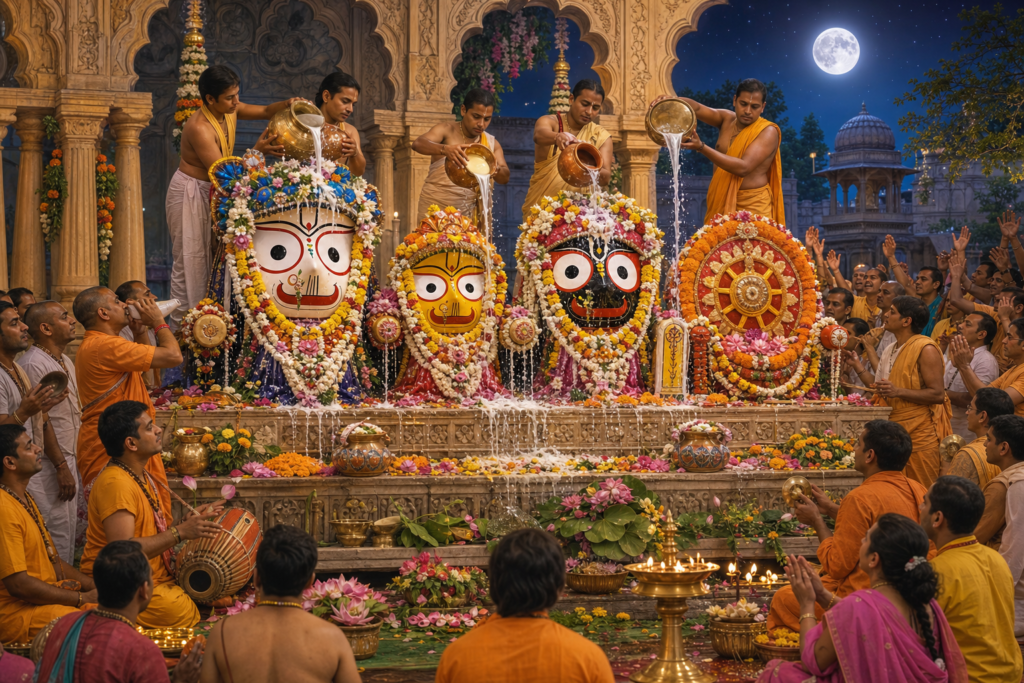
Ritual and aesthetics refine perception. A serene altar, the cadence of kirtan, incense that cues stillness, and carefully prepared prasad are not ornaments; they are designed environments that entrain pratyāhāra and dhyāna. Parallel structures exist across the dharmic family: Buddhist pūjā and chanting, Jain samayik and pratikraman, Sikh kirtan and Ardas. Properly understood, these are interoperable technologies of attention that elevate the senses from distraction to devotion.
Consider a familiar scene. A message chime arrives; attention narrows; the body leans forward; the mind surges with micro-anticipation. When one consciously pauses for a single slow exhale, notices the body’s readiness, and deliberately places the phone aside, the shift is palpable: craving crests and ebbs without compulsion. Encountered repeatedly, this micro-practice demonstrates at a lived level what the traditions assert: contact does not have to become craving; feeling can be met with freedom.
A practical, cross-tradition daily protocol can be simple and rigorous. Morning: 10–15 minutes of prāṇāyāma (e.g., nāḍī śodhana), followed by 20 minutes of dhyāna or mindfulness of breath; close with a brief prayer or Naam Simran to set intention. Midday: mindful meal (no screens), noting taste, texture, and satiety cues to decondition automaticity. Evening: 15–20 minutes of japa or kirtan to convert residual mental momentum into devotional steadiness, followed by pratikraman-style review (What stirred rāga-dveṣa? What vow was upheld?). Weekly: one technology Sabbath (reduced digital input) and one Seva activity to align insight with action.
Reducing sensory overload multiplies gains. Environmental designmuted notifications, intentional lighting, quiet hours, and simplified spacesacts as modern pratyāhāra. Consumption choices align with aparigraha: fewer but higher-quality inputs yield better signal-to-noise. The attention economy monetizes agitation; dharmic discipline reclaims sovereignty over what enters the mind.
Progress can be measured without sentimentality. Indicators include quicker recovery from emotional spikes, less compulsive checking, greater clarity under pressure, more unforced kindness, and an easeful contentment during ordinary tasks. Sleep quality and heart-rate variability often improve as parasympathetic tone strengthens; journaling reveals fewer ruminative loops and more stable intention. In Buddhist terms, there is more sati and less taṇhā; in Sikh terms, more sehaj and less haumai.
Common obstacles are predictable. Overzealous restraint can breed dryness or pride; laxity can masquerade as “balance.” The Middle Way advises calibrated intensity; Jain anuvratas emphasize stepwise commitment; Hindu sādhanā respects cyclicity (nairantarya abhyāseunbroken practicepaired with compassion for human limits). When guilt or discouragement arises, metta (loving-kindness) or a turn to bhakti often restores warmth without sacrificing precision.
Community is catalytic. Satsaṅga, Saṅgha, and Saṅgat provide mirroring, accountability, and shared momentum. In these settings, differences of language and liturgy soften before a common aspiration: to live awake, serviceful, and free. Unity here is not uniformity but harmonyIshta in Hinduism, anekāntavāda in Jainism, interdependence in Buddhism, and the Sikh emphasis on shared remembrance and serviceeach honoring many doors to one room.
The destination is also shared. Whether named mokṣa, nirvāṇa, kaivalya, or abiding in Hukam, the end of compulsive grasping is not sensory bleakness but luminous simplicity. The senses resume their rightful role: instruments for participation in a meaningful world, no longer arbiters of one’s worth or well-being. Lasting joy emerges not because contact ceases, but because consciousness ceases to be coerced by contact.
Seen in this light, “the world of senses” is neither enemy nor savior. It is curriculum. Hindu, Buddhist, Jain, and Sikh disciplines teach how to study it: first by stabilizing attention, then by refining perception, and finally by recognizing a freedom that was never, in truth, dependent on changing objects. Practiced with sincerity and intelligence, this integrated dharmic science turns restless seeking into steady seeing, and momentary pleasures into a durable, generous peace.
In a fractured age, this shared map also advances unity. It honors doctrinal distinctions while affirming a common ethical core and contemplative method. By living its insightsgoverning the senses, cultivating compassion, and dedicating actionthe wider human family embodies vasudhaiva kutumbakam, where inner freedom naturally expresses as outer harmony.
Inspired by this post on Hindu Blog.