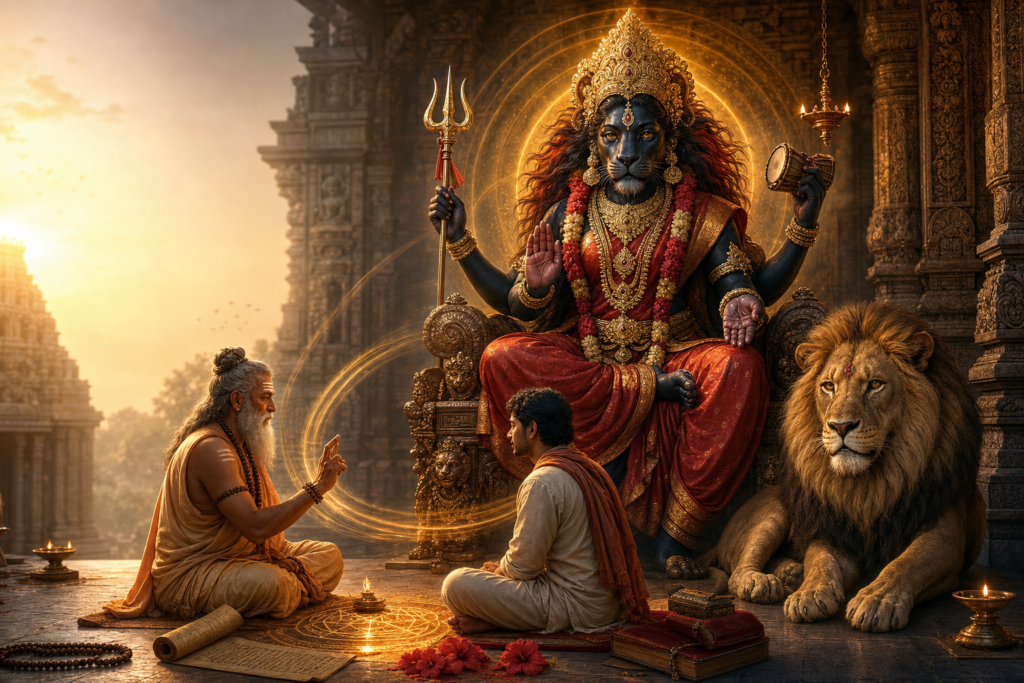
The mind has long been recognized as the subtle driver of human behavior and meaning-making, yet it remains an enduring enigma. Across the dharmic traditions of Hinduism, Buddhism, Jainism, and Sikhism, a shared insight emerges: the mind operates in a realm not fully accessible to the physical senses. Hindu wisdom, among the most detailed in its philosophical mapping, suggests that while the senses (indriyas) gather data from the external world, the mind synthesizes, interprets, and transcends itrevealing layers of awareness that cannot be reduced to sensory input alone.
Classical Hindu thought distinguishes between the faculties of manas (the coordinating mind), buddhi (discriminative intelligence), ahamkara (the sense of I), and chitta (the storehouse of impressions). Together, these subtle instruments interface with the senses yet are not confined by them. This framework, integral to Vedic and Vedantic discussions, directs attention inward toward atman, the witnessing Self, thereby emphasizing that the most decisive insights about consciousness arise through disciplined introspection rather than through the senses alone.
Yoga and Vedanta describe the limitations of empirical observation for understanding inner life. While sensory perception is invaluable for navigating the external world, it struggles to account for the texture of awareness itselfits qualia, silence, and sudden illuminations. The yogic aim of citta-vritti-nirodha points to a method: still the fluctuations of the mind to perceive what remains when the senses fall quiet. This is not a dismissal of the senses but a call to integrate them through pratyahara, ethical steadiness, and contemplative clarity.
Many recognize this distinction in everyday experience. A sudden calm during breath awareness can transform a restless afternoon; a moment of ethical clarity can arise without any new sensory stimulus; a creative solution may appear in silence after the mind steps back from noise. Such episodes illustrate what Hindu philosophy has long proposed: the mind’s deepest operations are subtle, layered, and only partially captured by sense data.
Dharmic traditions converge on this inner turn while preserving distinctive methods. Buddhism refines attention to citta and vijñāna through mindfulness, revealing patterns of reactivity and release. Jainism emphasizes samayik and nonviolence in thought, word, and deed, stabilizing the inner field and allowing jiva to shine with clarity. Sikh wisdom encourages simran and immersion in Naam, cultivating a poised mind (man) aligned with truth and service. These paths, while unique, affirm a shared principle: sustained practice unveils dimensions of mind beyond the reach of the senses.
Practical disciplines follow naturally from this insight. Breath awareness and pranayama regulate the nervous system and steady attention; pratyahara reorients the senses inward; meditation refines one-pointedness; ethics and compassion prevent agitation at its source. Together, these practices support the mind-body connection while honoring the mind’s subtle reach, creating conditions for discernment (buddhi) and equanimity to mature.
In this integrated view, the mind is neither dismissed as illusion nor reduced to biology. It is approached as a subtle instrument that can be trained, quieted, and clarified. The promise is not escapism but precision: by knowing the mind more fully, one engages the world more wiselyless reactive, more discerning, and anchored in values aligned with dharma.
Hindu wisdom thus situates the mind in a continuum from gross to subtle, from sense impressions to still awareness. In concert with Buddhism, Jainism, and Sikhism, it offers a unified, plural vision: diverse methods, one aspirationinner clarity in service of compassionate action. In a noisy age, this shared dharmic inheritance invites humility, rigorous inquiry, and a practical path toward peace that begins where the senses end and understanding truly begins.
Inspired by this post on Hindu Blog.