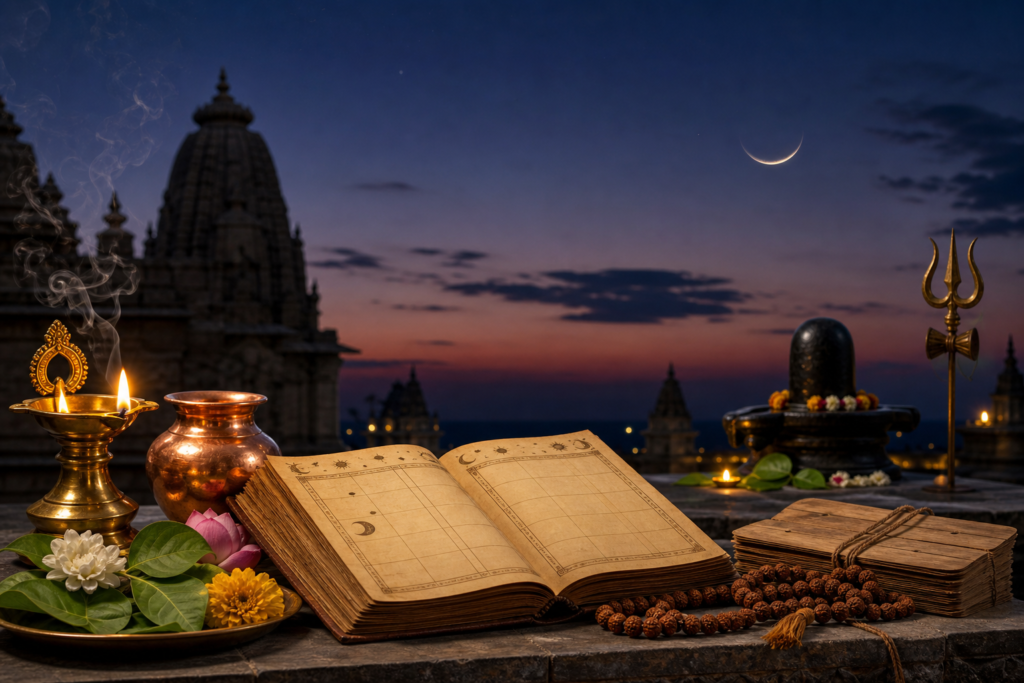
Across temples, homes, museums, and manuscripts, many observers notice a striking feature of Hindu iconography: deities sometimes appear stylized, symbolic, or even unfinished by ordinary standards. The Śiva liṅga is aniconic, Jagannath of Puri bears rounded arms and a schematic form, Śrī Cakra offers geometry instead of anatomy, and countless images privilege attributes and mudrās over anatomical fidelity. Rather than a flaw, this is a theological and aesthetic principle: every sacred image in Hinduism is simultaneously complete in essence and incomplete in form, a deliberate bridge between the finite and the infinite.
This paradox rests on a classical distinction in Hindu philosophy: the divine reality (tattva) is pūrṇacompletewhereas any visual representation (rūpa) is necessarily conditioned. The invocation of the Iśa Upaniṣad frames this vision: “pūrṇam adaḥ pūrṇam idam pūrṇāt pūrṇam udacyate, pūrṇasya pūrṇam ādāya pūrṇam evāvaśiṣyate.” The Brahman of the Upaniṣads transcends verbal and pictorial capturehence the apophatic refrain of the Bṛhadāraṇyaka Upaniṣad, “neti neti,” and the Kena Upaniṣad’s insight, “yad vāca anabhyuditaṁ yena vāg abhyudyate.” In this light, visual incompleteness is not deficiency; it is fidelity to metaphysical truth.
The Bhagavad-Gītā further integrates practice with metaphysics by honoring both nirguṇa (non-qualitative) and saguṇa (qualified) contemplation. In 12.1–5, it recognizes the legitimacy and challenge of both paths, while 7.21“yo yo yām yām tanum bhaktaḥ śraddhayārcitum icchati, tasya tasyācalāṁ śraddhāṁ tām eva vidadhāmy aham”confirms that devoted worship of particular forms is divinely sanctioned. Images are thus upāya (skillful means) and pratīka (symbolic stand-ins), not because they exhaust divinity, but because they invite relationship with it.
Classical treatises of art and architecture, including the Śilpa-śāstras (such as Mānasāra, Mayamata, Śilpa Prakāśa) and allied texts like Bṛhat Saṁhitā and the Chitrasūtra of the Viṣṇudharmottara Purāṇa, codify this principle in iconometry and aesthetics. Their grammar privileges pramāṇa (proportion), bhāva (expressive mood), and śobhā (radiance) over strict naturalism. Systems of tālamāna (modular measures), aṅgula (finger-width), and hastā (hand spans) craft bodies that are metaphoric rather than anatomical, guiding the eye to meanings, not merely muscles.
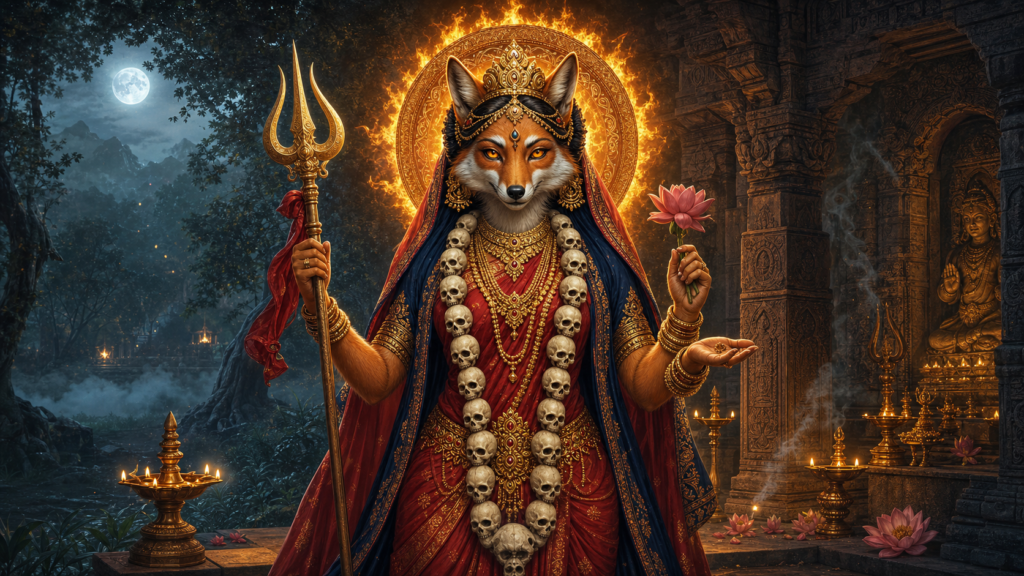
Consider the familiar visual language of attributes. Multiple arms or heads do not claim that the divine is a biological curiosity; they encode simultaneous powers and perspectives. A trident, discus, conch, mace, or veena functions as semantic shorthand for cosmic roles, virtues, and energies. Mudrās such as abhaya (fear-dispelling) and varada (boon-granting) foreground relational presence over physiognomic detail. What may appear “incomplete” anatomically is complete semantically and ritually.
Aniconic forms deepen this logic. The very word “liṅga” means “mark” or “sign,” orienting attention beyond figure to signification. The Śālagrāma (a naturally occurring fossil stone) and Bāṇa-liṅga epitomize completeness without portraiture. The Śrī Cakra condenses cosmology into geometry; its perfection lies in metaphysical precision rather than mimetic depiction. The icons of Jagannath of Purideliberately schematicperform a similar function, emphasizing accessibility, universality, and transcendence over portrait-like exactitude.
Ritual completes what matter begins. Through prāṇa-pratiṣṭhā, the consecration rite, a mūrti becomes an arcāvatāraa form in which the divine consents to be encountered. The ceremony of netronmīlana (opening the eyes) does not “finish the sculpture” so much as inaugurate presence. From that moment, the fullness experienced in darśana is relational and participatory; it is less about how many fingers are carved and more about how truly a living presence is engaged.
Classical Indian aesthetics illuminates why suggestion can be more potent than saturation. The theory of rasa and dhvani, refined by Ānandavardhana and Abhinavagupta, shows how art transmits meaning by evocation rather than enumeration. Visual “incompleteness” invites the devotee’s inner participation; sentiment, memory, mantra, and context co-create the experience. Incomplete figuration, like strategic silence in music or negative space in design, heightens rather than hinders presence.
Hindu temple architecture amplifies this pedagogy. The prabhāmaṇḍala around Śiva Naṭarāja’s dancing form, the axial procession from gopura to garbhagṛha, and the layered mandala plans inscribe theology into space. Architecture and image are co-authored texts: one gestures, the other answers. Neither claims exhaustive representation; together they choreograph an ascent from form to formlessnesssaguṇa to nirguṇa.
Regional and sectarian diversity corroborates that sacred form is a language with dialects. The same deity appears with distinct iconographic nuances in Chola bronzes, Hoysala stone, and Oḍiśā carvings. Paṅcāyatana and Iṣṭa-devatā traditions recognize legitimate plurality in approaches, reflecting the Ṛgvedic insight “ekam sat viprā bahudhā vadanti.” Unity in diversity is not a modern slogan; it is the operating system of Hindu practice.
This principle resonates across the dhārmic family. Early Buddhist art often preferred the Bodhi tree, empty throne, or Dharma wheel to anthropomorphic Buddhas, reserving personified images for later periods; the goal was always to point beyond form to Dharma. Jaina icons of the Tīrthaṅkaras, standardized yet serene, foreground meditative equipoise over portraiture, in keeping with anekāntavādatruth has many facets. Sikh tradition centers Śabad as Guru and venerates the Ik Onkar symbol, emphasizing the unrepresentable Akal Purakh. These paths differ in method yet converge on a shared insight: no single image can circumscribe the real, and humility before the infinite sustains inter-tradition harmony.
Historical realities also shape what modern viewers see. Some icons are fragmentary due to time, environment, or human violence; others were purposefully abstracted by canonical choice. The liturgical traditions distinguish between damaged images that retire from formal worship and aniconic or schematic images that are doctrinally complete. In either case, the theological claim stands: fullness does not depend on photorealism.
Contemporary perception science offers a complementary lens. Human cognition seeks patterns and completes partial cues (Gestalt closure). Icons that leave interpretive room often deepen salience and memory. In sacred settings, mantra, incense, music, and procession supply multisensory context that completes vision from within; the worshipper does not merely look at the image but looks through it, towards that which the image signifies.
Seen this way, the question “Why are images of Hindu gods and goddesses incomplete?” becomes an invitation to a richer answer. They are sampūrṇa in tattva and strategically apūrṇa in rūpa. The former preserves metaphysical integrity; the latter cultivates devotion, pedagogy, and contemplative depth. The image is not an endpoint but a thresholdan intentional liṅga, a sign that orients finite minds toward the inexhaustible ground of being.
This understanding also advances the shared objective of unity among Hinduism, Buddhism, Jainism, and Sikhism. Each tradition, in its own language, safeguards the same humility before transcendence while offering concrete practices for lay and monastic life. Honoring these convergences strengthens a civilizational ethos where diversity of form enriches, rather than threatens, spiritual fraternity. In acknowledging that every depiction is both a window and a veil, a sign and a silence, the dhārmic traditions together sustain a culture of reverence, reflection, and mutual respect.
Inspired by this post on Hindu Blog.