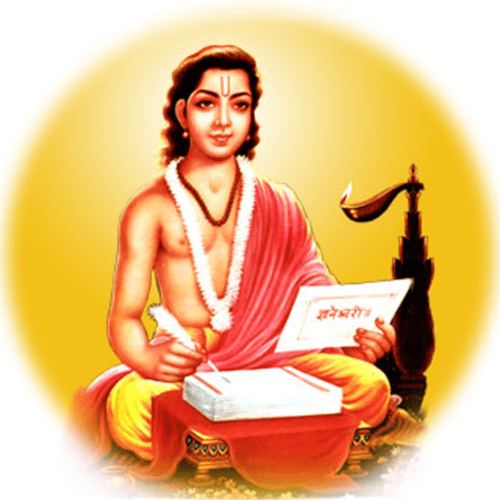
Across the subcontinent and global diaspora, the birth and aradhana (samadhi) days of Hindu gurus now unfold with spectacular pageantrystreamed online, amplified on social media, and replicated in lavish offline events. A closer, disciplined look, however, reveals a paradox: reverence is steadily migrating from the guru’s liberating teachings to the guru’s persona. This shifttoward compartmentalization, sycophancy, and spectacleobscures the primordial call shared across the Dharmic family of Hinduism, Buddhism, Jainism, and Sikhism: live the message, not worship the messenger.
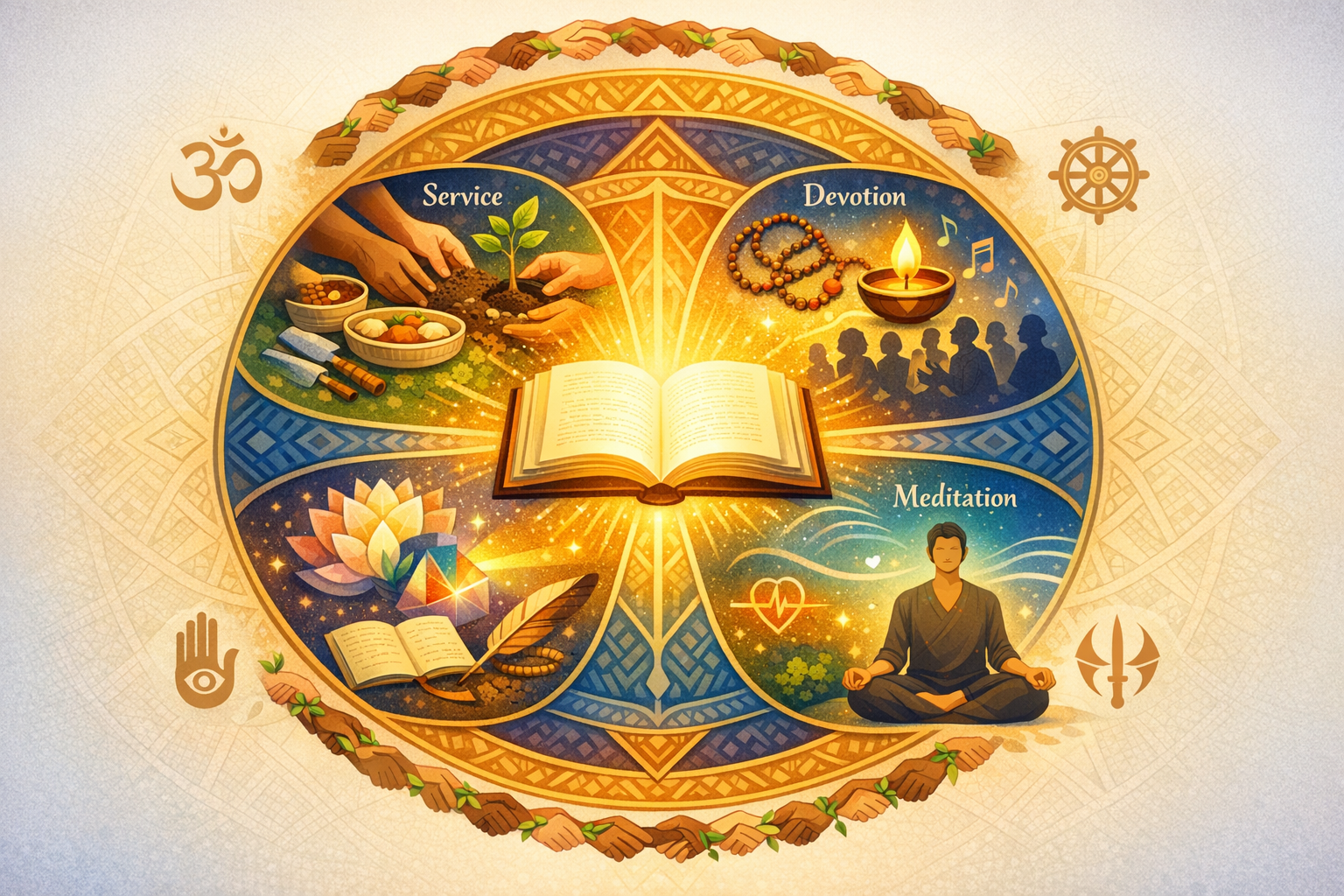
The thesis is straightforward and rigorous: authentic spiritual progress arises from embodying wisdom in conduct (Karma Yoga), devotion (Bhakti Tradition), contemplation (Jnana), and disciplined mind-training (Raja Yoga), rather than from performative allegiance to charismatic figures. Such an orientation aligns with Sanatana Dharma, affirms Vasudhaiva Kutumbakam (the world as one family), and strengthens unity in spiritual plurality rather than fragmenting it into competing camps.
In Hinduism, the Guru–Shishya Tradition frames the guru as the dispeller of darkness (gu–ru), a guide who points the aspirant inward, not a celebrity to orbit. The Bhagavad Gita (4.34) prescribes a relational ethichumility, inquiry, and serviceby which knowledge is received: approach with reverence, interrogate with reason, and dedicate one’s life to practice. The guru’s role is catalytic; the end is atma-vidya (self-knowledge), ethical steadiness, and liberation, not the construction of a personality cult.
Sikhism radicalizes this emphasis on message over messenger by establishing the Shabad (Word) as the eternal guru. With the Guru Granth Sahib as the living repository of wisdom, Sikh praxis elevates simran (remembrance), seva (selfless service), and communal responsibility over personal idolization. This institutional clarity secures continuity of insight independent of any singular leader’s charisma and places ethical transformation at the heart of devotion.
Buddhism articulates the same principle in the Mahāparinibbāna Sutta, where the Buddha affirms that, after his passing, the Dhamma and Vinaya shall be the guide. The Kālāma Sutta further instructs seekers to test teachings experientially and ethically rather than accept them on authority. The net effect is to secure allegiance to liberating truth and disciplined training, not to transient personalitiesan approach that safeguards the Sangha against sectarianism and credulous hero-worship.
Jainism, through the Namokar MantraNamo Arihantānam, Namo Siddhānam, Namo Āyariyānam, Namo Uvajjhāyānam, Namo Loe Savva-Sāhūnambows to perfected qualities rather than particular individuals. The epistemic ethic of Anekantavada (many-sidedness) fosters interpretive humility and pluralism, while the Ratnatraya (right faith, right knowledge, right conduct) anchors transformation in practice. Veneration thus orients to virtues that make awakening possible for all, rather than enshrining a single messenger.
Taken together, these Dharmic frameworks converge on a single methodological insight: charisma can inspire, but only disciplined practice and ethical integration liberate. When public energy prioritizes anniversaries and iconography over sadhana, the subtle center of the path is lost. Re-centering on teachings realigns devotion with discernment, reverence with responsibility, and celebration with service.
Modern media ecosystems exacerbate this slippage. Algorithms reward spectacle, quantifying devotion as metrics of reach rather than measures of inner refinement. Sociologically, this pattern resembles Max Weber’s “charismatic authority” syndrome: the routinization of charisma can institutionalize conformity, mute inquiry, and entrench sycophancy. Psychologically, over-identification with a leader encourages projection and spiritual bypassingsubstituting borrowed fervor for first-hand realization.
A corrective begins by restoring classical yardsticks of progress. In Hinduism, the yamas and niyamas (ahimsa, satya, asteya, brahmacharya, aparigraha; saucha, santosha, tapas, svadhyaya, Ishvara-pranidhana) supply behavioral diagnostics for authentic growth. The Gita’s ethic of lokasangraha (welfare of the world) orients Karma Yoga away from performative charity and toward sustained, skillful service. In Sikhism, kirat karo, vand chhako, naam japo entwines livelihood, sharing, and remembrance. In Buddhism and Jainism, sīla and ahimsa ground insight in non-harm.
This ethical re-centering also answers the guru’s ecological summons to see humans as inextricably one with nature. The Dharmic vision of Vasudhaiva Kutumbakam frames biodiversity, non-violence, and restraint as spiritual commitments, not merely policy preferences. When festivals in a guru’s name reduce waste, plant trees, support local conservation, and practice mindful consumption, reverence becomes regeneration rather than rhetoric.
Pluralism, too, is not an optional adornment but a doctrinal core. The Rig Vedic insightekam sat vipra bahudha vadantiharmonizes with the Hindu principle of Ishta, whereby each seeker is empowered to approach the Divine in the form most consonant with one’s nature. Ishta in Hinduism is psychological wisdom embedded in theology: pathways differ because minds and temperaments differ. When properly understood, Ishta immunizes against sectarian absolutism while honoring depth in devotion.
Swami Vivekananda’s articulation of this insightespecially his exposition of Ishta and his critique of exclusivist truth-claimsremains prescient. His appeal was not to dilute conviction but to elevate it beyond negation of others. Strong roots, he argued, enable broad branches. In that spirit, Religious Pluralism and Religious tolerance in Hinduism are expressions of spiritual confidence, not compromises of principle.
Jain Anekantavada complements this Hindu hermeneutic by training vision toward the partiality of any single viewpoint. In Buddhism, the Middle Way resists extremes that flatten complexity. Sikh ethics of sarbat da bhala (welfare of all) extend this plural ethic into social action. Each tradition, in distinct idioms, teaches humility in knowledge and generosity in fellowshippillars for unity across Dharmic communities.
How, then, might communities celebrate guru jayantis and aradhanas in ways that deepen practice rather than inflate personality? A few evidence-aligned heuristics help: anchor gatherings in scriptural study (svadhyaya) and guided contemplation; emphasize seva projects measured by long-term impact; privilege kirtan and collective meditation over excessive pageantry; and resource transparent institutions that cultivate many teachers, not one untouchable figurehead.
At the individual level, daily sadhana restores primacy to the message. A balanced regimenmindful breathwork, japa (silent or soft), seated meditation (dhyana), ethical journaling, and service commitmentstranslates inspiration into habit. In Bhakti Tradition, authentic devotion increasingly expresses as humility, steadiness, and compassion, not as rivalry between lineages. In Jnana, insight stabilizes as clarity, fewer reactivity spikes, and a spontaneous preference for truth over convenience.
Cross-tradition concordances can be explicitly cultivated. Hindu satsangs, Sikh sangats, Buddhist meditation circles, and Jain study groups can periodically co-host dialogues on shared themesnon-violence, truthful speech, simplicity, and servicewhile honoring doctrinal differences without competitive proselytism. Such Unity in Diversity demonstrates that depth and breadth are mutually reinforcing when anchored in practice.
Historical precedents reinforce these recommendations. Guru Gobind Singh’s proclamation of the Guru Granth Sahib as the perpetual Guru decentralized authority into the Word. Ramakrishna’s life and Swami Vivekananda’s organizational vision fused interior realization with social uplift. Vedantic acharyas emphasized that even the most exalted guru points beyond self-reference to the deathless Self. The through-line is unmistakable: the messenger dissolves into the message when rightly seen.
In practice, communities benefit from periodic “devotional audits.” Individually: track the weekly ratio of time spent on sadhana versus time spent consuming personality-focused content. Collectively: insist on transparent governance in ashrams, gurdwaras, viharas, and deras; document service outcomes; publish financials; rotate facilitators; and foster cultures where respectful questioning is welcomed as a sign of maturity rather than dissent.
When exclusivist truth-claims arisewhether within a Dharmic setting or in dialogue with other faithsthe Dharmic response can remain both principled and fraternal: affirm commitment to one’s path, articulate the epistemic humility of Anekantavada and Ishta, and invite collaboration on universally beneficial ethics. As Vivekananda long observed, intolerance impoverishes the rich tapestry of religious practices; pluralism enriches it.
Finally, the oft-repeated instruction to “see oneself as one with nature” is not a metaphorical flourish but a measurable discipline. It appears as gentler speech, fairer tradeoffs, reduced consumption, and resilient communities. It reframes guru devotion as continuity of carefor the vulnerable, for the land, for future generations. This, too, is Karma Yoga: reverence operationalized as responsibility.
Beyond guru worship lies a more demanding, more luminous path: embody the teachings of Sanatana Dharma in conduct and contemplation, and honor the allied wisdoms of Buddhism, Jainism, and Sikhism. In doing so, communities convert anniversaries into living laboratories of compassion, clarity, and courage. The messenger is honored most when the message is livedand when that living advances the welfare of all.
Inspired by this post on Hindu Blog.