Religious discourse in the contemporary world often gravitates toward fear and antagonism, yet the dharmic traditionsHinduism, Buddhism, Jainism, and Sikhismdeveloped philosophical instruments that replace anxiety with discernment, empathy, and shared purpose. Rather than securing cohesion through opposition, these traditions build it through interior transformation and ethical responsibility, generating a social fabric that can hold conviction and compassion together.
Within Hinduism, pluralism is not an afterthought but a principle grounded in its earliest layers of thought. The Rig Vedic insight ‘Ekam sat vipra bahudha vadanti’ affirms that reality is one though described in many ways. The Mahopanishadic maxim ‘Vasudhaiva kutumbakam’ extends this unity to social ethics by envisioning the world as a single family. The Bhagavad Gita harmonizes both views in the assurance ‘ye yatha mam prapadyante tams tathaiva bhajamy aham,’ indicating that the Divine responds to seekers in the mode they approach.
This metaphysical monism paired with methodological pluralism yields a civilizational ethos that neither relativizes truth nor coerces uniformity. Unity is preserved at the level of Being, while diversity flourishes at the level of approach, practice, and symbol. The result is a resilient framework for coexistence that prizes humility over hegemony and inquiry over insecurity.
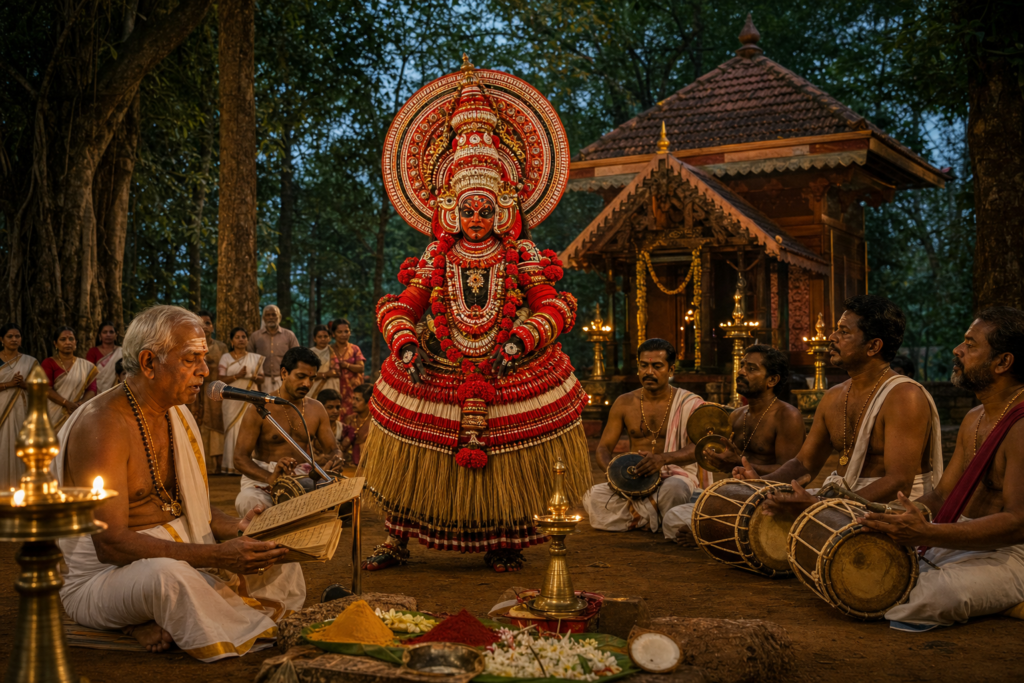
A distinctive institutionalization of pluralism in Hindu life is Ishtathe right and responsibility to honor a ‘chosen ideal.’ From domestic shrines to public temples, Ishta enables each practitioner to align worship with sva-bhava (individual disposition) and sva-dharma (situational duty). The Gita corroborates this personalization in 7.21, ‘yo yo yam tanum bhaktah sraddhayarchitum icchati, tasya tasyacalam sraddham tameva vidadhami aham,’ validating faith as it matures through a preferred form.
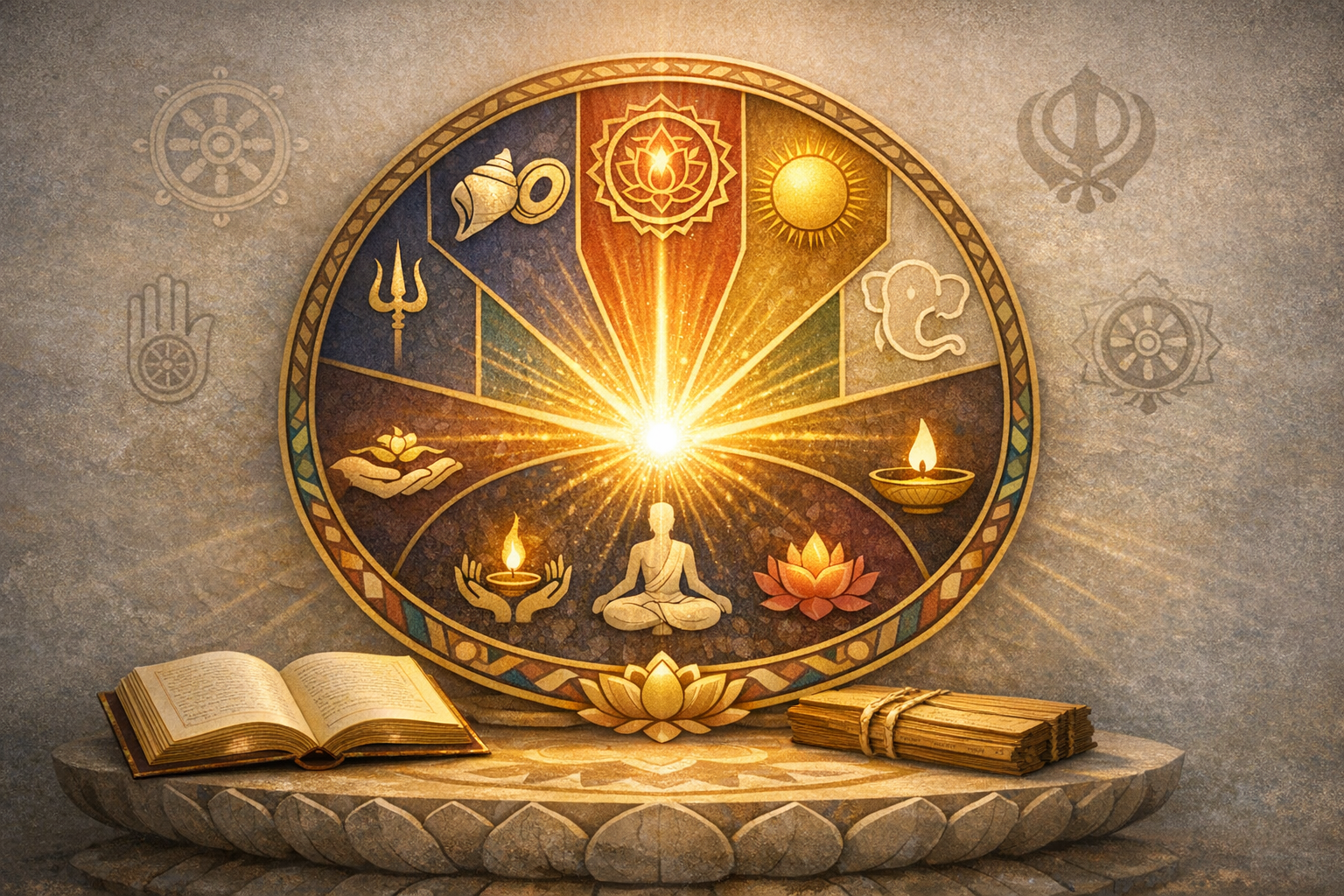
Ishta scales from the household to community through Smarta panchayatana-puja, which venerates Shiva, Vishnu, Shakti, Surya, and Ganesha as equally valid manifestations of Brahman. This ritual structure communicates a precise philosophical claim: saguna (with attributes) and nirguna (without attributes) are complementary gateways to the same nondual ground. Sectarian streamsVaishnavism, Shaivism, Shaktism, Saura, and Ganapatyathus operate as interoperable paths rather than mutually exclusive loyalties.
Diversity of practice is matched by diversity of realization pathways. Karma Yoga disciplines action, Bhakti Yoga refines devotion, Jnana Yoga clarifies insight, and Raja Yoga stabilizes attention. Classical darshanas such as Advaita (Shankara), Vishishtadvaita (Ramanuja), and Dvaita (Madhva) articulate different yet dialogical metaphysical models, demonstrating how robust debate can deepen shared commitments to dharma rather than splinter community.
This commitment to plural reasoning is mirrored across the dharmic family. Jainism develops Anekantavada (the doctrine of many-sidedness), together with Syadvada and Nayavada, to guard discourse against absolutism and to cultivate intellectual humility. Buddhism advances upaya-kaushalya (skillful means), permitting diverse pedagogies suited to context, while dependent origination dissolves rigid dogma by tracing phenomena to conditions rather than essences. Sikhism proclaims Ik Onkar and institutionalizes sarbat da bhala (the welfare of all) through the egalitarian practice of langar. These synergies are not coincidental; they reveal a civilizational pattern that prizes truth, compassion, and coexistence in equal measure.
Ethically, ahimsa remains a cornerstone binding these traditions, not as passive quietism but as an active technology of care. Hindu jurisprudence on dharma-yuddha, Jain vows of nonviolence, Buddhist precepts, and Sikh codes of conduct converge on the same normative outcome: minimize harm, protect the vulnerable, and orient strength toward service. This is the ‘Principle of Minimum Violence for Human’s Survival’ refracted through distinct yet concurring lenses.
From a psychological perspective, fear-based religious mobilization narrows perception, heightens threat monitoring, and impairs nuanced reasoning. Contemplative disciplines embedded in dharmic traditions provide correctives at each step: pranayama modulates autonomic reactivity, dhyana improves attentional control, and satsanga transforms social emotion from suspicion into trust. Emerging neuroscience corroborates these effects by linking regular meditation to reduced amygdala reactivity and enhanced prefrontal regulation, outcomes that translate directly into more tolerant civic behavior.
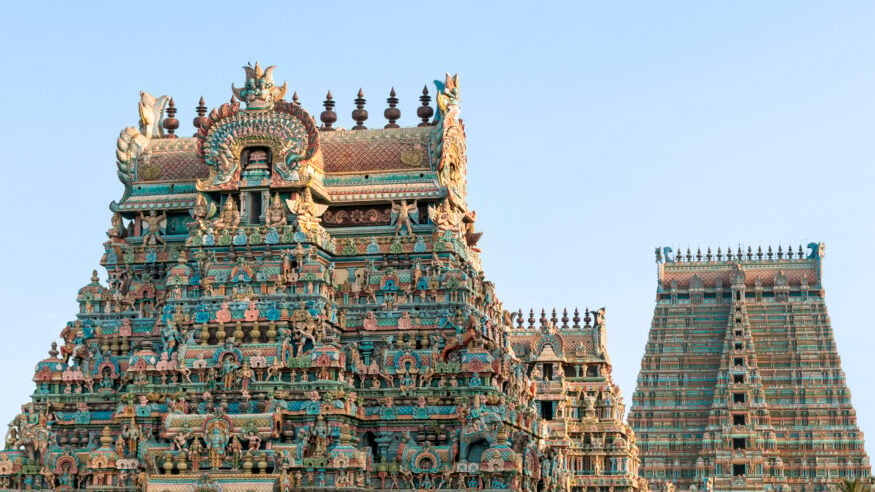
Historical and contemporary lived experience in South Asia illustrates this architecture of pluralism. In Kanchipuram, Shaiva and Vaishnava traditions flourished side by side, each enriching the other’s liturgical music, iconography, and temple architecture. Varanasi’s sacred geography coexists with Sarnath’s Buddhist legacy, while gurdwaras across India extend the hospitality of langar to people of every background; similarly, annadanam at Hindu temples expresses the same ethic of universal nourishment. Festivals like Onam, Deepavali, and Guru Nanak Jayanti often become neighborhood-wide celebrations, with families exchanging sweets irrespective of sect or community.
Modern India’s civic vocabulary reflects this heritage. The ideal of ‘sarva dharma sambhava,’ popularized in modern times, resonates with the Upanishadic confidence that ultimate reality is neither threatened by new viewpoints nor diminished by diverse rituals. A 2021 PEW Report on religion in India observed high support for religious freedom and pride in national diversity, even as it noted areas for further bridge-buildingevidence that the dharmic template for coexistence remains culturally salient and socially desired.
The theoretical logic behind dharmic pluralism can be expressed with precision. First, ontology: Brahman/shunyata/Ik Onkar is singular and inexhaustible; experiential access is therefore necessarily manifold. Second, epistemology: knowledge claims are partial and provisional, hence the safeguards of anekantavada and neti neti. Third, praxis: because persons and contexts vary, upaya and Ishta distribute spiritual technologies according to temperament without diluting the telos of liberation or union. This triadone reality, many knowings, tailored practicesyields stable pluralism without sliding into facile relativism.
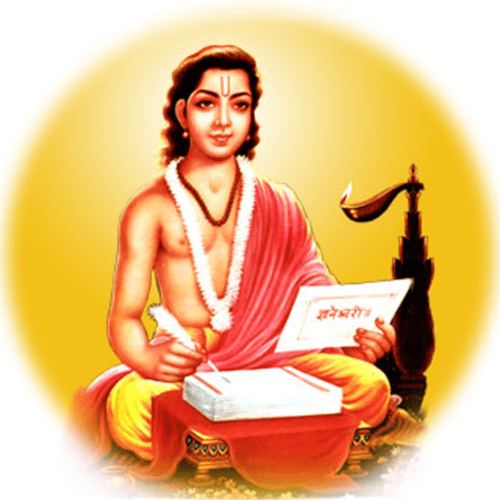
Swami Vivekananda exemplified this synthesis in modern idiom by teaching that Ishta personalizes the ideal while never absolutizing it. In public addresses, he consistently framed Hinduism’s inclusivity not as indifference but as disciplined hospitality to multiple spiritual grammars. The same insight animates the Bhagavad Gita’s counsel to act without hatred, to honor diversity in worship, and to measure maturity by the expansion of empathy.
Pluralism does not require erasing doctrinal distinctions; it requires holding them with integrity and humility. Vaishnava theologies of grace, Shaiva explorations of consciousness, Shakta affirmations of Shakti, Buddhist analyses of impermanence, Jain ethics of restraint, and Sikh devotion to the Naam possess genuine differences. The dharmic achievement is to convert difference into dialogue, and dialogue into collective uplift, without demanding uniformity of metaphysical vocabulary.
Contemporary communication ecosystems can erode this achievement when algorithms reward outrage and caricature. A dharmic response is epistemic hygiene: verify before amplifying, prefer primary sources (Upanishads, Bhagavad Gita, Guru Granth Sahib, Agamas, Nikayas, Sutras), and reward discourse that clarifies rather than inflames. Communities that embed such norms in schools, temples, mathas, viharas, and gurdwaras build immunity against polarization.
Practical steps for households and institutions align naturally with tradition. First, cultivate Ishta-sensitivity by teaching children to recognize and respect the chosen ideals of neighbors and relatives. Second, integrate comparative studyAdvaita with Dvaita and Vishishtadvaita; Anekantavada with Buddhist Madhyamaka; Sikh kirtan with Hindu bhajansto normalize complementarity. Third, expand seva through interfaith food drives, health camps, and environmental cleanup, where shared labor dissolves imagined boundaries more effectively than argument.
Fourth, ritualize common goods: open langar-style service in temples, host gurdwara-style kirtan exchanges, invite Jain and Buddhist teachers to speak on ahimsa and mindfulness, and celebrate ‘Unity in Diversity’ weeks anchored in scriptural study and shared meals. Fifth, adopt community charters that affirm non-proselytizing fellowship across dharmic traditions, allowing faiths to flourish without competitive denigration.
When fear is displaced by dharmic confidence, anger gives way to karuna, and suspicion yields to maitri. The resulting social fabric is not naïvely irenic; it is strategically resilient, ethically grounded, and intellectually humble. Hinduism’s philosophy of unityrooted in the Upanishads, operationalized through Ishta, and harmonized by the Bhagavad Gitaoffers a proven template for Religious tolerance in Hinduism and for Religious pluralism in India. In concert with Buddhism, Jainism, and Sikhism, it demonstrates that strong convictions and deep pluralism are not opposites but partners in the work of a more compassionate civilization.
Inspired by this post on Hindu Blog.