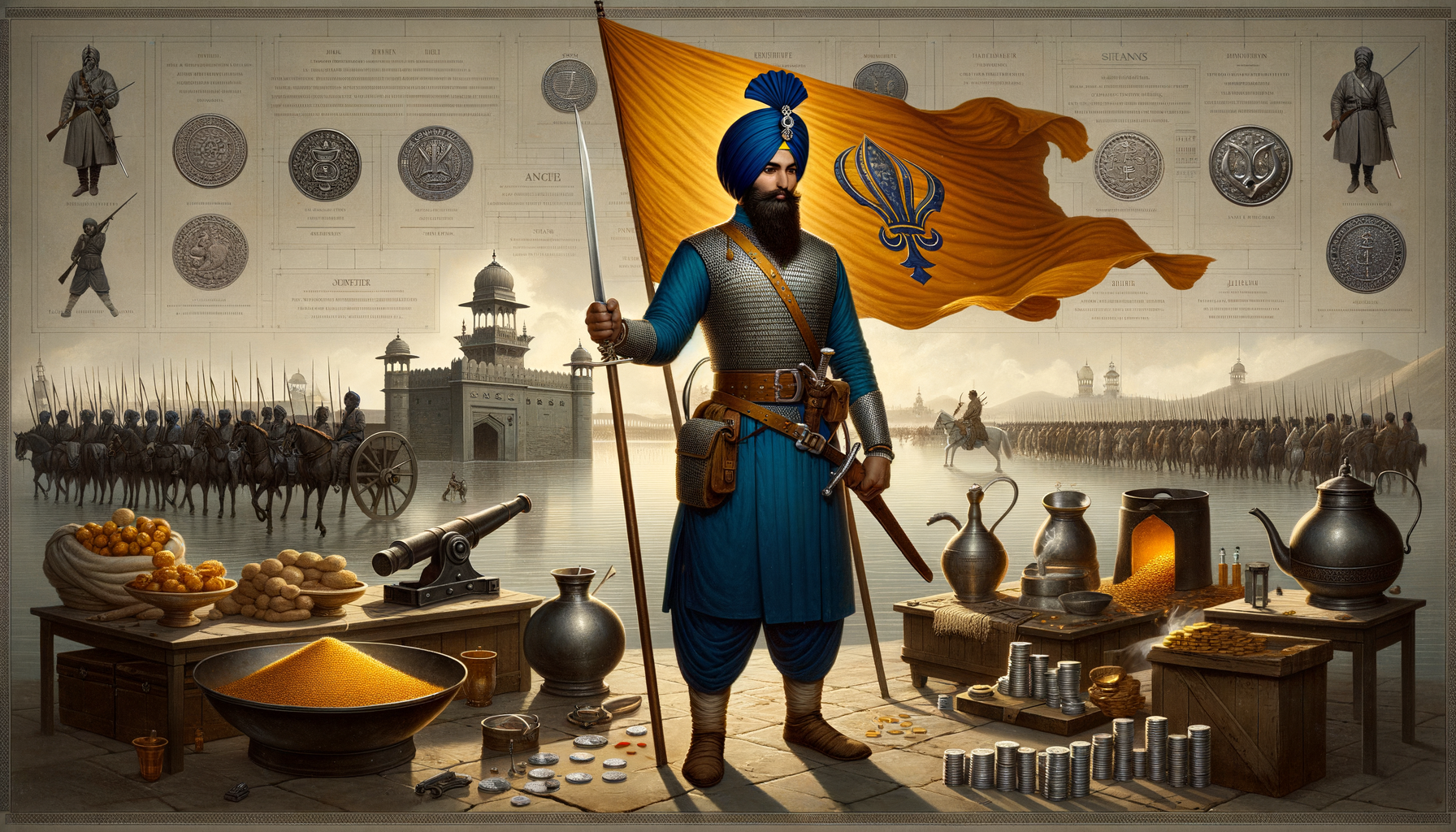
In the turbulence of 18th-century Punjab, when Mughal authority waned and repeated Afghan incursions unsettled everyday life, Jassa Singh Ahluwalia emerged as a unifying strategist whose leadership helped consolidate Sikh power and lay the groundwork for the Kapurthala State. This formative moment in Indian history demonstrates how coherent vision, community service, and federated coordination transformed shifting misls into enduring governance.
Trained within the discipline of the Khalsa and mentored in the ethos of shared responsibility, Jassa Singh rose to prominence within the Ahluwalia misl and the broader Dal Khalsa. His stature as a consensus builderoften remembered through the honorific Sultan-ul-Qaumrested on an ability to coordinate multiple Sikh bands into collective action, balancing defense with civil protection across Punjab’s agrarian towns and trade corridors.
Operationally, his campaigns prioritized safeguarding civilians, stabilizing routes, and restoring confidence after cycles of violence. Accounts of rescuing captives from predatory caravans became emblematic of a leadership philosophy that defended dignity without fear or favor. This approach resonated beyond sectarian lines, fostering trust among dharmic communitiesHindu, Sikh, Jain, and otherswho relied on restored security for pilgrimage, trade, and local livelihoods.
Guided by the Khalsa principle “Deg Tegh Fateh”the cauldron and the sword, welfare and defenseJassa Singh’s policy outlook fused service with sovereignty. Relief for the vulnerable, support for religious institutions, and disciplined stewardship of resources animated this ethic. In practice, it meant that political consolidation proceeded alongside community kitchens, sanctuary for travelers, and respect for diverse places of worship.
As territories coalesced under Ahluwalia stewardship, Kapurthala emerged as a strategic hub. Through cooperative arrangements with allied misls, assertive yet measured campaigns, and pragmatic revenue management, the Ahluwalia domain took recognizable shape. While the formal recognition of a princely “Kapurthala State” matured under successors, the institutional foundationsmilitary organization, local administration, and inter-misl diplomacywere established in Jassa Singh’s tenure.
Institutionally, his leadership helped normalize Sikh confederate governance amid the broader reordering of North India after the Mughal decline. The minting of coins invoking spiritual authority and communal welfare symbolized a polity grounded in ethical statecraft. Within this framework, plural communities found space to rebuild, reaffirming a regional culture that prized service, courage, and mutual respect.
The legacy continued through leaders like Fateh Singh Ahluwalia, who formalized the Kapurthala rulership and navigated the evolving balance of power in Punjab. Over time, Kapurthala State became known for administrative reform, cultural patronage, and engagement with wider Indian currentsevidence that the seeds sown by Jassa Singh matured into durable institutions capable of adapting to new political realities.
For contemporary readers, this history offers a model of unity within diversity: community defense in service of peace, principled power allied to compassion, and a federal spirit that honors distinct identities while pursuing shared security. In a dharmic perspective, the story underscores how solidarity among Hindu, Sikh, Jain, and Buddhist communities can translate into resilient governance and cultural renewal.
Seen through the lens of Indian history, Jassa Singh Ahluwalia’s achievement in establishing the foundations of Kapurthala State is both political and civilizational. It illustrates how the Sikh Confederacy converted volatility into opportunity, how the Ahluwalia misl shaped long-term stability, and how ethical leadershipgrounded in “Deg Tegh Fateh”can elevate public life even in an era of upheaval.
Keywords: Jassa Singh Ahluwalia, Kapurthala State, Ahluwalia misl, Dal Khalsa, Sikh Confederacy, Punjab history, Mughal Empire decline, Afghan invasions, Deg Tegh Fateh, 18th-century India.
Inspired by this post on SikhNet – News.