Paris Erupts in Peaceful Protest: Thousands Demand Justice for Hindus in Bangladesh
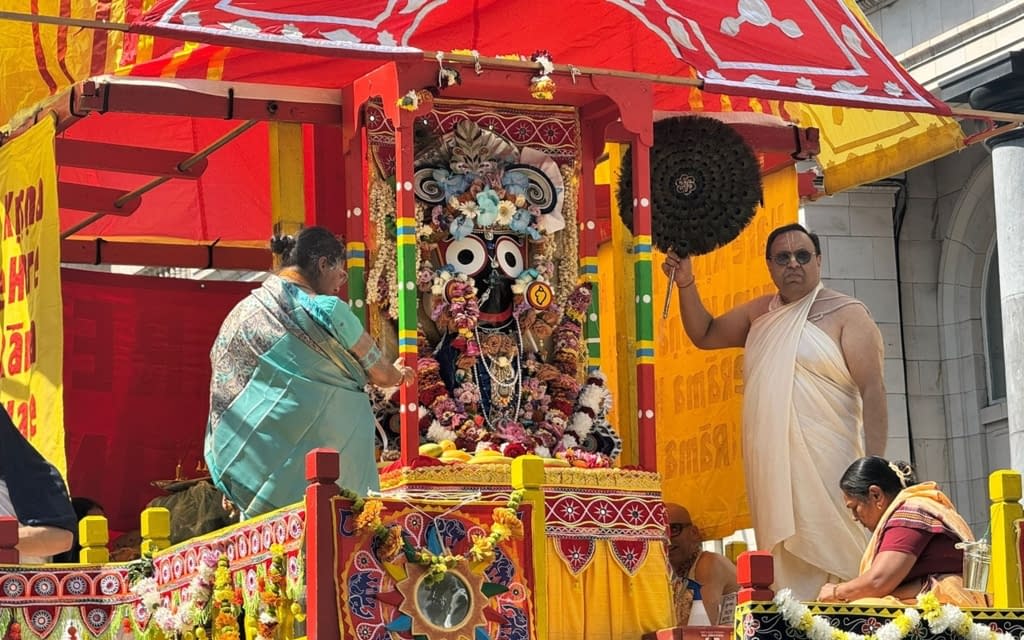
In Paris, a large, peaceful protest drew thousands to the streets to condemn the persecution of Hindus in Bangladesh and to appeal for urgent international intervention. The mobilization brought together members of the South Asian diaspora, human rights advocates, and representatives across dharmic traditions—Hindu, Buddhist, Jain, and Sikh—signaling a unified, values-based call for justice and religious freedom.
Contextual reports from rights observers and civil society organizations have, for years, documented patterns of intimidation against Hindu minorities in Bangladesh, including attacks on places of worship, sporadic violence during festival periods, and targeted coercion that undermines community security. Against this backdrop, the Paris demonstration framed the issue as both a human rights concern and a test of constitutional protections for minority communities.
Speakers and placards emphasized concrete priorities: safeguarding Hindu minorities, enforcing the rule of law, prosecuting perpetrators of violence, and protecting temples and cultural heritage. The messaging remained firmly nonviolent and inclusionary, underscoring that the defense of one community’s rights strengthens the broader social fabric and promotes interfaith harmony.
The protesters appealed to France, the European Union, the United Nations, and the wider international community to support principled diplomacy and accountability. Recommended avenues included enhanced monitoring by international mechanisms, technical support for legal and policing reforms, and non-discriminatory humanitarian assistance aimed at prevention and protection. Such measures were framed as consistent with global norms on minority rights and religious freedom.
Observers noted the emotional weight of testimonies shared by attendees, which highlighted the lived experiences of fear, loss, and resilience. These reflections lent the event a human dimension beyond statistics and headlines, illustrating how diaspora communities can elevate local voices, sustain attention on minority persecution, and foster transnational coalitions for peaceful change.
A notable feature of the gathering was its explicit emphasis on dharmic unity. Drawing on shared principles of ahimsa, compassion, and mutual respect, participants urged Hindus, Buddhists, Jains, and Sikhs—as well as allies from other faiths—to collaborate through lawful, constructive advocacy. This ethical posture aimed to counteract polarization and to model a pluralistic approach rooted in dignity and dialogue.
Pathways proposed by organizers and civil society partners included rigorous documentation of abuses, independent fact-finding, legal aid for victims, early-warning and rapid-response measures to protect places of worship, and local dialogue platforms among community and religious leaders in Bangladesh. Equally important were education campaigns against hate, responsible media coverage, and digital etiquette that resists disinformation and de-escalates tensions.
More broadly, the protest affirmed that peaceful assembly is a vital democratic instrument for articulating community concerns and guiding policymaking. It called upon academics, journalists, NGOs, and policymakers to collaborate on evidence-based strategies that simultaneously uphold state sovereignty and safeguard minority rights.
Ultimately, the Paris march was presented as a dignified plea for justice, security, and equal citizenship for Hindu minorities in Bangladesh. By championing religious freedom and interfaith solidarity, participants connected a specific grievance to universal human rights, reinforcing the principle that protecting vulnerable communities advances peace for all.
The post describes a large, peaceful protest took place in Paris, drawing thousands to condemn the persecution of Hindus in Bangladesh. It united diaspora voices with human rights advocates and representatives across dharmic traditions in a call for justice and religious freedom.
What were the protesters asking international bodies to do?
Protesters urged France, the EU, and the UN to support monitoring, legal reforms, and non-discriminatory humanitarian assistance. They also emphasized safeguarding Hindu minorities and upholding the rule of law, including protecting places of worship.
Who participated in the protest?
Diaspora communities, human rights advocates, and representatives from Hindu, Buddhist, Jain, and Sikh traditions participated. This underscored interfaith solidarity.
What pathways did organizers propose?
Organizers proposed rigorous documentation of abuses and independent fact-finding, along with legal aid for victims. They called for early-warning and rapid-response measures to protect places of worship and for local dialogue platforms among community and religious leaders in Bangladesh. Education campaigns against hate, responsible media coverage, and digital etiquette to resist disinformation were highlighted.
What core message did the protest aim to convey?
The protest emphasized nonviolence and pluralism. It argued that defending Hindu minorities advances universal human rights and interfaith harmony.
How did the event view peaceful assembly?
It framed peaceful assembly as a vital democratic instrument for articulating community concerns and guiding policymaking. It connected this act to safeguarding minority rights and promoting peaceful change.