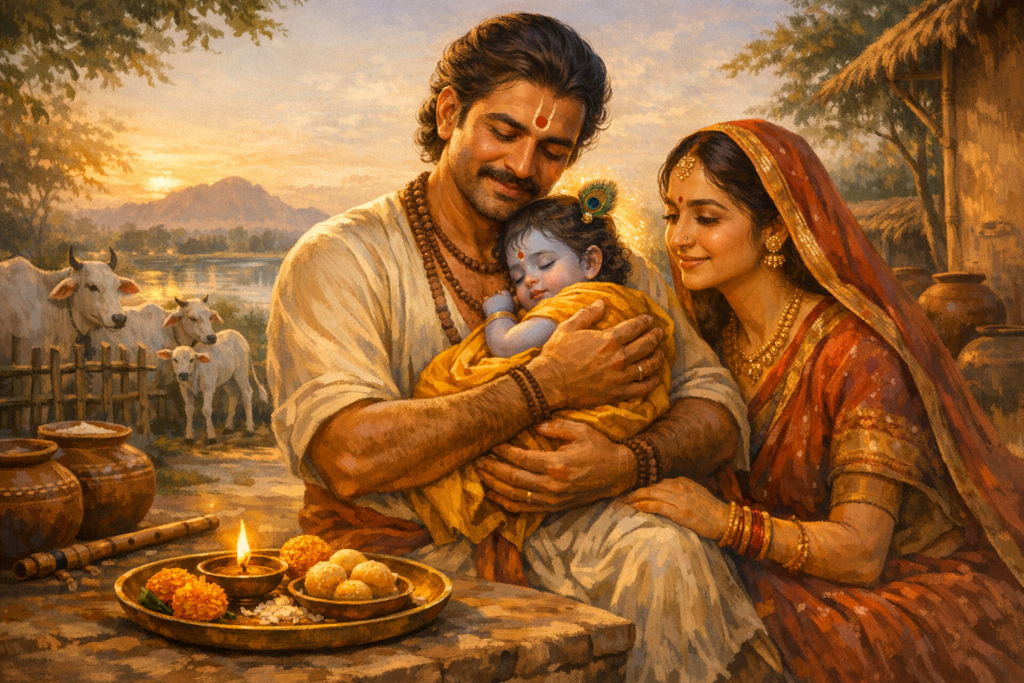
The image of Ravana and Maricha appearing as Rama and Lakshmana to abduct Sita haunts several regional Ramayana traditions. It reframes the abduction as a drama of perception, where dharma is tested not only by force but by illusion, voice, and visual deception. Read alongside the better-known Valmiki narrative, these variants reveal how Indian and Southeast Asian storytellers intensify suspense and ethical inquiry by exploring what it means when adharma briefly wears the mask of the righteous.
Disguise in these traditions operates along a spectrum. At one end is voice-mimicry and phantasmagoria (māyā), and at the other are full impersonations in which antagonists appear as Rama or Lakshmana to unnerve, confuse, or lure Sita. Regional Ramayana versions, oral epics, temple theatre, and dance-drama frequently move between these registers, reshaping the episode to suit linguistic, devotional, and performative ecologies.
Valmiki’s Ramayana provides the textual baseline. In the Aranya Kanda, Maricha assumes the form of the golden deer, drawing Rama away from the hermitage. A decisive turn follows when Maricha, fatally struck, imitates Rama’s voice to cry out for Lakshmana’s help; the feigned call compels Sita to send Lakshmana from the hut. Ravana then arrives disguised as a mendicant brahmana, not as Rama. The famous “Lakshmana-rekha” boundary does not occur in Valmiki, and neither Ravana nor Maricha physically appear as Rama or Lakshmana in the critical Sanskrit narrative.
Later vernacular and performative traditions expand this core with striking creativity, often heightening the psychology of deception. North and East Indian retellings popularize the boundary motif (variously called Lakshmana-rekha) and intensify the tension around Sita’s hospitality, vow-ethics, and discernment. The moral battlefield shifts from the forest to the mind, where seeing and hearing rightly become central to dharma.
Direct impersonation—where antagonists appear as Rama or Lakshmana—surfaces in scattered oral and stage traditions across the eastern and northern cultural spheres. In these tellings, the demon’s shapeshifting or conjuration produces a Rama- or Lakshmana-lookalike to approach Sita or to deceive forest-dwellers. Such scenes are anchored more in performance repertoires (jatra, pala-gān, village theatre) than in the core Sanskrit text, yet they are remembered powerfully by communities that encountered the Ramayana primarily as living katha on stage.
The Bengali Krittivasi Ramayana vividly foregrounds māyā. It is well known for scenes where Indrajit conjures a false head or phantom doubles to devastate morale. While the text does not consistently stage Ravana himself as Rama, its dramaturgy normalizes demon-crafted semblances of the heroes, thereby legitimizing later folk performance choices in which deceivers appear as Rama–Lakshmana to unsettle Sita and the audience alike.
Odia retellings, notably the Jagamohana or Dandi Ramayana associated with Balarama Dasa and subsequent performance traditions, amplify the ethics of threshold and deception. The emphasis on transgressive crossing and cunning visitors allows stage variants to escalate the ruse: some locally transmitted scripts and narratives depict or allude to demonic impersonation of the heroes as the most audacious breach of trust before the abduction.
In the North Indian devotional current, Ramcharitmanas showcases the power of illusion in Yuddha Kanda through Indrajit’s sorcery, even when not literalizing a Ravana-as-Rama disguise. The cultural memory that coalesces around these scenes—augmented by folk theatre, katha-vācana, and regional natak—makes the impersonation motif legible and emotionally credible to audiences accustomed to demons fabricating heroic doubles.
Tamil Kamban’s Iramavataram retains Maricha’s deer and Ravana’s ascetic form, yet it intensifies the aesthetics of wonder (adbhuta) and dread (bhayānaka). Kamban’s poetics of shapeshifting and verbal deceit provides internal logic for staged impersonations in later Tamil and allied South Indian performance traditions, even when the poem itself stops short of a literal Ravana-as-Rama appearance before Sita.
Malayalam devotional literature—such as Ezhuthachan’s Adhyatma Ramayanam—centers the “Māyā-Sita” doctrine: the Sita who is abducted is a divinely projected double safeguarded by Agni, while the real Sita remains inviolate. This theology, focused on ontological disguise, complements performance lineages that allow antagonists to simulate Rama or Lakshmana: both moves protect Sita’s sanctity while exploring the limits of perception.
Classical Sanskrit drama (e.g., Bhavabhuti’s Mahāvīracarita, Murāri’s Anargharāghava) consistently deploys illusion and misrecognition but tends to privilege voice, dreamlike visions, and conjured tableaux over literal, face-to-face impersonation of Rama before Sita. Even there, the dramaturgical grammar makes audience mis-seeing an intentional engine of rasa.
Across Southeast Asia, the Ramakien (Thailand) and Reamker (Cambodia) develop a sophisticated stage language for illusion. Khon and Lakhon choreography permits demon princes to project or marshal lookalike forms of Rama–Lakshmana as tactical mirages. Whether or not a given manuscript textualizes Ravana’s personal impersonation, dance-drama often realizes the idea physically on stage, leveraging masks and codified gestures to render deception visually unmistakable.
These impersonation episodes—textual or performative—serve a clear narrative purpose: they move the conflict from bāhya (outer) action to antar (inner) discernment. When a demon wears a divine face, the trial is no longer simply about strength or archery; it is about satya versus māyā, hospitality versus prudence, and the dharmic duty to recognize the real amidst persuasive semblance.
From the standpoint of aesthetics, the impersonation motif intensifies karuṇā (pathos) and adbhuta (wonder) while sharpening bhayānaka (terror). The question “Can truth be counterfeited?” heightens spectators’ emotional investment, explaining why many oral and stage traditions press further than the base text toward literal lookalikes of Rama and Lakshmana.
Text-critically, such variants illustrate how regional Ramayanas drift and re-converge through contamination, transcreation, and performance-led interpolation. The Baroda-style critical sensibility helps locate the Valmiki baseline, yet the lived Ramayana tradition is plural: North, South, and Eastern recensions, vernacular kāvyas, temple arts, and jatra all contribute layers without canceling one another.
Doctrinally, the “Māyā-Sita” strand offers a profound safeguard: even where deception escalates (including impersonation), Sita’s purity remains untouched in principle. Theologically, this preserves the integrity of Rama–Sita’s relationship while allowing storytellers to dramatize evil’s subtlest tactics.
Viewed through a wider dharmic lens, the impersonation motif resonates across traditions. Buddhist narratives of Māra’s illusions warn that even the exalted can be assailed by deceptive appearances; the remedy is mindfulness and prajñā. Jain Ramayana retellings such as Vimalasūri’s Paumacariya ethically reframe contentious episodes to prioritize ahiṃsā and self-mastery, spotlighting intention and conduct over spectacle. Sikh gurmat emphasizes bibek-buddhi (discerning intellect) and sat (truth), a moral compass that looks past persuasive exteriors—an outlook entirely consistent with seeing through a false Rama-mask.
Communities encounter these episodes not only on the page but also in shared spaces: village squares, temple courtyards, and school stages. Spectators often recall the visceral jolt when a performer in Rama’s visage turns out to be a deceiver. That moment, felt collectively, becomes a lesson in vigilance, compassion, and unity—values that dharmic traditions broadly celebrate.
Performance ecology helps explain why impersonation thrives. Theatre rewards visual clarity; when deception is literalized as a lookalike Rama or Lakshmana, ethical stakes become immediately legible, even to first-time viewers. Masks, color codes, and choreographic motifs in South and Southeast Asia give the audience semiotic tools to navigate such doubling.
Methodologically, it is helpful to distinguish three recurrent devices: voice impersonation (firmly attested in Valmiki via Maricha’s cry), conjured phantasms or severed-head illusions (strongly present in Krittivasi and in Yuddha episodes across vernaculars), and full-bodied impersonation of Rama–Lakshmana (more common in folk performance and localized scripts). Together they form a family of deceit motifs that different regions select and emphasize.
Ethically, these scenes critique misused intelligence. Ravana and his agents represent brilliance bent to adharma: knowledge of Vedas without humility, tapas without surrender, strategy without compassion. By contrast, Rama’s dharma rests on clarity of vision, restraint, and relational fidelity—a triad that outlasts the most dazzling counterfeit.
For readers and listeners who first met the Ramayana in childhood, encountering these regional variants later in life can feel disorienting. That disorientation is productive: it invites a deeper, pan-dharmic appreciation of how narrative plurality protects core values. Far from contradiction, the plurality is a pedagogy in empathy and discernment.
Ultimately, the motif of Ravana–Maricha as Rama–Lakshmana—whether literalized on stage or implied through conjurations—underscores a shared principle across Hinduism, Buddhism, Jainism, and Sikhism: truth demands discrimination, and compassion demands steadiness even when appearances mislead. In honoring this unity within diversity, the Ramayana’s living tradition continues to educate hearts and refine judgment across the dharmic world.
Inspired by this post on Hindu Blog.