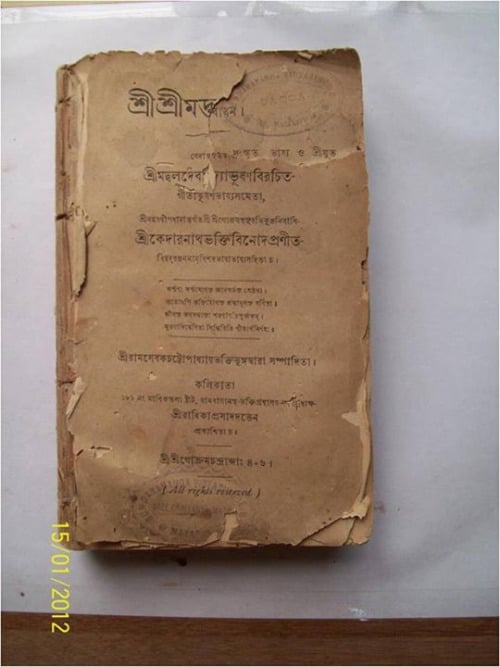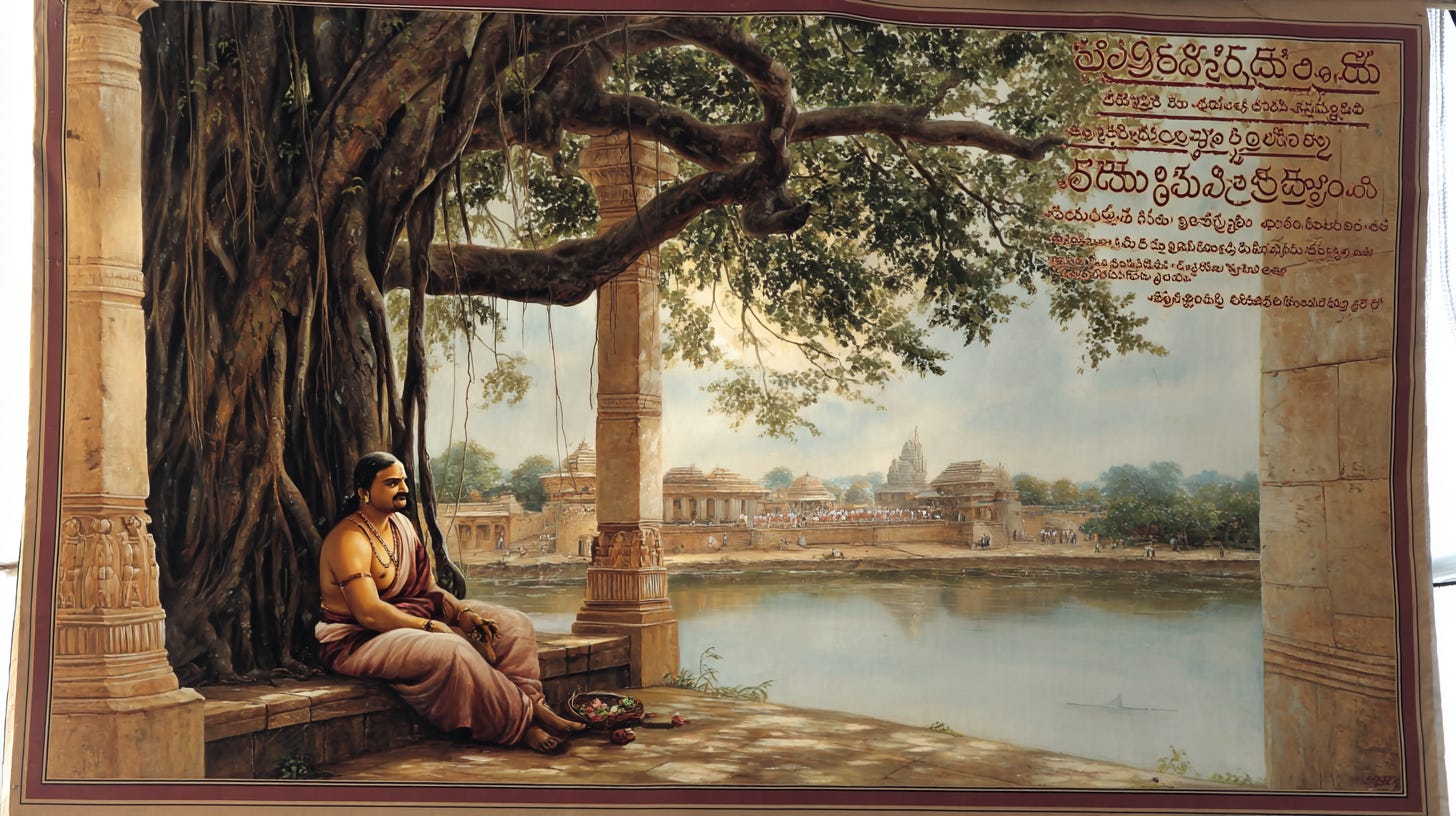
Kavisārvabhaomuḍu stands at a luminous intersection of Telugu classicism and Kannada literary sensibilityan historical novel by Nori Narasimha Sastry whose richness is newly accessible in Kannada through the translation of Shatavadhani Dr. R. Ganesh. Together, the original and its Kannada rendering chart an exemplary path for historical fiction rooted in philology, aesthetics, and cultural memory.
Nori Narasimha Sastry (1900–1978), a lawyer by training and a polymath by temperament, occupies a commanding position in twentieth-century Telugu letters. Despite a formidable reputation in Andhra Pradesh, his stature has been under-recognized beyond Telugu-speaking regions. The translation of Kavisārvabhaomuḍu into Kannada directly addresses this gap and affirms the shared civilizational archive that binds southern India’s literary cultures.
The long relationship between Kannada and Telugu is historically deep and textually demonstrable. From the Satavahana era onward, inscriptions, courtly patronage, and bilingual composition reveal a continuum of exchange. Nannayabhatta, the first great translator of the Mahabharata into Telugu, received support from the Vengi Chalukyas, a branch associated with Karnataka’s Chalukyan lineage. Conversely, Adikavi Pampafoundational to Kannada epic literatureretains strong roots in the Telugu cultural sphere. Palkuriki Somanatha forms a celebrated bridge, writing across both languages and embodying their mutual prosodic and metaphysical resonances.
This synergy attains a civilizational scale under the Vijayanagara Empire. The devotional ecologies of Annamacharya in Telugu and Purandaradasa in Kannada, though anchored in distinct linguistic milieux, converge on a shared bhakti horizon. Their compositions demonstrate how liturgical music, poetic meter, and philosophical motifs circulate freely across linguistic borders while retaining local idioms.
Technically, the shared repertoire is striking: Ragaḷe, akkara, kanda, sīsa, and vr̥tta operate as common metrical currencies; the Champu mode sustains a compositional aesthetic joining prose and verse in a single rhythmic body. Avadhānaan exacting art of extemporaneous composition, memory, and multi-focus performanceflourishes in both Kannada and Telugu, reinforcing a culture of high literary skill and audience sophistication.
In this context, Dr. R. Ganesh’s Kannada translation of Kavisārvabhaomuḍu is both literary homage and cultural historiography. The Telugu original is marked by mature, vigorous, and dignified prose; the translation preserves this register while allowing Kannada to flow idiomatically. Sanskrit shlokas and Telugu verses that occur in the source have been rendered as Kannada prose in situ, with narrowly targeted footnotes where indispensable. The result is not a rigidly literal line-by-line version, yet in well over ninety-five percent of instances, sentence architecture and stylistic contour remain faithful, warranting the description “authoritative translation.”
Contextualizing the work, Dr. R. Ganesh’s preface observes a renewed curiosity, within and beyond India, about culture, history, and heritage. This welcome energy sometimes appears without the ballast of deep sastric learning, textual training, and careful practicedeficits that can weaken modern historical fiction. The remedy proposed is a return to the exacting standards set during the early twentieth-century renaissance of Indian languages, when many writers married archival diligence to aesthetic sensibility.
Within this renaissance, Nori Narasimha Sastry is preeminent for a cycle of seven historical novels. His range extended furtherChampu compositions, plays, and essaysyet the novels exemplify a union of narrative design and research fluency. Initiated into Srividya by the renowned ascetic Srivimalananda Bharati, Nori integrates Srichakra worship with narrative logic, never as ornament but as dramaturgical thread. A legal background sharpened his grasp of historical social systems, commerce, jurisprudence, and administration; these domains appear in the novels not as exposition but as living structure.
Waghira, set amid the Ajanta Caves during Pulakeshin II’s Chalukyan reign, situates a tender fictional narrative within a securely reconstructed artistic milieu. The work signals Nori’s method: employ concrete civilizational artifactsmurals, inscriptions, ritual sequencesas anchors for an imaginative plot that respects historical plausibility.
Nori’s subsequent historical novels take up the KavitrayamuNannaya Bhatta (11th century), Tikkana Somayaji (13th century), and Errana (14th century)whose collaborative translation of the Sanskrit Mahabharata into Telugu defined a classical norm. Nannaya completed the Adi and Sabha portions and progressed into the Aranya Parva before his demise; Errana later finished Aranya and composed the Harivamsa; Tikkana authored the fifteen parvas from Virata to Svargarohana. Correspondingly, Nori sets Narayana Bhattu in Nannaya’s time, Rudramadevi in the age of Tikkana, and Mallareddy around Errana’s milieu.

A crucial insight shapes these novels: poets can be axial to a civilization’s moral and aesthetic compass without needing to act as political revolutionaries or mass organizers. Poetry’s public function need not align with overt statecraft; indeed, the most fertile poetic minds can prefer the disciplined solitude of imagination over the theatre of power.
Nori’s interpretive arc proposes that successive moments of intense debate and change in Andhra’s history often called forth the Mahabharata as a cultural lodestar. Within the Dharmic family, Buddhism and Jainism contributed to robust intellectual contestation and ethical reorientation; later, external political disruptions and cross-civilizational pressures further unsettled the region. At such junctures, poets revisited Veda Vyasa’s epic to revitalize Sanatana Dharma’s moral grammarunderscoring the profound unity, dialogue, and resilience that characterize the Dharmic traditions of Hinduism, Buddhism, and Jainism.
The Kavitrayamu not only stabilized Telugu grammar and prosody but also canonized a classical style that still instructs poets. Their diction, metrics, and narrative balance remain an enduring pedagogical model, confirming how literary excellence can outlast dynasties and redraw the horizons of taste.
Beyond the Kavitrayamu, Nori turns to Srinatha and Pothana of the fifteenth century. Srinatha is especially pivotal: he catalyzes the transition from the relatively straightforward Purana mode to the artisanal finesse of the Prabandha, a genre marked by ornate construction, elaborate imagery, and formal sophistication. While Nachana Somana is sometimes named a predecessor, Srinatha’s influence in consolidating the new idiom is indubitable.
Unlike poets confined to a single court, Srinatha traversed multiple royal centers and geographic zones, capturing the popular pulse while retaining scholarly appeal. He effectively professionalized poetic practice, demonstrating that refined aesthetics could find a broad audience without dilutionan achievement rare across Indian literatures and unique in its Telugu expression.
Accounts describe Srinatha as a born scholarmultilingual, quick-witted, and capable of producing polished verse extempore through intelligent wordplay. Family lineage reinforced his capacities: Kamalanābhāmātya, his grandfather, excelled in sastras and statecraft, and his father, Marana, enjoyed material ease. A devout Shaiva with refined tastes, Srinatha nonetheless exemplifies a pan-Indic intellectual ethos in which spiritual depth coexisted with worldly polish.
The Kannada–Telugu continuum that frames Kavisārvabhaomuḍu is not merely a literary phenomenon; it is a civilizational grammar of reciprocity. Nori’s Telugu prose carries majesty; Dr. Ganesh’s Kannada re-voicing retains that cadence while letting Kannada’s natural rhythms surface. Earlier Kannada translations of Nori’s Narayana Bhattu (by Raghusuta) and Rudramadevi (by K. Venkataramappa) attest to an ongoing interest; support from Kuvempu Bhasha Bharati for the present effort signals institutional recognition of this shared heritage.
For contemporary readers, the rewards are both intellectual and affective. The shared meters and Champu architecture teach how form shapes meaning; Avadhāna exemplifies disciplined creativity; the Vijayanagara devotional synthesis models interregional harmony; the Kavitrayamu demonstrates how canonical labor can found a language’s classical norm. Readers also encounter an ethos of Dharmic unityHindu, Buddhist, and Jain lineages in dialogueoffering a template of coexistence vital to the present.
Approached with Samskara, patience, and joy, Kavisārvabhaomuḍu becomes more than a historical novel. It is a masterclass in how languages converse across centuries, how poetry resists amnesia, and how the subcontinent’s literary traditions co-create a single, many-voiced inheritance.
Inspired by this post on Dharma Dispatch.