South Asia’s conversations about history, identity, and faith often unfold in highly charged language. A constructive path forward requires careful attention to evidence, empathy for living communities, and a civilizational commitment to pluralism shared by Hinduism, Buddhism, Jainism, and Sikhism. This analysis revisits commonly circulated claims about medieval invasions, conversion, resistance, and cultural memory, with the goal of strengthening Dharmic unity while maintaining historical rigor.
Identity in the Indian subcontinent has never been static. It has been shaped by centuries of trade, pilgrimage, monastic networks, intellectual exchange, conquests, alliances, and shared cultural repertoires. Islam arrived both through peaceful maritime commerce and Sufi lineages, and through military campaigns led by Ghaznavid, Ghurid, and later Delhi Sultanate polities, with subsequent Mughal-era consolidation and change. The result was a mosaic of regional experiences in which communities variously preserved traditions, adapted, fused practices, and sometimes shifted religious affiliation.
Public debates frequently center on competing narratives of pride and grievance. Some South Asian Muslim communities maintain genealogies linking to Arab or Central Asian forebears as a source of status, while others emphasize deep roots in the subcontinent. Conversely, many Hindus, Buddhists, Jains, and Sikhs foreground a long civilizational continuity and the resilience of local institutions. These narratives can become adversarial when framed as mutually exclusive. Reframing them as overlapping, layered identities aligned with South Asian pluralism opens space for inclusive memory rather than zero-sum competition.
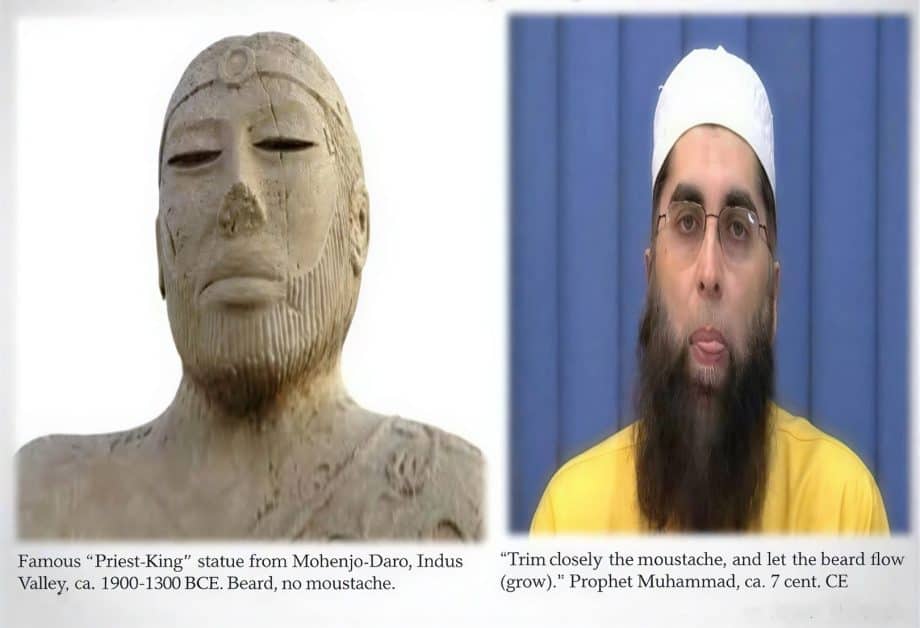
In diaspora settings, identity performance can become especially visible, whether through attire, language choices, or symbolic affiliations in political protests. Such expressions reflect transnational currents rather than simple imitations of other cultures. Comparative social research shows that symbolic belonging often intensifies under conditions of migration, perceived marginalization, or media-led transnational solidarities. Recognizing this as a sociological processnot a civilizational betrayalencourages more measured, respectful discourse.
Modern religious change spans a broad range, from renewal within traditions to disaffiliation and re-affiliation. Reports from South Asia and its diaspora note individuals who embrace secular worldviews, rediscover Dharmic paths, or deepen their Islamic, Sikh, Buddhist, or Jain practice. Experiences are not uniform. For some, reconnecting with ancestral traditions evokes relief and dignity; for others, it raises complex family dynamics and duties. A Dharmic approach urges compassion, non-violence in speech, and patient dialogue across such intimate transitions.
Cultural memory in the subcontinent has long circulated across borders, languages, and communities. Popular epics such as the Ramayana and the Mahabharata have found audiences in Pakistan and Bangladesh, where viewers often respond to their ethical and aesthetic power rather than to any single religious prescription. This enduring appeal illustrates a shared civilizational repertoire that can serve as a bridge between communitiesevidence that South Asian heritage frequently exceeds confessional labels.
The most consequential historical debates revolve around the nature and scale of violence, enslavement, and conversion under medieval polities. Primary sourcesPersianate chronicles, Sanskrit and vernacular inscriptions, travelogues, and later court historiesdocument episodes of temple desecration, mass enslavement in certain campaigns, jizya taxation regimes, and regionally variable policies toward non-Muslim subjects. At the same time, many centuries also witnessed thriving cross-cultural intellectual life, administrative cooperation, and everyday coexistence. Reducing this complex history to a single narrative of either unbroken tolerance or total subjugation conceals more than it reveals.
Quantifying casualties across eight or more centuries is inherently uncertain. Popular figures citing tens of millions of deaths are deeply contested due to the lack of continuous demographic data and the methodological challenges of extrapolating from episodic sources. That said, there is ample documentation of severe destruction and human suffering in specific invasions and punitive expeditions, including those associated with Mahmud of Ghazni, Muhammad of Ghor, certain Khalji and Tughluq rulers, and the cataclysmic incursion of Timur. Responsible historical analysis balances acknowledgement of atrocities with methodological transparency about what can and cannot be measured.
Enslavement and forced population movement formed a grim aspect of several medieval campaigns. Contemporary accounts speak of captives transported to Central Asia and the Middle East, including cities such as Ghazni, Herat, and Baghdad. The social consequences were long-lasting: demographic change, fractured lineages, and the trauma of dispossession. Understanding this history is essential not to inflame present-day antagonism, but to honor those who suffered and to ground reconciliation efforts in truth rather than polemic.
Scholarly consensus increasingly locates the origins of the Romani people in northwestern India, with linguistic and genetic evidence pointing to migrations beginning around the first millennium CE. While conflict and enslavement are among proposed drivers, historians caution against monocausal explanations. Multiple waves over time, involving artisans, performers, and displaced groups, likely contributed to a complex diaspora story. Framing this as a civilizational loss invites a broader inquiry into how to safeguard vulnerable communities today.
That audacious armada of the religion of Hijaz –
Whose insignia reached every corner of the world
Which learnt no obstruction from any fear
Which felt no hesitation in Persian Gulf or faltered in the Red Sea
Which valiantly crossed all the seven oceans
Oh, drowned was that armada (of Islam), when it reached the mouth of Ganga!
– Mawlana Khwaja Altaf Husain
These lines, often attributed in public discourse to Mawlana Khwaja Altaf Husain, reflect a historical perception that the Indian subcontinent posed exceptional military and cultural resistance to external armadas. Across centuries, polities such as the Rajputs, the Ahoms, and the Vijayanagara Empire, along with later Sikh confederacies and the Marathas, demonstrated repeated capacity to defend sovereignty, rebuild institutions, and sustain religious life. This resilience helps explain the survival and dynamism of Dharmic traditions into the modern era.
Examples of enduring martial ethos include the distinct kshatra ideals articulated in classical texts and embodied in regional warrior lineages. In modern times, Gurkha regimentsdrawing recruits largely from Hindu and Buddhist communities of the Himalayan regionbecame internationally recognized for discipline and valor. Situating these traditions within a broader civilizational history highlights a key lesson: courage and ethical duty were cultivated alongside philosophical sophistication, temple arts, monastic learning, and village self-organization.
Two persistent myths deserve correction. First is the trope that “Hindus were slaves for a thousand years.” This caricature overlooks the mosaic of autonomous kingdoms, negotiated coexistence, regional renaissances, and cycles of resistance that characterized the period. Second is the claim that British colonialism “saved” the subcontinent. The record shows that colonial rule extracted vast resources, disrupted indigenous institutions, and recast histories to serve imperial narratives. A balanced account recognizes both medieval complexity and modern colonial exploitation, keeping South Asian agency at the center.
Patterns of conversion in regions that became Afghanistan, Pakistan, and Bangladesh were multi-causal. Factors included political economy under sultanate and later Mughal administrations; social mobility; removal of punitive taxes; Sufi charisma and localized piety; intermarriage; and, in specific episodes, coercion and violence. The result is today’s intertwined ancestry across communities, where Hindus, Muslims, Jains, Buddhists, and Sikhs often share deep kinship histories. A Dharmic ethic counsels rejecting humiliation or collective blame in favor of truth-telling, restitution where appropriate, and a renewed covenant of mutual respect.
For public discourse today, several principles strengthen unity while honoring historical pain. First, methodological claritydistinguishing well-attested episodes from contested estimatesbuilds trust. Second, empathy for living communities discourages the recycling of demeaning labels and opens channels for dialogue. Third, shared cultural heritageepics, devotional music, classical languages, crafts, and sacred geographiescan be harnessed to rebuild fraternity across borders and beliefs. Finally, education that compares ethical philosophies across Hinduism, Buddhism, Jainism, and Sikhism fosters common ground without erasing difference.
Moving from grievance to gravitas requires courage of a different kind: the willingness to face difficult sources without weaponizing them, to honor victims without vilifying descendants, and to claim a civilizational inheritance grounded in non-violence, inquiry, and dignity. In this spirit, studying medieval invasions, forced conversion, and resistance is not a pretext for contemporary antagonism but a call to safeguard pluralism. Dharmic unity strengthens when memory is truthful, speech is compassionate, and the future is built together.
Inspired by this post on Hindu Human Rights Blog.