As I delve into the history of India, the concept of Parāvartana or Ghar-Wapsi captures my attention, especially during the times of the Vijayanagara and Maratha Empires. This journey of rediscovery was fraught with challenges as Muslim rule spread across Hindustan, making these initiatives sporadic yet noteworthy.
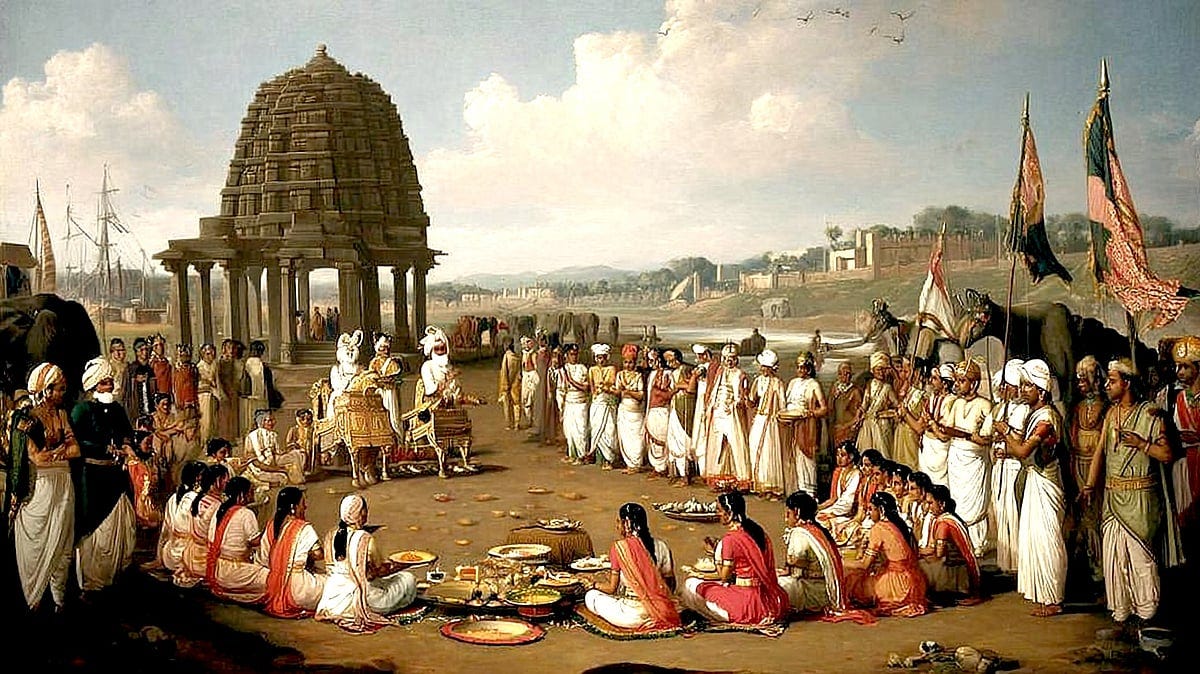
I find myself transported to the grand city of Vijayanagara, where in 1398 CE, a significant event unfolded following the Bahmani-Vijayanagara war. The Bahmani ruler, Tajuddin Firuz, had forcibly converted thousands of Hindus, holding them hostage to secure a treaty from Harihara II. It was a dark time, but the resilience of the Hindu society shone through as a mass Shuddhi ceremony was conducted, welcoming back these souls into their fold. This episode, though rare, is a testament to the enduring spirit of the people.
Fast forward a century, and we find ourselves amidst the Maratha Empire, where Chhatrapati Shivaji Maharaja and his council played pivotal roles in religious matters. The Panditarao, a key figure in this council, would convene learned Brahmanas to restore individuals forcibly converted by the Mughals back to their rightful place in society. These efforts were not just acts of faith but also of cultural preservation, highlighting the importance of unity and identity.
The narrative of Ghar-Wapsi finds another champion in Swami Dayananda Saraswati, whose Arya Samaj movement stood as a bulwark against threats to Sanatana society. His disciple, Swami Shraddhananda, led mass Shuddhi campaigns that challenged the status quo, although at great personal cost. His assassination was a grim reminder of the stakes involved in this cultural reclamation.
Despite the challenges faced, the spirit of Parāvartana continues in various forms today. The legacy of these movements lives on, inspiring new generations to uphold their heritage against formidable odds.