The ascetic lineages of Shaivism have long inspired both scholarly fascination and popular curiosity. Within this tapestry, the Kalamukhas and the Kapalikas stand out as two of the most debated Hindu sects in India. Each cultivated rigorous renunciation and unwavering devotion to Lord Shiva while developing distinct forms of practice, iconography, institutional life, and philosophical orientation. A careful, comparative look at these traditions—grounded in literary testimonies and inscriptions from Ancient India and Medieval India—clarifies what they shared, where they diverged, and how their legacies persisted in the broader diversity of Hindu philosophy and the religious diversity in Hinduism.
Placing these sects within the architecture of Shaivism is essential. Classical Shaiva traditions are often mapped along two broad pathways: the Atimārga (ascetic “path beyond,” associated with Pāśupata and Lākula lineages) and the Mantramārga (tantric and āgamic Shaivism, including Bhairava Tantras and Siddhānta). Scholarly consensus suggests that Kapalikas sit close to the Bhairava-oriented strata, while Kalamukhas often intersect with Lākula-Pāśupata currents and early Siddhānta. In practice, boundaries were porous; initiatory lineages, ritual vocabularies, and temple affiliations frequently overlapped across regions and centuries.
Etymology underscores self-understanding. Kapālika derives from kapāla, “skull,” highlighting the sect’s emblematic skull-bowl and its emulation of Shiva as Kapālin. Kālamukha combines kāla, “black,” and mukha, “face,” reflecting the sect’s characteristic dark forehead mark that visually signaled affiliation. The names themselves encode ritual identity and public presence, turning the body into a visible archive of vows, observances, and lineage memory.
The evidence base is twofold. Textual sources include Sanskrit literature—such as Mahendravarman I’s Mattavilāsa Prahasana (7th century), Bhavabhūti’s Mālatīmādhava (8th century), and Rājaśekhara’s Karpūramañjarī (10th century)—as well as historical chronicles like Kalhaṇa’s Rājataraṅgiṇī. Epigraphic sources, crucial for the Kalamukhas, come largely from 10th–13th century Karnataka and Andhra, documenting mathas (monastic centers), endowments, and ritual responsibilities. Foundational modern studies—particularly David N. Lorenzen’s work on Kapalikas and Kalamukhas and R. N. Nandi’s analyses of Karnataka inscriptions—anchor much of the present understanding. Because many dramatic portrayals are satirical or polemical, inscriptions offer indispensable correctives.
Geography and chronology reveal differing social footprints. Kapalikas appear in literary and historical notices from roughly the 6th to the 12th centuries across regions such as Ujjain, Kāñcīpuram, Kāśī (Varanasi), and, at times, Kashmir. Kalamukhas are most securely attested between the 10th and 13th centuries in present-day Karnataka (including sites like Balligavi and its environs) and parts of coastal and interior Andhra. These distributions reflect alternative modes of organization: the more mendicant and liminal ethos of Kapalikas versus the temple-centered, epigraphically visible institutions of the Kalamukhas in medieval South India.
Kalamukha institutions were structurally robust. Inscriptions record Kalamukha ācāryas heading mathas attached to Śiva temples, enjoying land grants, managing endowments, and supervising ritual cycles. Their leaders appear as learned ritual specialists who harmonized āgamic temple worship, mantra practice, and ascetic discipline. In such contexts, the sect’s “black mark” functioned as a recognized insignia rather than an emblem of social deviance, integrating ascetics into civic and agrarian rhythms through festivals, education, and charitable distribution of temple revenues.
Kapalikas, by contrast, are frequently depicted as uncompromising renouncers inhabiting the thresholds of society—charnel grounds, forest edges, and transient urban margins—though occasional references hint at lodgings and small establishments. The Mattavilāsa Prahasana’s portrait of Kapalikas in Kāñcīpuram, however stylized, captures a public familiarity with their signs: the skull-bowl (kapāla), the skull-topped staff (khaṭvāṅga), ash-smeared bodies, and matted hair evocative of Bhairava’s fierce iconography. Such visibility, at once magnetic and unsettling, made them subjects of theatrical satire and religious debate.
Ritual repertoires likewise diverged in emphasis. Kapalikas oriented themselves toward Bhairava and the Mātṛkās, valorizing cremation-ground sādhana that sought to transmute fear and impurity into liberation. Literary and doxographic sources describe vows that imitated Shiva as Kapālin, including the bearing of a kapāla as an alms bowl and the cultivation of transgressive purity beyond conventional social markers. Kalamukhas, while ascetic, appear more fully engaged with linga worship, temple-based consecrations, mantra and vrata observances, and a disciplined routine that blended Pāśupata inheritance with regional āgamic practice.
Soteriological aims illuminate shared ideals and distinctive routes. Both aspired to union with Rudra—variously framed as rudra-sāyujya or the attainment of Shiva’s own status—yet they advocated different technologies of transcendence. Kapalikas pressed radical asceticism to its limits, confronting mortality and aversion to dissolve the very structures of fear and attachment. Kalamukhas, while no less committed to renunciation, appear to have preferred initiatory discipline integrated with public worship, pedagogical roles, and the institutional rhythms of temples and mathas that stabilized practice across generations.
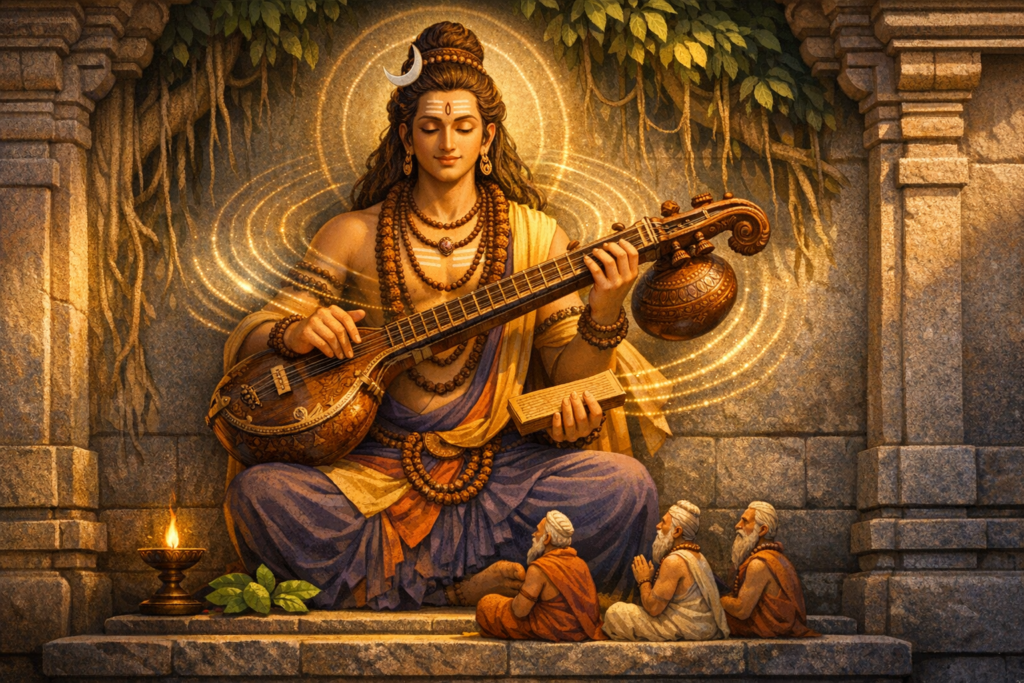
Iconographic markers reinforced these orientations. The Kapalika’s kapāla and khaṭvāṅga, garlands of bone, and cremation-ash aesthetics performed a theology of liminality in full view. Kalamukhas showcased a distinct black forehead mark alongside the tripuṇḍra and rudrākṣa, signaling Shaiva identity within ritualized civic life. The body in both sects served as a doctrinal canvas: bearing vows, rehearsing metaphysics, and communicating teaching without speech.
Literary representations of the Kapalikas often stage taboos—wine, meat, and, in a few texts, the specter of human sacrifice—as dramatic foils. Works like Bhavabhūti’s Mālatīmādhava feature Kapalika characters in sensational plots that play to audience expectations of the eerie and the transgressive. Historiographically, such scenes must be read with care: as satire, polemic, or moral theater rather than straightforward reportage. Epigraphic silence about comparable extremes among Kalamukhas (and, indeed, Kapalikas) counsels critical caution when moving from stage to street.
Gender dynamics surface in the figure of the Kapālikā, the female ascetic sometimes portrayed as a ritual partner and co-adept. The motif reflects broader tantric Shaiva and Shākta currents in which yoginīs embody power (śakti) and esoteric knowledge. While textual dramatizations can be lurid, the underlying theological register emphasizes the indispensability of śakti and the necessity of reconciling fierce and auspicious forms within the seeker’s path.
Cross-tradition references underscore a shared Dharmic horizon. Jaina and Buddhist sources occasionally mention these Shaiva ascetics, while Vajrayāna Buddhism’s cremation-ground contemplations and Jaina austerities provide instructive parallels in confronting fear, impurity, and impermanence. Read together, these materials illustrate the civilizational ethos of plural search: multiple disciplines, one landscape of soteriological aspiration. Recognizing this kinship promotes a deeper unity among Hindu, Buddhist, Jaina, and Sikh traditions without erasing their distinctive contributions.
Historical transition in the Deccan adds another layer. By the 12th–13th centuries, the rise of the Vīraśaiva/Liṅgāyat movement transformed Shaiva religious life in Karnataka. Many Kalamukha mathas appear to have been absorbed, reformed, or supplanted within new institutional configurations linked to Jangama leadership and intensified bhakti. Rather than framing this solely as conflict, the long view suggests adaptation, continuity of temple-centered institutions, and a rechanneling of ascetic energies into devotional and social service forms consistent with evolving community needs.
Later echoes of Kapalika imagery persist in the Aghori and, in different registers, the Nāth yogis, though direct lineage continuity remains debated. What endures is the charnel-ground imaginary of fearlessness, the iconic presence of Bhairava in Hindu sacred geography, and the reminder that ascetic courage sometimes takes the form of radical proximity to what society shuns. These echoes illustrate how motifs migrate across time, acquiring new ethical and theological inflections while retaining a recognizable core.
Royal charters and civic patronage especially shaped Kalamukha visibility. Land grants funded perpetual lamps, daily worship, educational programs, and feeding rituals, embedding ascetics within the agrarian calendar and urban ritual economies. Kapalikas, though less epigraphically present, nonetheless haunted the cultural imagination, signaling that even liminal ascetics can influence mainstream religious life by challenging its boundaries and refreshing its symbols.
A concise comparative profile may be drawn. Evidence for Kalamukhas is strongly epigraphic and institutional; for Kapalikas, more literary and performative. Kalamukhas flourished in temple complexes with recognized civic functions; Kapalikas privileged itinerancy and liminality. Kalamukhas leaned toward linga-centered āgamic practice and pedagogical roles; Kapalikas embraced Bhairava devotion and cremation-ground sādhana that dramatized transcendence. Yet both sought Shiva’s state, practiced rigorous vows, and contributed to the plurality of Shaivism that undergirds the religious diversity in Hinduism.
Contemporary relevance is not hard to feel. The Kalamukha model invites reflection on how institutions can protect ascetic intensity while serving communities. The Kapalika example asks what it means to face death, fear, and taboo with spiritual steadiness. Together they encourage modern seekers to balance discipline with fearlessness, temple routine with inner transformation, public service with contemplative depth—an equilibrium long celebrated across Dharmic traditions.
Methodologically, the state of the field is dynamic. Epigraphic discoveries in Karnataka and Andhra continue to refine Kalamukha history, while re-readings of Sanskrit drama and chronicles bring fresh nuance to Kapalika portrayals. Influential scholars—among them David N. Lorenzen, R. N. Nandi, and Alexis Sanderson—have mapped these ascetic terrains with rigor, showing how philology, history, and ritual studies must be held together for balanced conclusions.
In sum, Kalamukhas and Kapalikas represent complementary faces of Shaiva asceticism in Medieval India: one more institutional and integrative, the other more liminal and transgressive in rhetoric and symbol. Both, however, are comprehensible as committed paths within the broader ecosystem of Hindu sects in India, advancing shared Shaiva goals through differing disciplines. Reading them within a civilizational framework that honors Hindu philosophy’s breadth—and its kinship with Buddhist, Jaina, and Sikh quests—fosters the unity that plural traditions deserve.
Inspired by this post on Hindu Blog.