India’s past is best understood as an accumulative, living continuum rather than a series of discrete, sealed epochs. While many civilizations are interpreted through archaeological remains akin to a petrified treefixed in time and suited to slicing, counting, and catalogingIndia functions more like a vast banyan, ancient yet alive, with roots and branches extending across centuries and regions. This continuity calls for a methodological shift in Indian historiography, one that recognizes living memory, civilizational ethics, and oral traditions alongside archaeology and philology.
In archaeological terms, petrified history preserves snapshots: it captures structure, isolates periods, and supplies measurable data about what changed and when. Such evidence is invaluable for studying civilizations whose cultural lines were severed. India, however, retains civilizational memory across millennia through stories, rituals, philosophical treatises, and shared practices that span Hinduism, Buddhism, Jainism, and Sikhism. As a result, interpreting Indian history solely through fossilized records risks missing what the civilization remembers and continues to enact.
Living history invites a different question set. Instead of only asking what can be extracted from remains, Indian historiography benefits from asking communities what they remember. Absence of fossilized evidence does not imply absence of antiquity; it often indicates that different tools are needed. In a clinical metaphor, an autopsy reveals what a person ate before death; a living person can simply be asked. With a living civilization, those questions extend to landscapes, toponyms, songs, and ritual cycles that have carried knowledge forward.
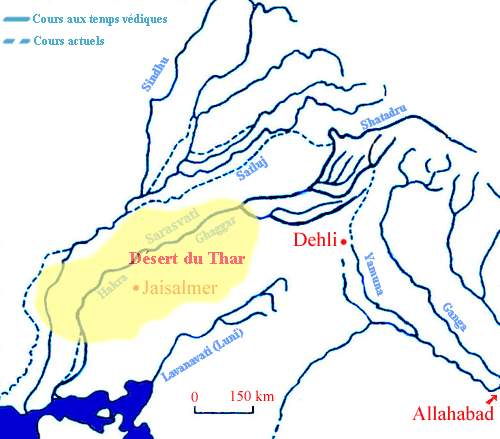
Examples across regions illuminate this approach. Rajasthan’s collective memory connects the desert’s formation to the disappearance of a once-mighty rivera recollection long preserved in local lore. In Kampil, villagers remembered a buried fort beneath a mound even before excavation confirmed it. Readers of the Rigveda’s nadistuti sukta could identify the Saraswati’s placement between the Yamuna and the Sutlej, centuries before paleo-channels were traced through satellite imagery. Such convergences between oral testimony, textual memory, and modern science exemplify a distinct evidentiary synthesis for Ancient India.
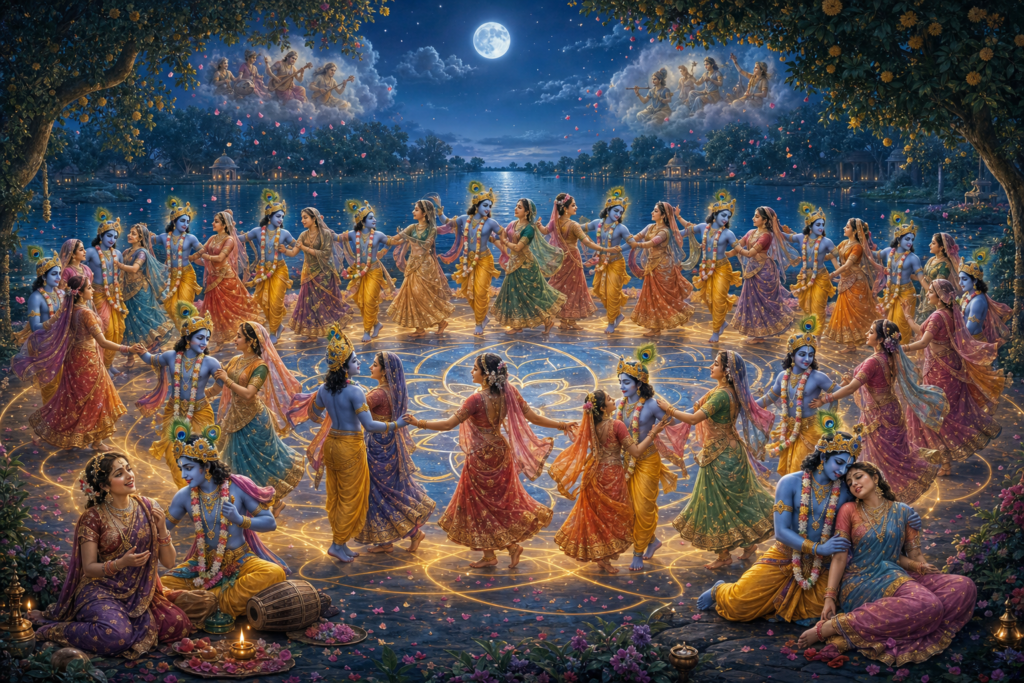
Society itself served as the primary custodian of history, not merely courts or royal chronicles. Memory moved through folk songs, narrative performances, philosophical debates, and epic enactmentsvehicles that transcended political cycles. This decentralization did not produce fragmentation; it produced coherence through widely shared themes and values. The result is an Indian history that is percipientshaped by the society’s ability to perceive, discriminate, and select what is worth preserving for future generations.
A key mechanism of this civilizational coherence was the intentional cross-pollination of ideas across regions and languages. This occurred through ritual specialists, monastic and scholastic lineages, and regular movement to तीर्थस्थल, where hospitality enabled extended stays for recitation, debate, and teaching. Guests would conduct ceremonies, recite Vedic passages, transmit stories, and engage in philosophical analysis with hosts. Over time, this “transfusion” integrated wisdom across Hindu, Buddhist, Jain, and Sikh milieusthrough katha, kirtan, pravachana, Jataka and Avadana retellings, Jain prabandhas, and the reflective cycles of pratikramancreating an Indian ethos that prized both diversity and unity.
The society’s editorial choices rested on a civilizational grammar. Just as प्रकृति (prakriti) denotes the impermanent and evolving, and संस्कृति (Sanskriti) aligns with सनातन (Sanatanaeverlasting), memorable events were elevated when they taught lessons perceived as enduring. Stories were preserved not merely for spectacle, but because they encoded ethical insights central to civilizational continuityinsights applicable across dharmic traditions.
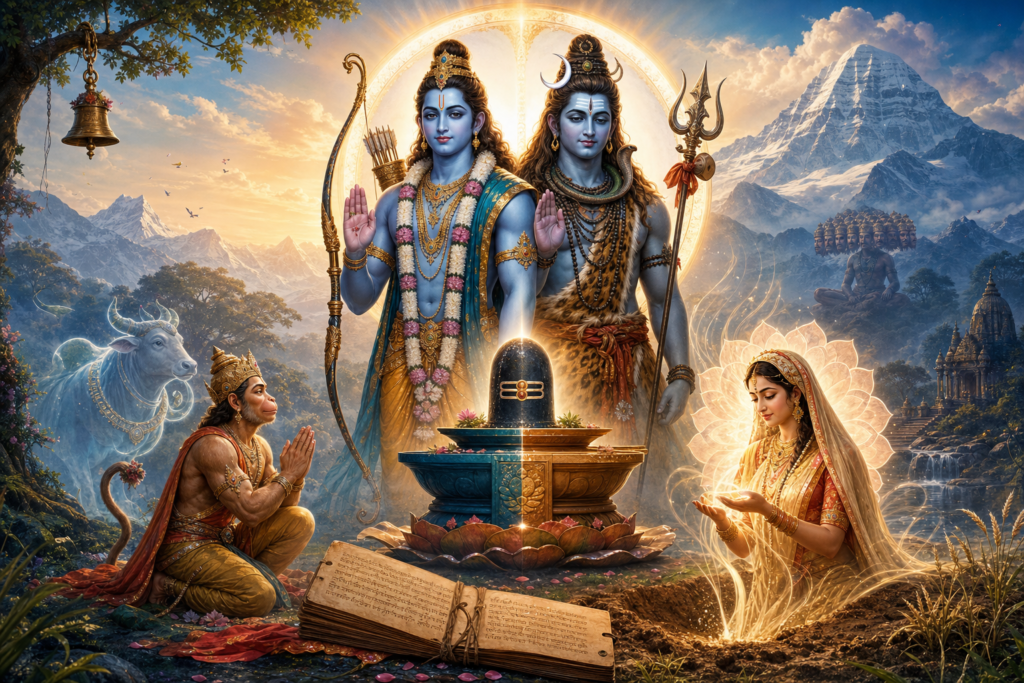
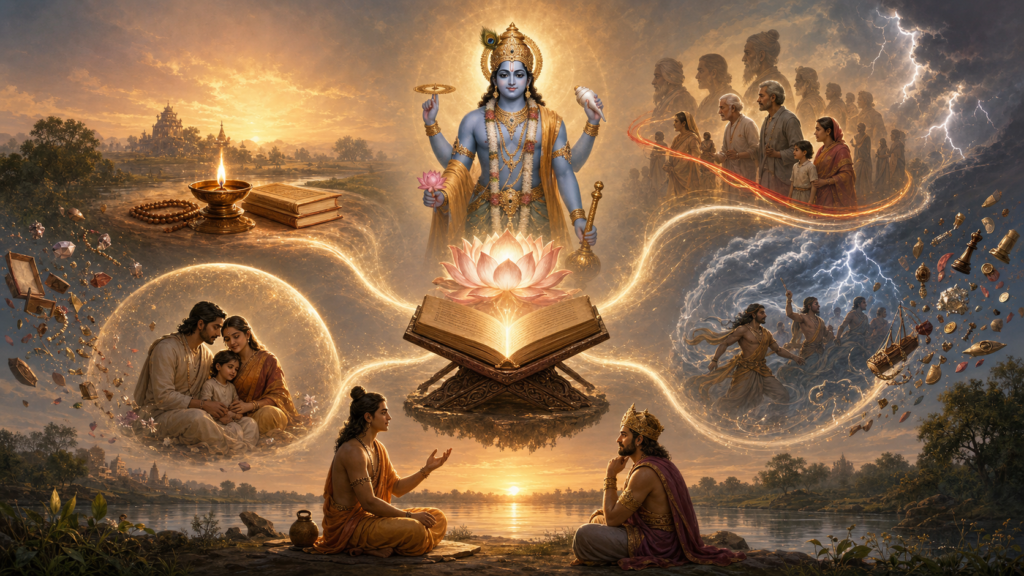
Material prosperity alone was not the decisive civilizational marker. Indians prioritized सभ्यता (civility) over material glitter. The Ramayana underscores this value: Lanka’s visible opulenceits bejeweled grandeur and multi-storied palacesdid not make it a civilizational ideal. Ayodhya’s worth was measured in the quality of social order and ethical governance. Such narratives teach that centralized power, when detached from dharma, corrodes civility; history’s purpose, therefore, is to transmit frameworks that prevent such decline.
“Percipient history” captures this civilizational method: history as refined memory curated by society for posterity. It contrasts with “petrified history,” which privileges administrative records and archaeological snapshots that often reflect state or institutional viewpoints. Colonial education systems emphasized centralized, record-centric studyuseful in many contexts, yet incomplete for a living civilization like India. A more comprehensive Indian historiography integrates archaeology and text criticism with oral traditions, ritual practices, sacred geography, and living languages of memory.
In practice, this means correlating multiple evidence streams: inscriptions and chronicles with ballads and kathas; stratigraphy with toponyms; philology with pilgrimage circuits; and archival records with performative traditions across temples, viharas, mathas, pathshalas, and gurdwaras. Such triangulation does not dilute rigor; it deepens it, making Indian history more accurate, inclusive, and resilient to distortion.
For readers familiar with India’s sacred geography, these methods feel intuitive: rivers remembered in verse, sites encoded in festival calendars, and ethics preserved through shared stories. For scholars, they provide a replicable framework for Indian Historiographyone that honors Ancient India’s continuity and the unity-in-diversity of dharmic traditions. For communities, they affirm that lived practice, when critically examined and cross-verified, is a legitimate archive.
As India reassesses its past, distinguishing between non-Indic petrified history and Indic percipient history is essential. The goal is not to valorize one form of evidence at the expense of another, but to align method with the nature of the subject. India’s living civilization calls for an integrative approach that treats civilizational memory as primary data, seeks empowering lessons without indulgence in self-flagellation, and strengthens the shared foundations of Hinduism, Buddhism, Jainism, and Sikhism. Such a framework does more than recount events; it equips society with principles to navigate the present and shape a dignified future.
Inspired by this post on Varnam.