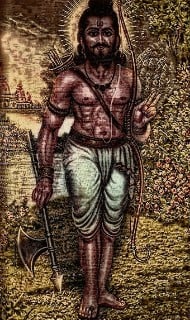
Sectarian and political disputes are not unique to the present era; they recur throughout Hindu history and Ancient India. Sri Parashuramaan empowered incarnation of the Supreme Lord appearing several ages before Lord Ramachandrastands as a pivotal figure in Hindu scriptures whose actions reshaped the relationship between spiritual authority and temporal power. The narrative records a time when kings, proud of strength and consumed by the quest for absolute power, rebelled against spiritually advanced sages who traditionally offered ethical counsel and guided governance.
When rulers offended the devotees of Lord Krishna and deviated from the path of righteousness, neglecting the welfare of citizens, corrective action became necessary. Sri Parashurama fulfilled that mandate by restoring Dharma, demonstrating that power must be accountable to moral law. This episode, often framed as a Righteous War in Hindu philosophy, emphasizes restraint, justice, and the protection of social welfare rather than conquest or sectarian triumphalism.
The lesson resonates across Dharmic traditions. In Hinduism, Buddhism, Jainism, and Sikhism, the ethical use of power is inseparable from compassion, responsibility, and service to society. Parallels include the Buddhist ideal of righteous rule, Jain emphasis on accountability and non-injury, and Sikh commitments to justice and seva. Read in this inclusive light, Parashurama’s intervention is best understood as a moral realignment that upholds Dharma for all, not a partisan victory.
Many readers will recognize modern echoes in this account: leadership untethered from ethical counsel often drifts toward arrogance, fragmentation, and the erosion of public trust. The story invites reflection on how institutions today can re-center wise counsel, humility, and citizen care. It encourages a practical question: how can governance integrate spiritual wisdomwithout coercionto safeguard fairness, compassion, and the common good?
Hindu history consistently celebrates the rajarshi ideal, where rulers embody both statecraft and virtue, guided by sages and ethical principles. Sri Parashurama’s revolution illustrates that enduring stability arises not merely from force but from alignment with Dharmatruthfulness, responsibility, and protection of the vulnerable. In this light, the narrative functions as a timeless framework for ethical leadership and accountable governance.
Viewed through a unifying lens, the account does not fuel sectarian rivalry; it clarifies a shared Dharmic message: power is legitimate only when it serves society under moral restraint. Such an understanding strengthens interfaith respect within the Dharmic family and fosters harmony between communities committed to justice, non-violence, and collective well-being.
Ultimately, Sri Parashurama’s example offers a measured, historically rooted insight: when ethical guardianship falters, societies benefit from principled correction that restores balance. The transformation is not merely political; it is spiritualan enduring reminder that Dharma remains the cornerstone of just kingship and cohesive society.
Inspired by this post on Dandavats.