-
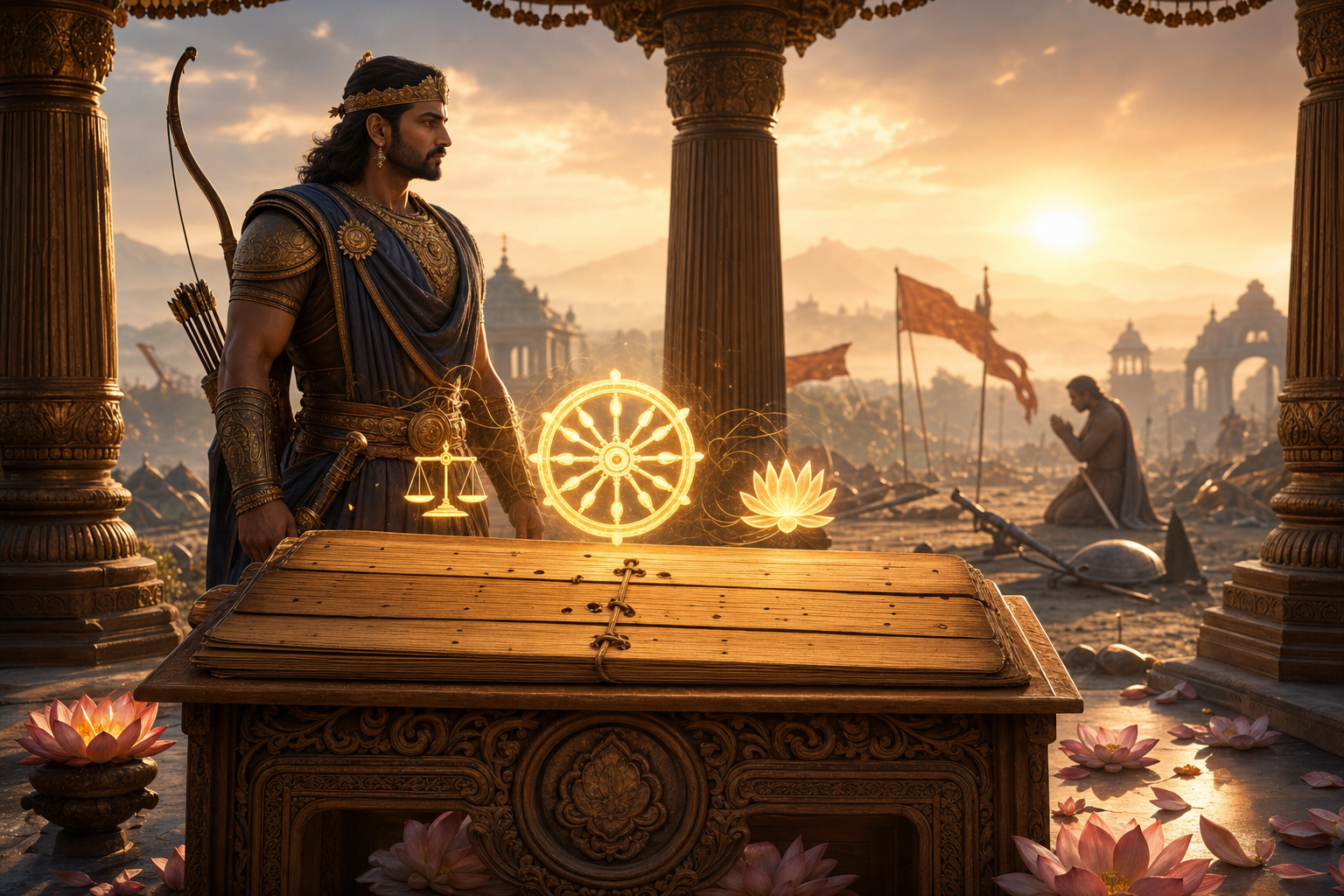
Manusmriti on Dharmayuddha: Powerful Ethical Rules for Righteous Warfare

Dharmayuddha, or righteous warfare, is one of the most demanding ethical ideas in ancient Indian thought. The Manusmriti presents war not as a space beyond morality, but as an arena where restraint, justice, and honor remain binding. Its rules prohibit cruel weapons and forbid attacks on the wounded, disarmed, surrendering, sleeping, frightened, or helpless. This…
-
Kumbhakarna and Vikarna: Tragic Brothers of Conscience, Loyalty, and Dharma in the Epics

Kumbhakarna (Ramayana) and Vikarna (Mahabharata) embody the epic dilemma between loyalty to kin and loyalty to dharma. This rigorous, text-grounded comparison explains how each man speaks the truth, anticipates disaster, and yet dies fighting for causes he judged unjust. Readers gain a practical frameworkkṣātra-dharma, bandhu-dharma, rāṣṭra-dharma, and ātma-dharmato evaluate conflicts of duty. The analysis connects…
-
Sri Rama’s Virtue and Valor: A Timeless Dharma Blueprint for Courageous, Just Leadership

Sri Rama’s portrayal in the Ramayana unites virtue (dharma) with valor (kshatra), forming the ideal of Maryada Purushottama. This synthesis grounds strength in compassion and binds power to law, offering a reliable template for just leadership and community protection. The epic narratively encodes principles akin to just war ethics: just cause, right intention, last resort,…
-
Ravana’s Fatal Breach of Rajadharma: Desire Over Duty and the Ruin of Lanka’s Statecraft

This long-form analysis examines Ravana’s breach of rajadharma in the Ramayana as a rigorous lesson in Dharmic statecraft. It situates kingship within Hindu, Buddhist, Jain, and Sikh ethical frameworks, showing how a ruler’s personal desire must remain subordinate to public duty. It explains how Ravana’s abduction of Sita, dismissal of counsel, and politicization of private…
-
Vīra Swarga Explained: The Uplifting Hindu Ideal of Dharma, Courage, and Sacred Sacrifice

Vīra Swarga, the “Heaven of Heroes,” illuminates a central Hindu philosophical ideal: selfless courage in service of dharma. It affirms valor only within strict ethical boundsprotection of innocents, restraint, and last resortechoing the Bhagavad Gita and Kshatra Dharma. Distinguished from moksha, it represents a meritorious heavenly state that honors noble sacrifice while encouraging continued spiritual…
-
Discover Parashurama’s Proven Revolution: How Dharma Transformed Kingship and Society

Sri Parashurama’s narrative illustrates how Dharma disciplines power and protects society in Ancient India. Readers gain a clear, academic understanding of why sages traditionally guided rulers and how that counsel maintained justice and public welfare. The account highlights a Righteous War framed by restraint and responsibility, not conquest. Its ethical core aligns with shared values…
-
Episodes from the Udyoga Parva as Profound Guides to the Contemporary Hindu Society

Delve into the Udyoga Parva, a pivotal section of the Mahabharata, and explore its significance as a guide to statecraft, diplomacy, ethics, and values. This blog post draws parallels between the Udyoga Parva and the Sundara Kanda in the Ramayana, highlighting how both serve as preludes to battles defending Dharma against Adharma. Contrasting Sri Rama’s…