
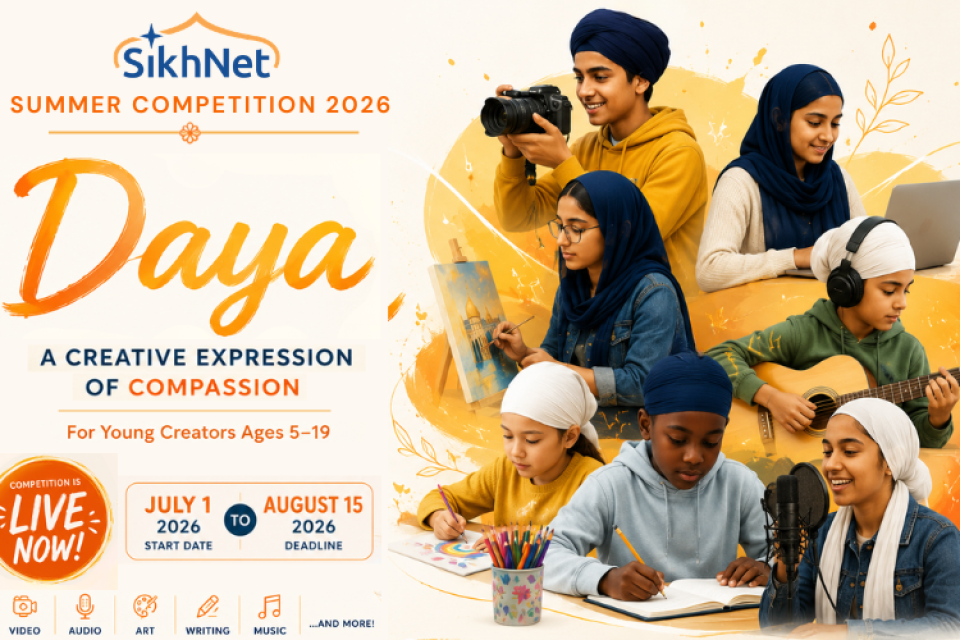
The SikhNet Creative Competition 2026 is open, and its central message is unusually direct: a child may have something important to say this summer, and the role of family, school, and community is to help that voice become clear. The announcement matters because children do not merely inherit culture by memorizing facts. They internalize values when they are invited to interpret them, question them, express them, and connect them to lived experience. In that sense, a children’s creative competition is not a minor seasonal activity; it is a structured opportunity for self-expression, cultural education, and spiritual reflection.
The public framing of the SikhNet Creative Competition 2026 places the child at the center. Rather than presenting creativity as decoration or entertainment, the announcement recognizes that young people already carry observations, emotions, doubts, and insights. Summer often provides the time and mental space for these inner materials to become visible. Without exams, crowded schedules, and constant comparison, a child may return to drawing, storytelling, music, poetry, film, photography, or spoken reflection as a natural language of discovery.
From an educational perspective, this is significant. Creative work develops more than artistic confidence. It strengthens narrative thinking, sequencing, memory, symbolic reasoning, ethical judgment, and emotional regulation. When a child prepares an entry for a competition, the process requires choosing a subject, gathering ideas, organizing thoughts, revising rough attempts, and presenting a finished work to an audience. These are the same intellectual operations required in mature scholarship, professional communication, community leadership, and spiritual self-examination.
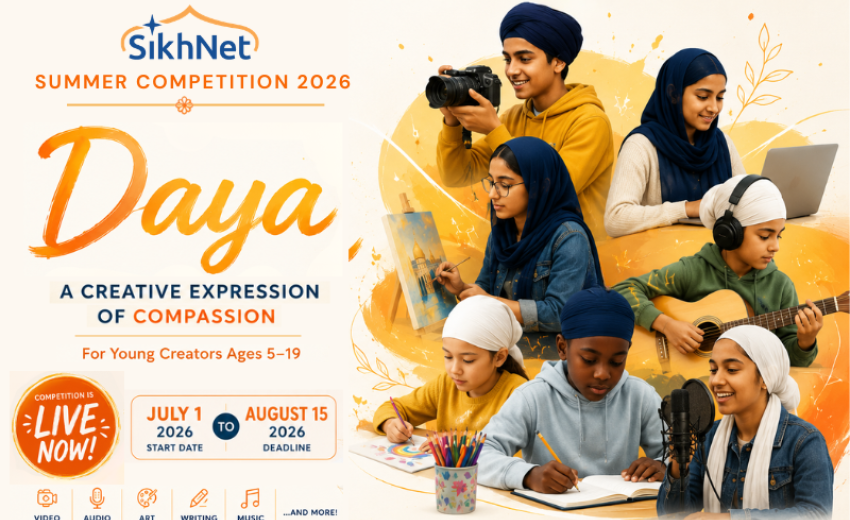
For Sikh families and Sikh youth, the SikhNet Creative Competition 2026 also carries a cultural dimension. Sikhi has never been a tradition of passive reception alone. The Guru tradition preserved wisdom through shabad, kirtan, poetry, disciplined memory, ethical action, and community life. Children who create from within this inheritance are not simply producing school-style projects. They are learning how language, sound, image, and story can become vehicles for gurmat, seva, courage, humility, justice, and remembrance.
The value of such a competition also extends beyond one community. A dharmic approach to education recognizes that truth, compassion, self-discipline, service, reverence, and liberation are explored across Hinduism, Buddhism, Jainism, and Sikhism in distinct but deeply resonant ways. A child who reflects on kindness, nonviolence, courage, gratitude, honest speech, or responsibility toward others is participating in a broader civilizational conversation. The task is not to flatten differences among dharmic traditions, but to help young minds see that inherited wisdom becomes meaningful when it is lived, expressed, and shared with dignity.
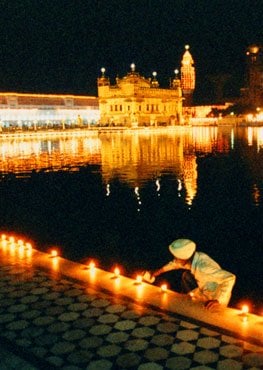
The most powerful feature of a youth creative competition is its ability to turn cultural identity from an abstract label into an active practice. A child may know the words Sikh, Sikhi, gurdwara, kirtan, seva, Guru Nanak, Guru Gobind Singh, or Guru Granth Sahib Ji. Yet creative work asks a more demanding question: what do these words mean in the child’s own moral imagination? A drawing about service, a poem about courage, a short video about family prayer, or a story about standing up for truth can translate inherited vocabulary into personal understanding.
Parents and educators should therefore treat the summer not as idle time to be filled, but as a developmental window. Children often communicate indirectly. A quiet child may say more through color than conversation. A highly verbal child may discover discipline through editing. A child who struggles with confidence may find a safe beginning in a short reflection, a simple visual composition, or a recorded narration. The point is not to manufacture a polished adult-like product. The point is to help the child move from feeling to form.
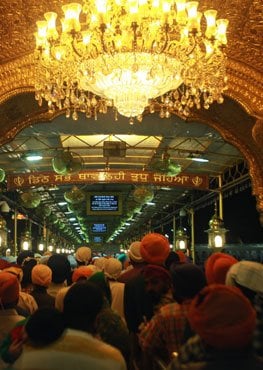
A strong entry begins with attentive listening. Adults can ask open questions without taking control: What story keeps coming back to mind? Which value feels important this year? What moment at home, school, sangat, or in daily life revealed something true? What problem in the world feels painful, and what response feels aligned with dharma? Such questions help a child identify the emotional and ethical center of the work. They also prevent the project from becoming a parent-designed submission with a child’s name attached to it.
The technical process should be kept simple but serious. First, the child should select a theme that can be expressed clearly. Second, the chosen medium should match the child’s strengths: writing for those who think in language, art for those who think visually, music or recitation for those drawn to sound, and video for those who understand sequence and performance. Third, the child should prepare a rough version. Fourth, the family should support revision by asking whether the message is clear, whether the work feels honest, and whether every element serves the central idea.

Originality is especially important in the age of digital tools. Children now encounter templates, artificial intelligence systems, filters, stock images, and copied captions everywhere. A competition rooted in self-expression should encourage ethical creativity. Assistance with spelling, formatting, scanning, recording, or uploading may be appropriate, especially for younger children. But the central idea, emotional voice, and artistic choices should remain the child’s own. This distinction protects the integrity of the work and teaches a deeper lesson about truthful effort.
Families should also approach digital participation with care. Before submitting any creative work, the official SikhNet page should be reviewed for eligibility, age groups, deadlines, file requirements, permissions, judging criteria, and publication rules. Because the brief announcement identifies the competition as open but does not provide all operational details in the supplied source material, responsible participation requires checking the current instructions directly before preparing a final submission. This is not merely administrative caution; it is part of teaching children respect for process.

The emotional side of the competition deserves equal attention. Children can become anxious when adults overemphasize winning. The healthier emphasis is disciplined expression. A child can be taught that completion itself has value: selecting an idea, staying with it, revising it, and sharing it respectfully. Recognition is meaningful, but the deeper achievement is the formation of voice. A child who learns to say something true with care has gained a skill that will outlast any certificate, ranking, or public mention.
This approach is especially relevant for diaspora communities. Many Sikh children grow up navigating multiple languages, cultural codes, school environments, and social expectations. They may feel deeply connected to their heritage at home and uncertain about how to express that heritage publicly. A creative competition gives them a legitimate forum to translate identity into a form others can understand. It can help bridge the distance between home practice and public confidence.

At the same time, the competition can support intergenerational learning. Elders carry memories, sakhis, songs, migration stories, family histories, and examples of resilience. Children carry contemporary questions about belonging, fairness, technology, friendship, climate, bullying, anxiety, and meaning. When a child interviews a grandparent, remembers a gurdwara experience, reflects on langar, or explores the meaning of seva, the project becomes more than an entry. It becomes a conversation between generations.
There is also a civic dimension. Sikh tradition places great emphasis on service, dignity, and courage in public life. Children who create around these themes begin to understand that spirituality is not confined to ritual or private feeling. It shapes how one speaks, shares, studies, treats strangers, responds to injustice, and participates in community. In a wider dharmic frame, this aligns with the recurring insight that inner formation and social responsibility are inseparable.

A practical preparation plan can help families make the most of the opportunity. During the first week, the child can explore possible themes and review the official rules. During the second week, the child can gather material, sketch ideas, draft lines, record voice notes, or discuss memories with family members. During the third week, the child can create the main work. During the fourth week, the focus can shift to revision, technical formatting, permission checks, and final submission. This steady rhythm reduces pressure and allows the work to mature.
The best adult role is that of guide, not substitute. Adults can create a quiet workspace, provide materials, explain historical or spiritual references, and help with technical submission requirements. They can ask clarifying questions and encourage revision. They should avoid replacing the child’s words with adult vocabulary or converting a sincere childlike expression into a polished ideological statement. The authenticity of a child’s voice is often more powerful than sophistication.
The SikhNet Creative Competition 2026 should therefore be understood as an educational and cultural invitation. It encourages Sikh youth and children from connected communities to use summer creatively, to think about identity with seriousness, and to express values through disciplined imagination. It also reminds families that culture is strengthened when children are trusted as participants, not treated only as inheritors.
The most meaningful outcome may be simple: a child discovers that there is something worth saying, and that the community is willing to listen. In a time when children are often surrounded by noise, speed, and imitation, such listening is not small. It is a form of education, a form of care, and a form of cultural continuity.
Inspired by this post on SikhNet – News.









Leave a Reply
You must be logged in to post a comment.