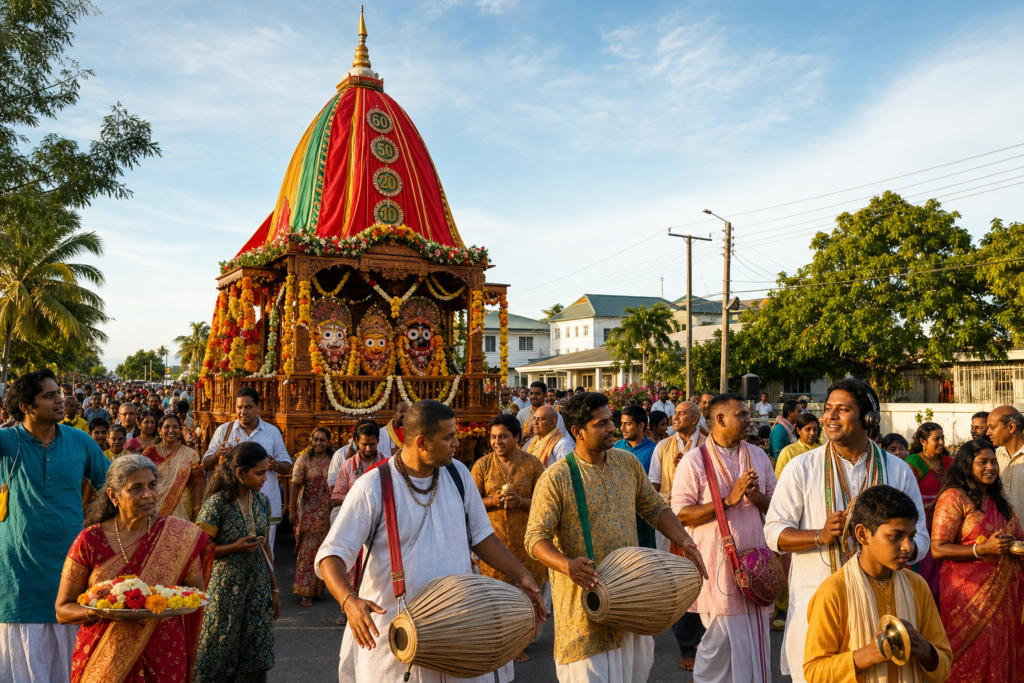
Compiled under the direct order of the Governing Body Commission of the International Society for Krsna Consciousness, this handbook and its accompanying curriculum provide an authoritative, systematized path of Krsna consciousness. Rooted wholly in the inspiration, guidance, and wisdom of His Divine Grace A.C. Bhaktivedanta Swami Prabhupada, founder acarya of ISKCON, the work serves aspiring practitioners and future disciples of authorised ISKCON acaryas. In continuity with Srila Prabhupada, Srila Bhaktisiddhanta, and Srila Rupa Gosvami, its intent is to remain strictly within the parampara while offering practical tools for contemporary spiritual life.
Prepared to be used conjointly, the handbook outlines core principles, standards, and practices, while the curriculum structures learning into sequenced modules, outcomes, and assessments. Together they ensure philosophical clarity, steady sadhana, community integration, and consistent pedagogy across centers.
Fidelity to authorised sources is central. The curriculum aligns with the founder acarya’s instructions and with the decisions of the GBC, integrating guru, sadhu, and sastra as harmonized pramana. This assures learners that teachings reflect the Brahma-Madhva-Gaudiya tradition and its established commentarial heritage.
The theological framework is anchored in achintya-bheda-abheda, the philosophy of inconceivable simultaneous oneness and difference. The curriculum unfolds through sambandha (knowledge of the soul, Bhagavan, and the energies), abhidheya (the process of bhakti-yoga), and prayojana (the ultimate goal of prema). These categories provide a precise map from foundational understanding to realized devotion.
Scriptural study centers on Bhagavad-Gita As It Is, Srimad-Bhagavatam, Sri Isopanishad, The Nectar of Devotion, and The Nectar of Instruction, with guided engagement with Caitanya-caritamrta as learners advance. Readings are supplemented by authorised summaries and study guides to cultivate both comprehension and contemplation in line with Vedic philosophy.
Pedagogically, the program integrates cognitive, affective, and behavioral domains. Scriptural literacy, devotional feeling, and disciplined practice are cultivated in parallel, moving from knowledge acquisition to lived realization. Frequent reflection, dialogue, and mentoring contextualize insights and deepen embodiment of the teachings.
Learning architecture typically progresses through four pillars. Foundations introduces the soul, karma, samsara, and dharma, along with the principles of Sanatana Dharma as lived through the Bhakti Tradition. Sadhana-bhakti develops regulated practice, including japa, kirtan, study, seva, and Vaishnava etiquette. Theology and Hermeneutics refine core concepts such as the nature of Krishna, the jiva, maya, and shakti-tattva, including how guru-sadhu-sastra resolve apparent tensions. Culture, Worship, and Community Service train in practical temple life, seva, and ethical responsibility.
Clear learning outcomes support measurable progress. By course milestones, participants demonstrate accurate summary and recitation of key verses of Bhagavad-Gita and Srimad-Bhagavatam, articulate sambandha-jnana in their own words, maintain consistent daily sadhana, and contribute meaningfully to community life through seva and collaborative study.
Sadhana forms the backbone of transformation. The program emphasizes a steady morning routine, attentive japa, congregational kirtan, reflective reading, and regulated lifestyle. Emphasis is placed on the four regulative principles, honesty and humility in relationships, and the cultivation of steady enthusiasm, patience, and confidence in the process of bhakti-yoga.
Mantra meditation is taught in a methodical, accessible way. Guidance addresses posture, breath awareness, the mental posture of prayerful receptivity, and practical methods to maintain one-pointed attention during japa. Kirtan is presented not only as musical praise but as sankirtana that consolidates learning, softens the heart, and strengthens collective identity in the sangha.
Temple worship and seva are approached as extensions of scriptural meditation. Arcana is framed through authorised procedures that emphasize cleanliness, punctuality, concentration, and reverence. Learners grasp how external ritual expresses inner remembrance and how prasada culture integrates devotion into daily nourishment and hospitality.
The Guru-Shishya Tradition is explained with care. Roles of siksa and diksa are differentiated, etiquette is specified, and the centrality of accountability and humility is stressed. The curriculum repeatedly underscores avoidance of offenses to devotees, the holy name, and the Deity, linking these standards to both scriptural mandates and community well-being.
Hermeneutics trains learners to interpret texts in harmony with parampara. Attention is given to how Srila Prabhupada’s purports synthesize Sanskrit sources and Gaudiya commentaries, how context clarifies meaning, and how to distinguish principle from adjustment in practice. Learners examine how guru-sadhu-sastra triangulation guides personal decisions without sectarian rigidity.
Assessment blends knowledge and character. Memorization and comprehension checks are paired with reflective journals, sadhana diaries, and mentor feedback. Regular check-ins invite learners to connect scriptural insights with life events, supporting both resilience and responsibility in spiritual growth.
Community formation is emphasized as essential to the Hindu way of life and to sustained devotion. Through shared kirtan, prasada, study circles, and festivals, participants experience how sangha stabilizes practice and transmits culture. Practical service assignments cultivate empathy, time management, and the joy of collaborative accomplishment.
Ethics and social responsibility are presented as integral to bhakti. Truthfulness, compassion, cleanliness, and austerity are contextualized as living expressions of dharma rather than mere prohibitions. Guidance for family life, livelihood, and civic engagement reflects a balance between timeless values and the complexity of modern society.
Interdisciplinary touchpoints highlight unity across dharmic traditions of Hinduism, Buddhism, Jainism, and Sikhism. Parallels are drawn between bhakti and practices such as dhyana and mindfulness, between ahimsa and compassionate service, and between seva and selfless action. This comparative lens affirms spiritual diversity and unity, encouraging dialogue, mutual respect, and the shared pursuit of wisdom and well-being.
Practitioners commonly report tangible benefits. Many describe how early morning kirtan and attentive japa stabilize attention and mood, how study of Bhagavad-Gita clarifies ethical choices, and how seva builds belonging and purpose. These observations are treated as qualitative indicators that devotion matures through disciplined practice and community support.
Historical and textual literacy is nurtured through selected readings from Gaudiya literature, such as Jiva Gosvami’s Tattva-sandarbha and Baladeva Vidyabhusana’s Govinda-bhasya, presented at levels appropriate to learners. Sanskrit terminology is introduced gradually so that concepts like bhava, prema, and rasa are understood accurately and reverentially.
Implementation guidelines support educators. Sample syllabi, session plans, and rubrics enable consistent delivery, while mentorship frameworks outline how senior practitioners can companion learners with empathy and clarity. Facilitators are reminded to model steadiness, honesty, and care, creating a culture where questions are welcomed and study fosters realization rather than contention.
Adaptation principles ensure global relevance. The curriculum accommodates linguistic diversity, introduces local case studies, and encourages service projects addressing community needs. In this way, the spirit of sankirtana translates into concrete contributions to social harmony, environmental care, and interfaith goodwill.
Safeguards are articulated to uphold dignity and trust. Clear boundaries, respectful dialogue, and grievance pathways are specified so that spiritual spaces remain safe and uplifting. This attention to ethics reflects the conviction that devotion flourishes where transparency, accountability, and compassion prevail.
Overall, the handbook and curriculum present a comprehensive, research-grounded, and practice-centered approach to Krsna consciousness. By weaving together scriptural study, disciplined sadhana, community participation, and a unifying outlook across dharmic traditions, the program equips seekers to cultivate devotion with intellectual clarity and heartfelt commitment.
With gratitude to Srila Prabhupada and in remembrance of Srila Bhaktisiddhanta and Srila Rupa Gosvami, the work prays to remain strictly in the line of the parampara and to carry transcendental potency for the enduring benefit of anyone who makes meaningful use of it. Compiled in service by Rohininandana das, it invites disciplined inquiry, humble practice, and loving cooperation on the path of bhakti-yoga.
Inspired by this post on Dandavats.