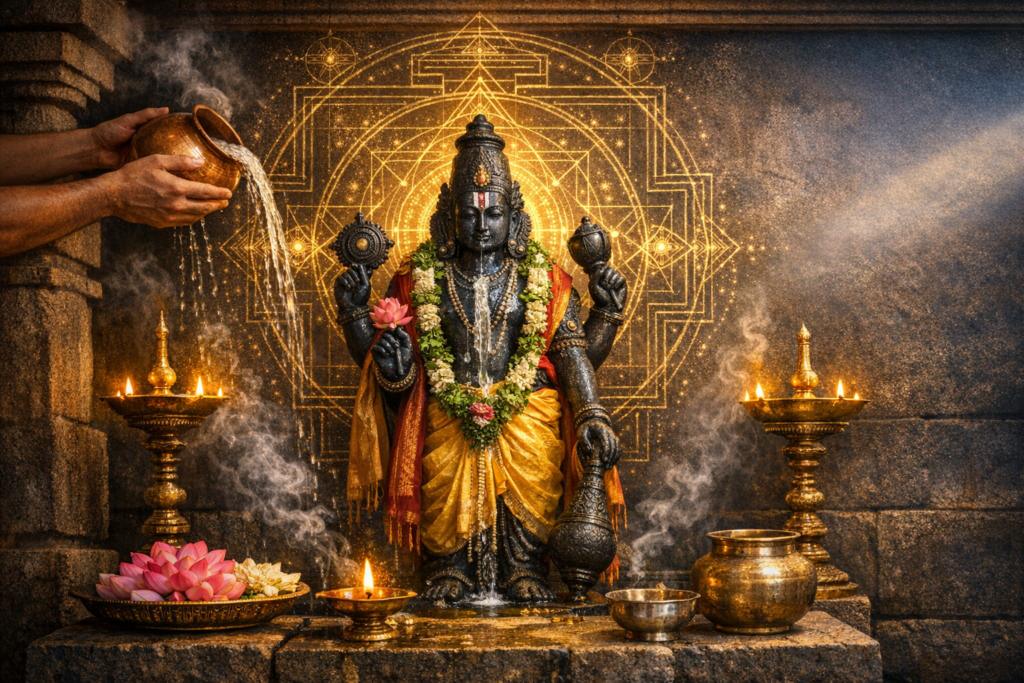
Vaastu Bhagawan, revered in Hinduism as the divine guardian of structures, is traditionally invoked to safeguard homes, temples, and public spaces. When Vaastu principles (Vastu Shastra) are applied with care and devotion, the built environment is believed to align with dharmic order, fostering safety, protection, peacefulness, happiness, and prosperity.
Classical descriptions portray Vaastu Bhagawan as embodying the qualities of the Trimurtis and the Tridevis, uniting the energies of creation, preservation, transformation, wisdom, prosperity, and power. This integrated presence situates Vaastu Bhagawan as a protective force within the spatial field, sustaining the wellbeing of inhabitants through harmony between the physical structure and cosmic rhythms.
Vastu Shastra offers an architectural grammar grounded in the Pancha Mahabhuta (earth, water, fire, air, and space), the cardinal directions, and proportion. Central to this framework is the Vaastu Purusha Mandala, a sacred grid used to balance functions, circulation, and light. By aligning entrances, rooms, and courtyards with this mandala, designers and householders seek to honor Vaastu Bhagawan and support a life of equilibrium and clarity.
Ritual observances such as Vaastu Puja, Vaastu Shanti, and Griha Pravesh consecrate sites and structures, acknowledging the sanctity of thresholds and the Brahmasthana (the vitality of the central space). Offerings of light, fragrance, and water symbolically purify and stabilize the environment, while proportionate design, unobstructed ventilation, and mindful orientation reinforce the protective dimension attributed to Vaastu Bhagawan.
In lived experience, families often report a palpable sense of calm after integrating simple Vaastu corrections—such as enhancing natural light, decluttering the center of the home, or situating contemplative spaces in the ishanya (northeast). Architects and planners likewise note that Vaastu-aligned elements—balanced courtyards, cross-ventilation, and measured symmetry—advance day-to-day wellbeing alongside aesthetic coherence and functional clarity.
These principles resonate across the wider dharmic world. The pursuit of spatial harmony and mindful orientation can be observed in Buddhist viharas, Jain temples, and the community-centered openness of Sikh gurdwaras. While forms and rituals differ, the shared dharmic ethos affirms balance, compassion, and collective welfare—values that strengthen interfaith understanding and unity among Hinduism, Buddhism, Jainism, and Sikhism.
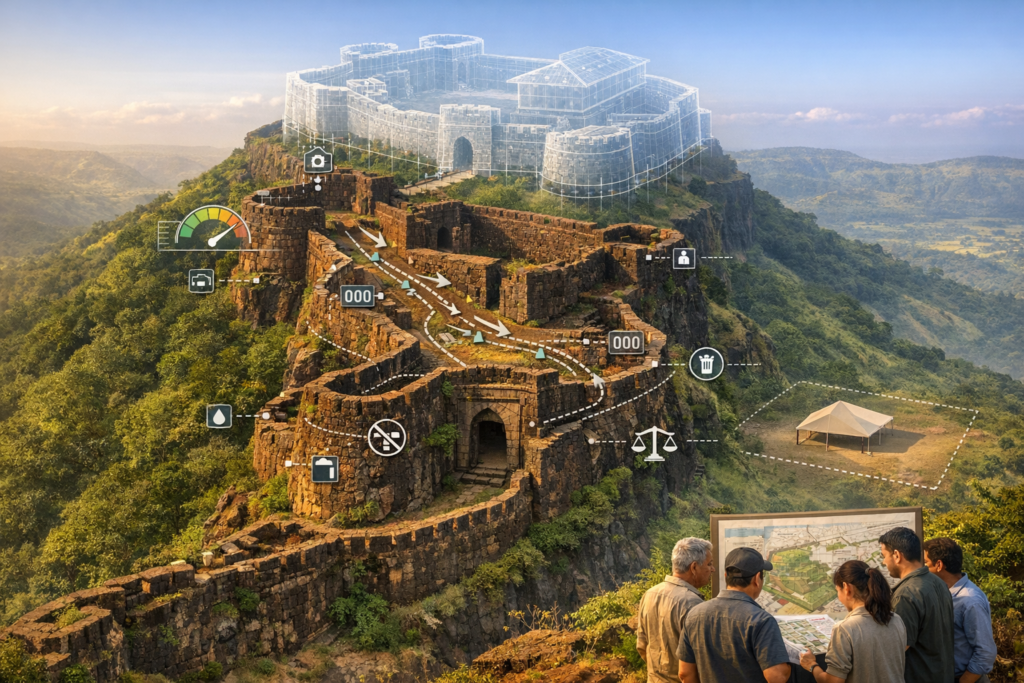
Practical steps remain accessible: maintaining clean thresholds, allowing the northeast to host study, prayer, or meditation, and preserving openness at the center of the dwelling. When paired with modern building science—daylighting, acoustics, and sustainable materials—Vaastu-oriented design enhances cultural heritage while supporting contemporary health and comfort.
In this holistic framework, Vaastu Bhagawan stands not only as a deity of protection but also as a guiding presence for Hindu architecture and Temple Architecture. Through Vedic wisdom, spatial ethics, and mindful ritual, structures become sites of harmony where individual wellbeing and community dignity can flourish in alignment with Sanatan Dharma.
Inspired by this post on Hindu Pad.