Gyaraspur in the Vidisha district of Madhya Pradesh embodies a rare confluence of sacred observance, cultural memory, and outstanding temple architecture. Locally revered as a landscape animated by the spirit of Ekadashi, the village stands as a living archive of dharmic practices that have shaped central India’s spiritual geography for more than a millennium. Its shrines and stone gateways, together with enduring fasting traditions, make Gyaraspur a compelling case study in how ritual life and built heritage reinforce one another across generations.
Oral tradition holds that the toponym “Gyaraspur” draws from gyarasNorth Indian usage for the eleventh lunar day (Ekadashi). While philologists often approach such derivations with caution, local memory consistently associates the site with Ekadashi austerities and vows. Regardless of etymological certainty, the community’s devotional imagination has long placed Ekadashi at the heart of Gyaraspur’s identity, shaping how residents and pilgrims narrate the village’s origins and purpose.
Geographically, Gyaraspur lies within a landscape thick with Indic heritageproximate to Vidisha, Sanchi, and Besnagar (home to the Heliodorus pillar), and historically linked to the temple-building energies of the Gurjara–Pratihara and Paramara polities between the ninth and eleventh centuries. Archaeological Survey of India (ASI) protection underscores the site’s importance, yet Gyaraspur remains woven into everyday devotion rather than confined to the realm of monuments alone. This dual statusritual center and archaeological ensembleexplains the village’s enduring resonance in Madhya Pradesh’s cultural heritage.
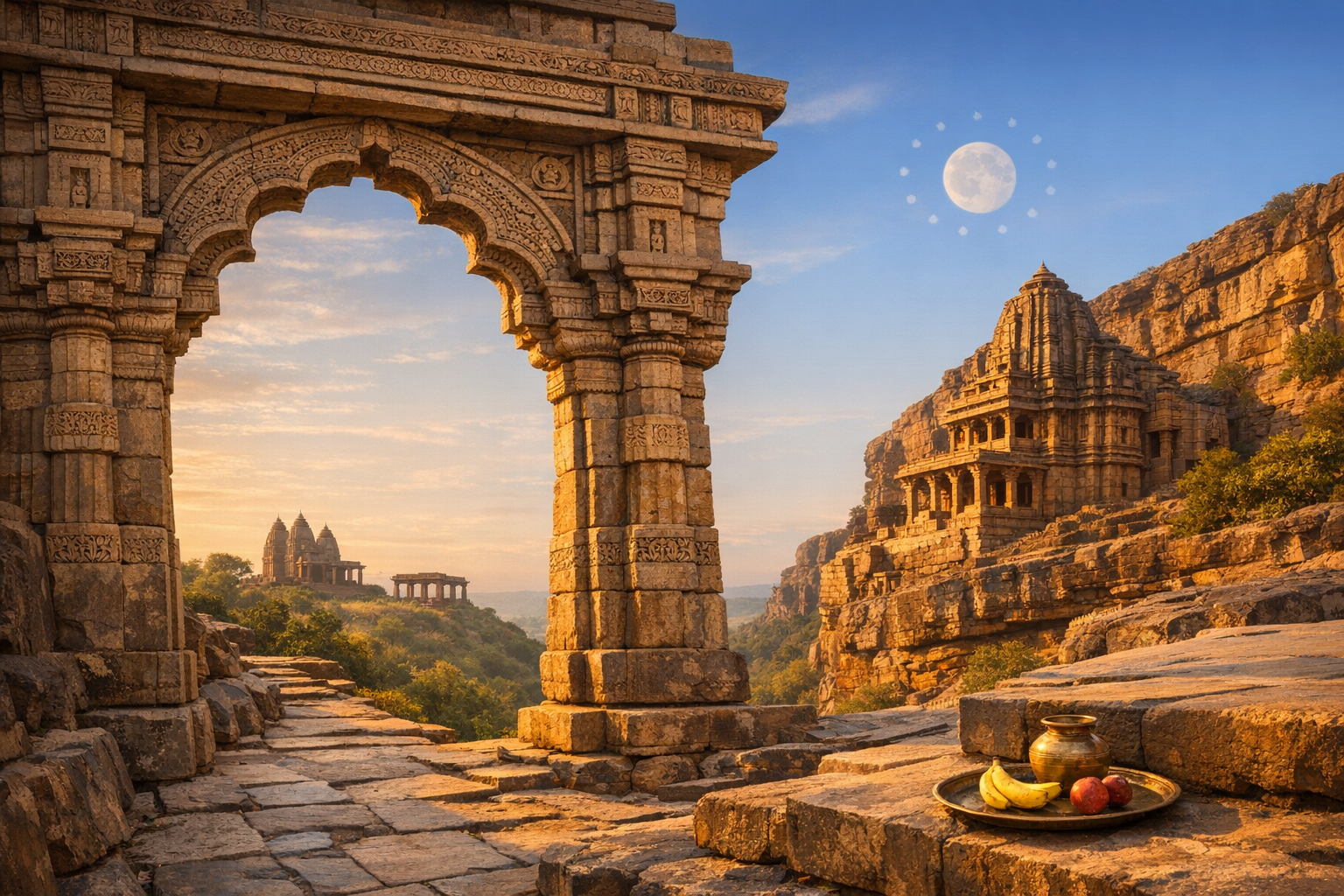
The architectural corpus at Gyaraspur illustrates both virtuosity and pluralism. The hill-hugging Maladevi Temple, the trikuta (triple-shrine) Bajramath, and freestanding gateways such as the Hindola Torana (with the nearby Athkhamba) together demonstrate the technical range of central Indian nagara traditions. These works do more than display aesthetic refinement; they reveal how Hindu and Jain communities shared, adapted, and carefully curated sacred spaces through time, a theme that harmonizes with the village’s Ekadashi-centered ethos of inner restraint and ethical clarity.
Among Gyaraspur’s highlights, the Maladevi Temple (c. ninth–tenth century) anchors the escarpment in a dramatic dialogue between rock and shrine. Executed in a nagara idiom with a carefully articulated plangarbhagriha (sanctum), antarala (vestibule), and mandapa (hall)the temple blends cliff-carved substructures with masonry elevations. Though the superstructure has suffered time’s erosions, surviving architectural members display a sophisticated sculptural program of chaitya-arch motifs, vyalas, and narrative panels, situating the shrine within the wider stylistic universe of the Gurjara–Pratihara and early Paramara ateliers.
The interior iconography of Maladevi, featuring Jain Tirthankaras alongside temple ornament, invites a judicious historical reading. Many scholars note that Jain images were installed (or reinstalled) over time, while the very name “Maladevi” evokes a Shakta valence. Rather than positing a single, static identity, the evidence points to layered usage: Hindu and Jain communities alike honored the sanctity of place, demonstrating a characteristic dharmic pluralism in which reverence for the sacred space outlived changes in patronage or ritual emphasis.
Bajramath, a remarkable trikuta temple dated broadly to the tenth century, offers a complementary lens on syncretism. Its triple sanctums and axial composition suggest a plan that may have originally coordinated multiple deities or theological emphases, with later Jain occupancy attested by present images of Jinas. The temple’s conceived unityarchitectural, spatial, and symbolicmirrors the region’s social reality, wherein communities negotiated continuity through respectful adaptation rather than erasure.
The Hindola Torana, a freestanding ceremonial gateway, and the adjacent Athkhamba (an eight-pillared hall remnant) further attest to the area’s ceremonial architecture. The torana’s gently inclined uprights evoke the visual metaphor of a “hindola” (swing), while the superposed architraves record a refined grasp of proportion and load transfer. Together, these elements reflect processional and liminal functions in temple ritual, choreographing movement from the secular to the sacredan apt spatial prelude to the inward turn of Ekadashi practice.
Seen through the lens of sacred geography, Gyaraspur’s material fabric and its Ekadashi reputation form a coherent whole. Pilgrims often report a felt sense of inward quiet while ascending to the hilltop shrines, a cue to the mind–body alignment that fasting observances are designed to cultivate. The terrain thus becomes a pedagogical aid: ascent rhythms breathing, gateways frame attention, and sanctums invite stillness.
Ekadashi, the eleventh lunar day (tithi) of both fortnights (Shukla and Krishna paksha), has a rich textual foundation in Puranic literature and medieval compendia such as the Hari-bhakti-vilasa. Its stated aims range from cultivating sattva (clarity, compassion, discipline) to restraining the senses and reorienting attention toward dharma. Importantly, the vow integrates ethics with embodiment: food simplicity, ahimsa, and mindful speech cohere with japa, kirtan, and quiet study of sacred texts.
Calendarically, Ekadashi observance relies on precise tithi reckoning rather than civil dates, with regional almanacs (panchangs) providing sunrise-based guidance. Paranathe ritual break-fast on Dwadashioccurs within a specified window, and practitioners often navigate Smarta and Vaishnava calculation nuances with advice from local priests or established panchang authorities. Observance modes vary from phalahara (fruits and simple foods) to nirjala (waterless), with the latter traditionally associated with Jyeshtha Shukla Ekadashi; contemporary guidance emphasizes aligning discipline with health and capacity.
Emerging biomedical literature on intermittent fasting and circadian alignment sheds complementary light on these time-honored practices, noting potential benefits related to metabolic flexibility and attentional clarity. Traditional frameworks, however, foreground intention (sankalpa) and ethical transformation over mere physiology, keeping Ekadashi anchored in compassion, restraint, and remembrance rather than austerity for its own sake.
The unity across dharmic traditions becomes especially visible in Gyaraspur’s story. Jain communities observe poshadha and extended vows (tapas) during Paryushan with remarkable discipline; Buddhists keep Uposatha days for ethical renewal and meditation; and the Sikh tradition, while not prescribing ritual fasts, centers seva (selfless service), simran (remembrance), and honest living as paths to self-mastery. Across these lineages, the shared aspiration is inner purification expressed through ethical conductan aspiration that Gyaraspur’s shared temple landscape quietly models.
Local narratives that link “Gyaraspur” to gyaras articulate a communal pedagogy: time (lunar rhythm), place (sacred hill and gateways), and practice (fasting, prayer, and study) converge to sustain a moral ecology. In this frame, the village’s temple stones and its Ekadashi memory act together as repositories of wisdom, reminding communities that spiritual discipline flourishes when nurtured by beautiful, storied spaces.
Responsible visitation helps preserve this synergy. Travelers typically access Gyaraspur via Vidisha and Bhopal, combining the site with regional circuits that include Sanchi and Udayagiri. The ASI guidelineseschewing graffiti, respecting sanctum rules, and supporting local livelihoods through considerate engagementare integral to safeguarding both monuments and living ritual cultures that animate them.
For researchers and reflective visitors alike, Gyaraspur offers a tightly woven tapestry: Ekadashi’s discipline of the senses, Jain–Hindu architectural pluralism, and the enduring vitality of Madhya Pradesh’s sacred geography. The village is best approached not merely as a collection of ruins but as a cultural laboratory where architecture teaches inwardness and ritual teaches careacross communities, across centuries.
In sum, Gyaraspur stands as an elegant testament to how fasting observances like Ekadashi and shared temple heritage can cohere into a single, uplifting narrative of dharmic unity. The result is a place that deepens academic understanding while inviting personal transformationa landscape where the eleventh day’s quiet resolve is inscribed, in stone and memory, for all who come in reverence.
Inspired by this post on Hindu Blog.