Goddess Nilavarahika, also rendered as Nila Varahika or Neela Varahika, is revered as a formidable manifestation of the Divine Mother and a guardian deity within Hindu traditions. As a divine warrior, this form of Shakti embodies transformative power—dissolving what is outworn to clear space for renewal—while offering steadfast protection to devotees and communities.
The name itself is instructive. “Neela” evokes a deep blue hue associated with depth, vastness, and the limitless sky and ocean, while “Varahika” signals a traditional link with Varahi, the boar-faced Shakti celebrated in multiple regional lineages. Across India, iconography and liturgical practices vary; the core theological thread remains a protective, transformative Devi whose energy safeguards dharma and restores balance.
Nilavarahika’s symbolism centers on the dynamic tension between destruction and regeneration. As a fierce yet compassionate presence, she channels cosmic forces to dismantle adharma and fear, enabling moral clarity and inner steadiness. In this sense, the goddess functions both as a guardian of thresholds—temple, household, and inner life—and as a catalyst for spiritual growth.
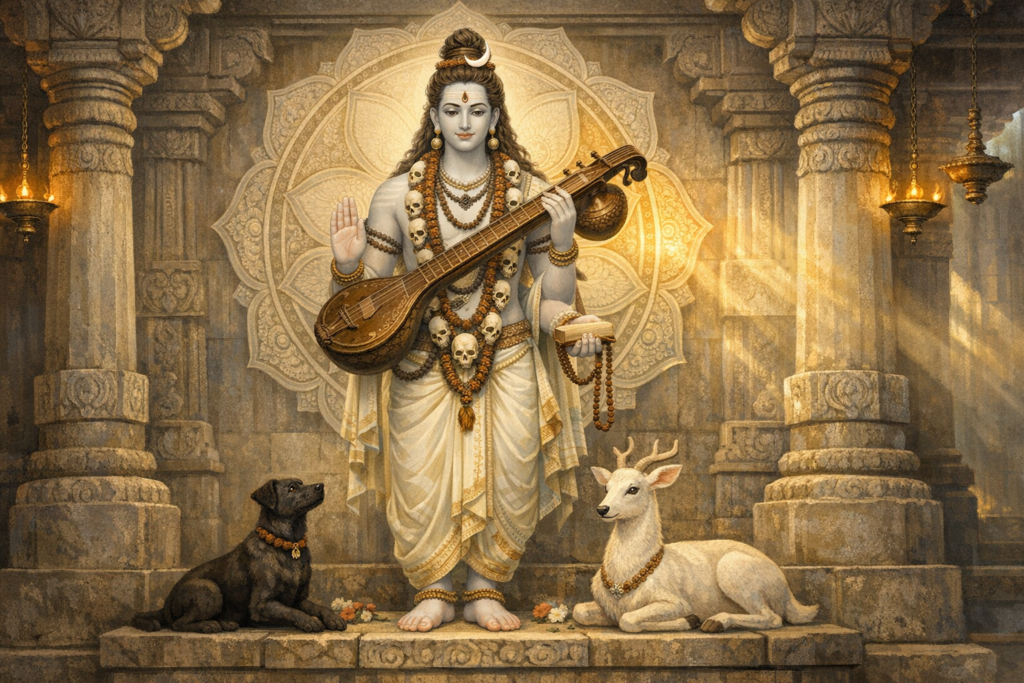
Iconographically, depictions often emphasize potency and watchfulness: a commanding posture, an intense gaze, and a complexion aligned with “neela” (blue-black) are common cues. Multiple arms may be shown to indicate comprehensive capability and protection. Hands can display abhaya (assurance) and varada (boon) mudras, underscoring both safety and grace. Implements—when present—symbolize ethical discernment, restraint, and active defense of righteousness, rather than mere physical force.
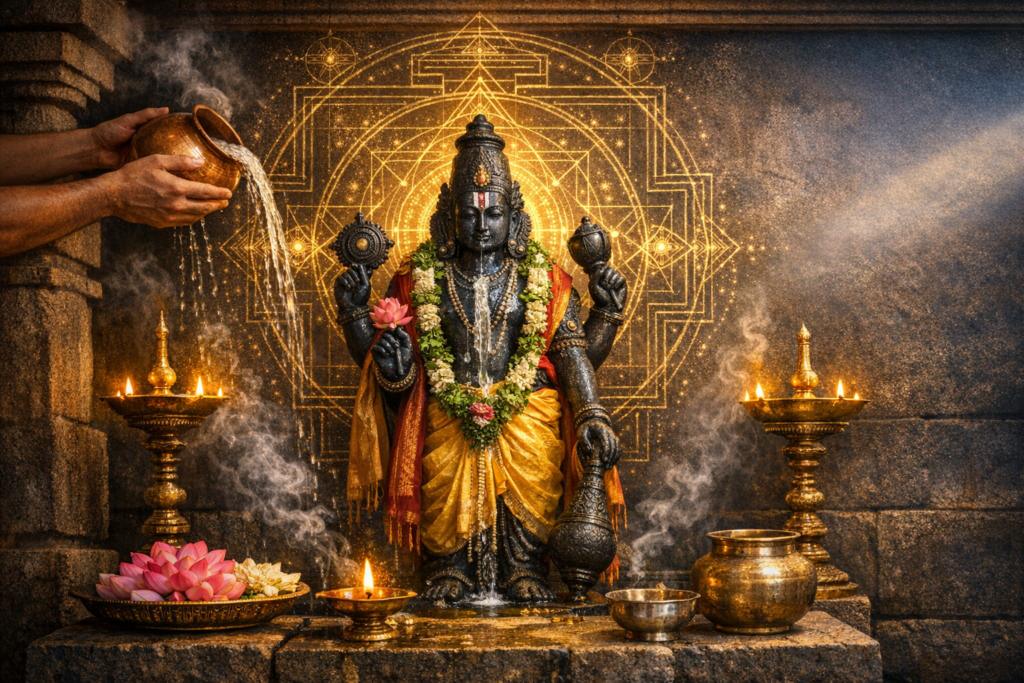
Idol forms appear in diverse materials such as stone, metal, or wood, reflecting regional artisanal lineages. As a guardian deity, Nilavarahika may be enshrined near liminal spaces, signaling vigilance over entrances and community boundaries. This placement mirrors living traditions in which devotees regard the goddess as the sentinel of homes, shrines, and moral order.
Each visual element carries layered meaning. A dark-blue hue conveys the boundless and the primordial; the “Varahika” association evokes earth-stabilizing resilience and the lifting of consciousness from chaos to clarity. When a noose or cord is depicted, it suggests the compassionate restraint of harmful impulses; a shield or protective emblem represents safekeeping; and a blade, when shown, denotes the severing of ignorance. Even the rhythm of ornaments and the geometry of posture reinforce themes of balance, vigilance, and transformative power.
In devotional life, contemplation of Nilavarahika’s iconography supports ethical decision-making and emotional resilience. Devotees frequently report a felt sense of safety, clearer boundaries, and renewed courage after meditative worship. Such experiences align with the goddess’s role as a guardian: inner steadiness is cultivated not as detachment from the world, but as readiness to protect, serve, and rebuild.
The goddess’s warrior-mother motif resonates across the wider family of dharmic traditions. Within Hinduism, Varahi traditions foreground protective Shakti; in Buddhism, cognate themes appear in fierce feminine wisdom-forms such as Vajrayana’s protective deities. While Jainism and Sikhism articulate divinity and practice through distinct theological frameworks, the shared values of fearlessness, compassion, and justice create a bridge of understanding. Read through this inclusive lens, Nilavarahika’s symbolism becomes a unifying reminder of courage and care across dharmic pathways.
For students of iconography and temple art, a careful viewing offers practical insights: observe the number of arms and mudras, the presence (or absence) of implements, the hue and texture of the surface, and the spatial context of the shrine. Cross-referencing these cues with regional traditions helps refine interpretation without imposing uniformity. Such study encourages both historical literacy and devotional sensitivity.
Ultimately, Goddess Nilavarahika exemplifies the Divine Mother as vigilant protector and transformer. Her sacred symbolism and idol form invite a disciplined mind, a brave heart, and a compassionate ethic—qualities that sustain personal well-being and communal harmony. Approached with humility and scholarly care, her iconography becomes a living guide to restoring balance in the self and in society.
Inspired by this post on Hindu Blog.