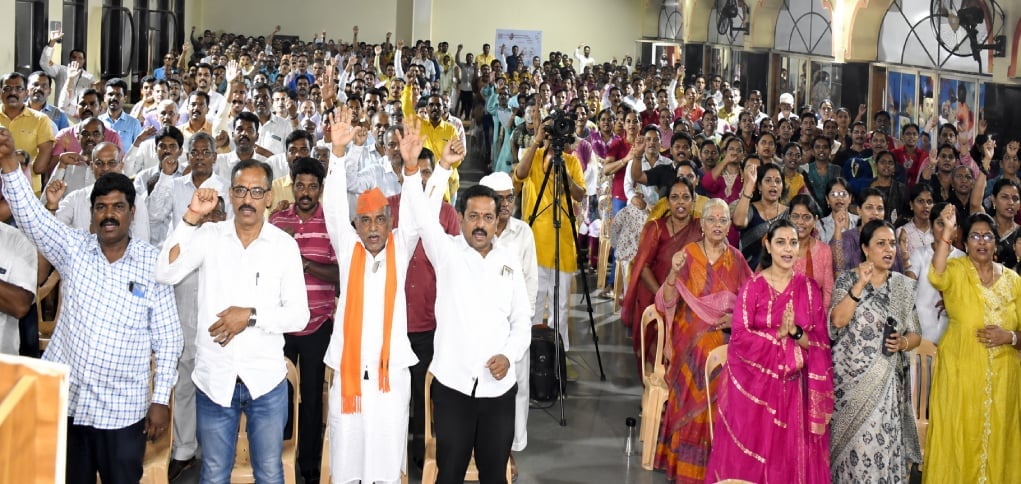
“Make Homes Into Centers” encapsulates a practical vision for congregational preaching and community formation that has been championed within the Gaudiya Vaishnava tradition by HH Jayapataka Swami and harmonizes with the broader dharmic ethos of grihastha-dharma. Rooted in Srila Prabhupada’s exhortation, “As Srila Prabhupada said, we have to fan the fire and cause it to burn,” the approach frames household spaces as catalytic nodes of devotion, learning, and seva. While historically underexplored, congregational development becomes a powerful, scalable method to contact, cultivate, and engage new participants across Hinduism, Buddhism, Jainism, and Sikhism without coercion, sectarianism, or exclusivity.
In a dharmic context, congregational development refers to a systematic, ethics-driven method of nurturing sangha through recurring, small-group spiritual practice, scriptural learning, and service. Rather than displacing temples, monasteries, gurdwaras, or derasars, the home-based model complements institutional life by extending sacred presence into daily rhythms. This household-centered model respects the plurality of worshipbhajan and kirtan alongside simran and path, Gita study alongside Dhammapada reflection, Jain Agamas study alongside readings from the Guru Granth Sahibaffirming unity-in-diversity while maintaining fidelity to each tradition’s integrity.
Sociologically, households function as high-trust micro-communities capable of generating durable social capital. Insights from resource-mobilization theory, network diffusion, and volunteer-management research show that small, frequent gatherings amplify belonging, lower barriers to participation, and catalyze organic leadership. In diaspora settings and fast-paced urban environments alike, the distributed “home-as-center” model increases accessibility, resilience, and intergenerational continuity of dharmic practice.
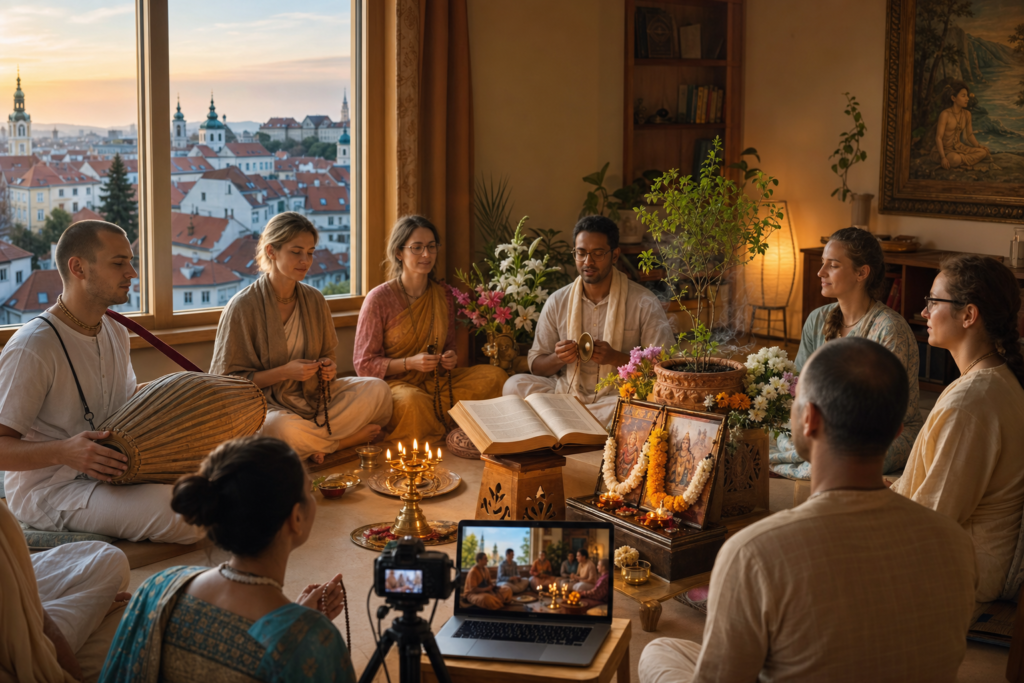
Architecturally and ritually, a “center at home” can be as simple as a clean, designated corner with a lamp, a small murti or sacred text, and a predictable weekly or fortnightly schedule. The aim is not grandeur but reliability: a known time and place where neighbors and friends can assemble for satsang, devotee care, and seva planning. Hospitality, gentle etiquette, and a welcoming atmosphere create the conditions for sustained congregational development.
Programmatically, a balanced gathering typically includes devotional expression (kirtan, bhajan, simran, path), scriptural reflection (Bhagavad Gita, Upanishads, Dhammapada, Jain teachings, selected shabads), contemplative practice (japa, pranayama, dhyana), and a brief review of service opportunities (annadanam or langar, environmental seva, neighborhood assistance). Content can rotate across traditions to model respectful learning, ensuring that each practice is presented accurately and without syncretic dilution.
Cadence matters. A weekly or biweekly satsang anchors continuity, while a monthly service day consolidates shared purpose. Major festivalsDeepavali, Gita Jayanti, Vesak, Paryushan themes, Gurpurab commemorationsoffer natural moments for outreach and for integrating newcomers into the congregational rhythm, all while preserving each tradition’s protocols.
Clear roles strengthen reliability. A host oversees logistics and hospitality; a facilitator moderates discussion; a devotional lead guides singing or recitation; a study lead curates readings; a seva lead coordinates projects; and a care lead tracks pastoral needs. Rotating roles cultivate broad competence and prevent burnout, fostering a culture where leadership is distributed rather than concentrated.
Ethical guardrails ensure trust. Congregational preaching in a dharmic frame is invitational and non-coercive, centered on seva, learning, and inner transformation rather than pressure. A simple code of conductrespect for all paths, safety of minors, dietary clarity, sober gatherings, and zero tolerance for harassmentkeeps the home sacred, inclusive, and lawful. Where relevant, local safeguarding norms and background checks for children’s activities should be followed.
Systematization converts goodwill into sustainable congregational development. The basic pipeline is contact, cultivate, and engage. Contacts arise through festivals, neighborhood conversations, digital announcements, or referrals. Cultivation follows through gentle, timely follow-ups and meaningful invitations. Engagement deepens as newcomers find clear pathways into learning circles and seva teams that match their interests and schedules.
Data stewardship is crucial. With explicit consent, limited contact details are recorded for the sole purpose of communication about gatherings and seva. Privacy policies should be transparent, retention minimal, and sharing restricted. Compliance with applicable lawssuch as the EU’s GDPR, India’s Digital Personal Data Protection Act (DPDP) 2023, Canada’s CASL, or relevant U.S. state lawsbuilds credibility while protecting participants.
Onboarding benefits from a warm, human touch. A short welcome call or message within 72 hours, a clear description of the next gathering, and a simple primer on what to expect reduce uncertainty for newcomers. Peer “buddies” or host-family introductions help translate intention into attendance and belonging.
Follow-up rhythms sustain momentum. A 72-hour courtesy message acknowledges attendance, a two-week check-in invites the next step, and 30-, 60-, and 90-day touchpoints help assess fit, interests, and care needs. The tone remains friendly and pressure-free, oriented toward service and spiritual growth rather than recruitment metrics for their own sake.
Engagement deepens through a graduated pathway: first-time attendee, regular participant, volunteer contributor, project co-lead, and eventually home-host or trainer. Micro-sevasuch as bringing prasada or langar ingredients, managing the reading list, or handling greetingcreates low-friction on-ramps that gently “fan the fire” of commitment.
Leadership cultivation is framed through mentorship and skill-building rather than hierarchy. Drawing on the Guru-Shishya Tradition while honoring modern facilitation methods, experienced practitioners coach emerging facilitators in group dynamics, inclusive language, and conflict navigation. This approach dignifies diverse aptitudessinging, study, logistics, caregivingand allows multiple pathways to contribute.
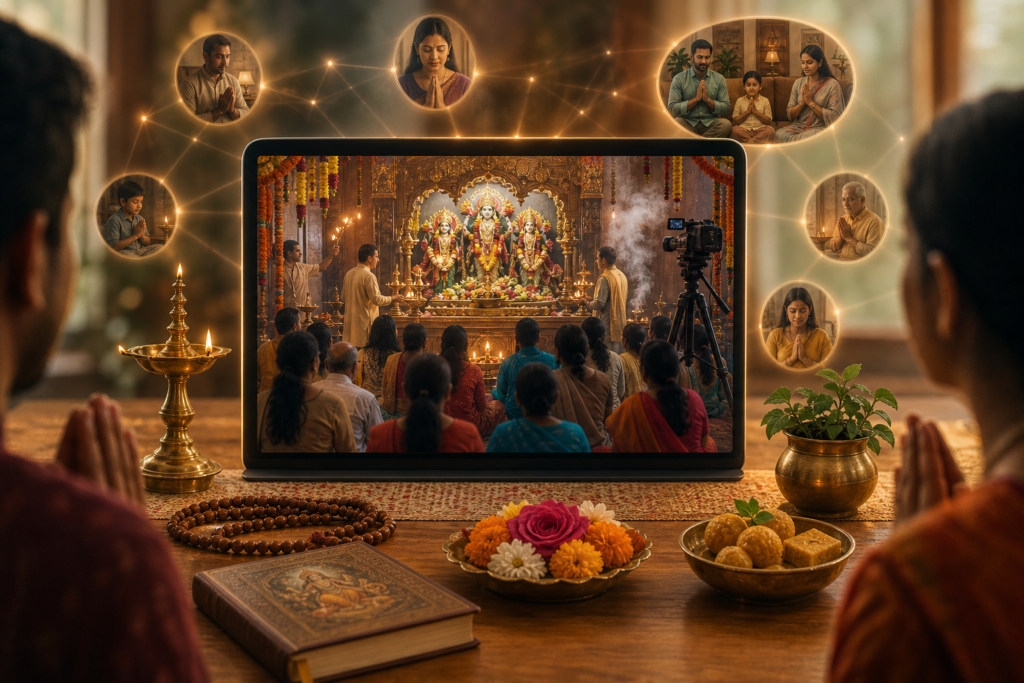
Digital infrastructure, used sparingly and wisely, multiplies reach. Privacy-conscious tools for calendars, RSVP, and reminders reduce friction; group messaging enables rapid coordination; and a lightweight community relationship system catalogs interests, attendance patterns, and care notes with consent. Data minimization, encryption where possible, and clear opt-outs are best practice.
Measurement clarifies reality and improves stewardship. Practical indicators include new contacts per month, first-to-second-visit retention, average gathering size, active volunteers, volunteer hours, and the number of household centers sustained over a quarter. Qualitative signalsreported peace of mind after satsang, perceived inclusion across age and background, and readiness to hostround out the picture.
A balanced scorecard prevents tunnel vision. Spiritual practice health (participation in japa, simran, dhyana), study depth (regular scripture engagement), seva throughput (projects completed, beneficiaries served), and community well-being (care interactions, conflict resolution timeliness) together offer a comprehensive congregational view.
Training is the quiet engine of quality. Hosts and facilitators benefit from short modules on devotional protocols across traditions, trauma-aware listening, de-escalation, inclusive facilitation, child-safeguarding basics, and ethical boundaries. Periodic refreshers, shadowing opportunities, and peer feedback cultivate excellence.
Content architecture can follow three tiers. Foundation-level satsangs emphasize universal dharmic ethics and accessible practices from the Bhagavad Gita, Dhammapada, Jain teachings, and select shabads. Intermediate circles deepen text study, contemplative discipline, and seva planning. Advanced groups explore commentarial traditions, comparative hermeneutics, and leadership pedagogyalways with reverence and accuracy.
Seva anchors devotion in actionable compassion. Food-based service such as annadanam or langar, neighborhood aid for elders, environmental cleanups, and skill-based pro bono support convert congregational energy into measurable public good. Projects are deliberately modest and repeatable so that newcomers can join without intimidation.
Youth engagement thrives on ownership. Teen-led discussion segments, music ensembles, and digital storytelling give younger participants authentic roles. Age-appropriate study and mindful technology practices sustain interest, while mentorship ties elders and youth in reciprocal learning.
Event design should be humane and time-sensitive. Predictable start and end times, a welcoming doorway experience, clear dietary information for prasada or langar, comfortable seating, and accessible language allow broader participation. Care for silence and sound balance honors both song and contemplation.
Scaling respects the grain of community. A cluster modelseveral home centers in walking distance, lightly coordinatedretains intimacy while building capacity. Monthly review calls across hosts surface learnings, align calendars, and redistribute support to prevent overburdening any single household.
Financial stewardship remains simple and transparent. Home centers minimize cost by relying on in-kind contributions and volunteer logistics. When pooled resources are necessaryfor books or matsclear accounting and consent-driven contributions safeguard trust. The spirit is seva, not solicitation.
Consider a typical urban example. A small apartment household begins a fortnightly Gita-and-kirtan circle with three neighbors. Within a quarter, attendance stabilizes at ten, a rotating roster covers singing and reading, one family anchors hospitality, and a monthly neighborhood seva emerges. The emotional texture shifts: participants report calmer evenings, renewed gratitude, and the discovery of new friendships that feel like extended family.
A diaspora vignette illustrates dharmic unity. A multifaith apartment cluster hosts a rotating formatone week bhajan and Gita reflection, the next simran and selected shabads, followed by Dhammapada verses, then Jain ethical teachingswith careful attention to each tradition’s sanctity. Shared langar-style meals and joint environmental seva deepen bonds, demonstrating that congregational development can be both tradition-faithful and relationally expansive.
The instruction to “fan the fire” translates operationally into micro-nudges and meaningful assignments. A newcomer is invited to choose a chant, read a verse, or coordinate the next seva’s materials. Each well-matched responsibility increases agency and belonging, and the flame of devotion grows steady rather than sensational.
Risk management is integral. Clear boundaries prevent overreach; a documented pathway for handling grievances protects participants; and periodic facilitation audits keep gatherings safe, lawful, and welcoming. When differences of interpretation arise, hosts privilege humility, accuracy, and goodwill over winning arguments.
Launching within 90 days is realistic. The first month maps local interest and sets a simple schedule; the second month pilots gatherings and codifies follow-ups; the third month refines roles, confirms a monthly seva, and trains a second host to ensure continuity. By the end of the quarter, a community has formed, measured by names remembered, needs noticed, scriptures engaged, and service rendered.
Ultimately, congregational preaching in this dharmic register is a disciplined craft: it marries devotion with design, warmth with structure, and pluralism with fidelity. Homes that become centers extend the mandir, vihara, derasar, or gurdwara into daily life, ensuring that spiritual practice, study, and seva are not occasional events but living habits. As households welcome neighbors and newcomers into this gentle rhythm, unity across traditions is not assertedit is experienced.
Inspired by this post on Dandavats.