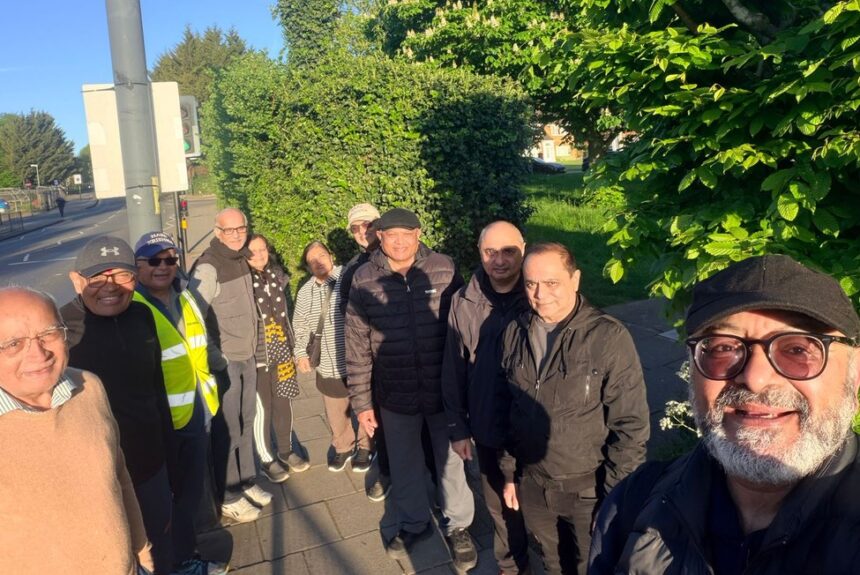
Each Sunday at 7:00 a.m., a steadily growing group of devotees and well-wishers assembles outside Stanmore Station for a purposeful 5.5-mile walk to Bhaktivedanta Manor. The journey typically takes around 90 minutes at a conversational pace and has become a community mainstay for those seeking a blend of devotion, health, and fellowship. The initiative is coordinated by Yashu Shah, whose consistent stewardship has helped transform a local idea into a repeatable, safe, and inspiring practice.
Framed within the broader tapestry of Tirtha-Yatra and padayatra traditions, this weekly pilgrimage aligns with the Bhakti Tradition while resonating with parallel practices across dharmic lineages. Hinduism, Buddhism, Jainism, and Sikhism have long affirmed the value of foot-pilgrimage as a discipline that integrates body, mind, and spirit. The walk from Stanmore to Bhaktivedanta Manor thus exemplifies unity in spiritual diversity, welcoming participants who cherish devotion to Krishna while honoring a plural ethos of seva, mindfulness, and communal harmony.
Bhaktivedanta Manor, a significant ISKCON (International Society for Krishna Consciousness) center dedicated to Sri Krishna, functions as both destination and catalyst for this practice. The measured distance, early-hour start, and accessible urban-to-rural transition support a rhythm of contemplation that many participants describe as a “moving meditation.” The chosen timing offers quiet streets, cool temperatures, and the subtle uplift afforded by dawn light—conditions that support both safety and reflective awareness.
Experientially, the walk tends to alternate between gentle conversation and tranquil silence. Low-voice japa and soft bhajans are common, undertaken with sensitivity to neighborhood quiet hours. Families often participate together, and intergenerational groups create an atmosphere of mutual care and steady pacing. Newcomers regularly note how the simple act of placing one foot after another becomes a structured sādhanā that clarifies intention and steadies attention.
From a planning perspective, the distance and duration invite a methodical approach. At a moderate pace of approximately 16–18 minutes per mile (10–11 minutes per kilometer), the 5.5-mile (≈8.9 km) route aligns with the widely recommended 150 minutes of moderate-intensity activity per week. Simple pre-walk routines—checking the weather forecast, confirming a charged phone, and reviewing the day’s group plan—ensure readiness without complexity. Basic route familiarization, including awareness of pavements, pedestrian crossings, and potential rest spots, supports inclusive participation and informed decision-making en route.
Group management typically benefits from two simple roles: a lead walker who maintains pace and route discipline, and a tail walker who ensures no one is left behind. These roles promote cohesion without formality and mirror established best practices in community walks. Where possible, a volunteer with basic first-aid training and an emergency contact protocol further enhances resilience. Reflective or high-visibility elements (vests, bands, or outer layers) and adherence to the UK’s pedestrian safety conventions (using pavements where available and crossing at designated points) contribute materially to group safety.
Hydration and nutrition guidelines are straightforward: sipping water periodically (for example, 200–300 ml every 30–40 minutes in temperate weather), carrying a small snack for those who prefer it, and avoiding heavy meals immediately beforehand. Comfortable walking shoes, moisture-wicking socks, and layered clothing (especially for colder months) prevent common issues such as hotspots, chills, or over-warming. Small measures like anti-chafe balm and a lightweight, packable rain layer can make a tangible difference on changeable mornings.
Accessibility is strengthened by a culture of accommodation. Participants who wish to begin a little later may identify intermediate join points; those who prefer shorter segments sometimes coordinate a midway start. Families with prams and elders using walking poles are welcomed, and the group ethos prioritizes considerate pacing and periodic checks on comfort. In this way, the walk becomes a living demonstration of seva and inclusion, rather than a test of endurance.
The health rationale for a weekly walking pilgrimage is compelling. Regular brisk walking is linked to improved cardiovascular fitness, glycemic control, and musculoskeletal resilience. Morning natural light supports healthy circadian entrainment, and the combination of steady movement with reflective focus can lower perceived stress and enhance vagal tone. Many participants report a measurable lift in mood and clarity of thought following the gentle discipline of the route, particularly when paired with japa or breath awareness.
Environmentally, walking to a local sacred site expresses a practical ethic consistent with ahimsa and stewardship. For a typical passenger vehicle, a single avoided 5.5-mile trip can save roughly one to two kilograms of CO₂ emissions, depending on vehicle and conditions. While the exact figure varies, the symbolic impact is unequivocal: a weekly, community-scale shift from short car trips to purposeful walking signals ecological mindfulness embedded within devotional life.
The pilgrimage also functions as social architecture. Routine contact in shared, service-oriented activity fosters trust, reduces isolation, and strengthens the local dharmic network. Newcomers find mentors organically; adolescents observe adults practicing discipline and respect; elders transmit living tradition by presence and example. This quiet interdependence shapes a durable community of practice anchored in devotion to Krishna and respectful of the multiple pathways celebrated across dharmic traditions.
Importantly, the walk models unity across Hinduism, Buddhism, Jainism, and Sikhism through overlapping values—sangha and satsang, ahiṁsā and seva, remembrance of the divine and uplift of the many. Sikh Nagar Kirtan processions, Buddhist and Jain foot-pilgrimages, and Hindu Tirtha-Yatra all honor embodied devotion and ethical restraint. In this sense, the Stanmore–Bhaktivedanta Manor walk articulates a shared civilizational grammar: ethical conduct on the way, gratitude at the destination, and humility in both.
Courtesy guidelines consolidate this grammar into practice: arrive on time, keep voices low in residential areas, yield courteously on narrow pavements, and observe a simple “leave no trace” ethic. If children are present, basic safeguarding norms apply—clear handover points, recognizable adults in lead and tail roles, and an agreed meeting place if the group disperses upon arrival. Such unobtrusive structure supports safety without compromising the walk’s contemplative character.
Arrival at Bhaktivedanta Manor is typically unhurried. Many pilgrims proceed to darshan, some remain in quiet japa, and others naturally gather in small groups for reflection. The culmination is intentionally simple; the value lies as much in the shared movement and intention as in any scheduled activity at the destination. Participants often find that the inward alignment cultivated en route enhances their receptivity to kirtan, study, or service carried out later in the morning.
As a replicable model, the Sunday foot-pilgrimage demonstrates how small, regular, volunteer-led initiatives can catalyze outsized benefits. Core elements include a consistent start time; a route within the comfort range of most adults; clearly identified lead and tail walkers; basic safety equipment; and an invitational culture that values devotion over speed. Communities elsewhere can adapt these principles to local geographies, sacred sites, and seasonal patterns, strengthening bonds through actionable, accessible practice.
Measured outcomes are both tangible and intangible. A typical walker may log 10,000–12,000 steps and expend 400–600 kcal, depending on pace and physiology. Attendance has grown organically as word of the experience spreads through satsang circles and family networks. Less easily quantified, but equally important, are gains in attentional steadiness, social cohesion, and the gentle re-centering that devotional walking can bring to a week’s routine.
Above all, the Stanmore to Bhaktivedanta Manor walk exemplifies the principle of Vasudhaiva Kutumbakam by integrating spiritual aspiration, community engagement, and environmental mindfulness into a single, repeatable act. The weekly continuity—supported by the initiative of coordinators such as Yashu Shah and the goodwill of participants—keeps the experience grounded in lived practice. In this convergence of Hindu pilgrimage ethos with a broader dharmic vision, a simple Sunday morning becomes a steady conduit for devotion, health, and unity.
Inspired by this post on Dandavats.