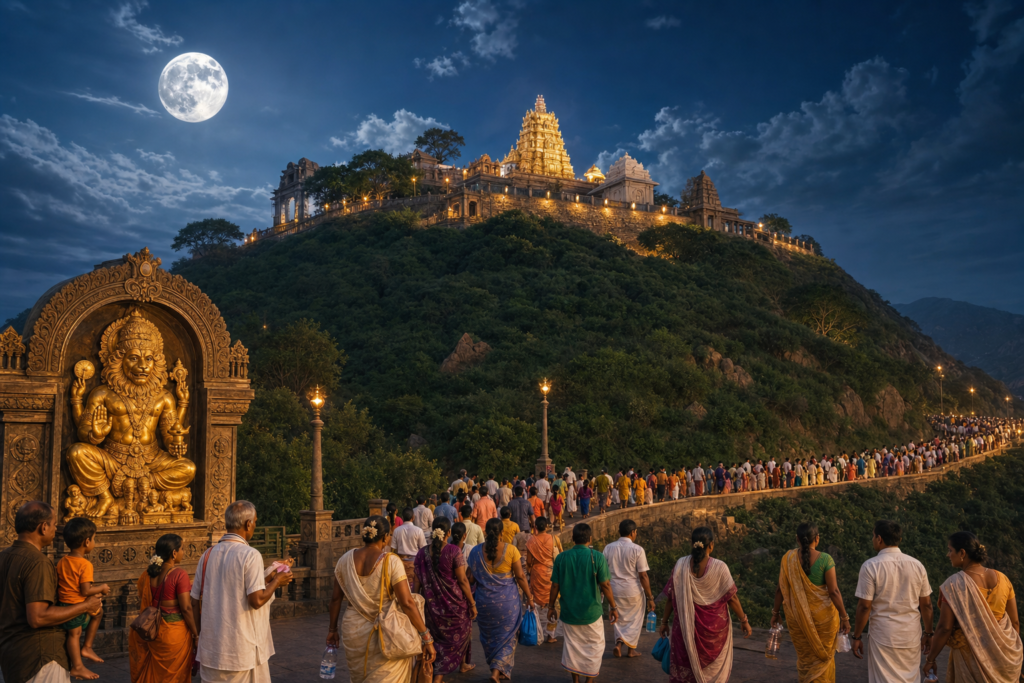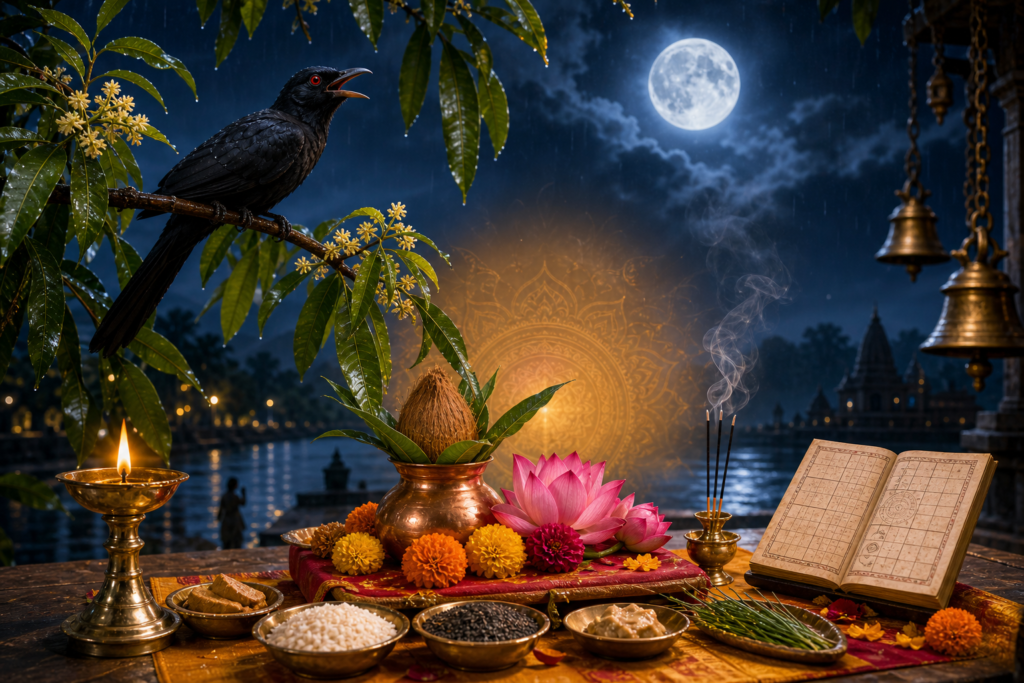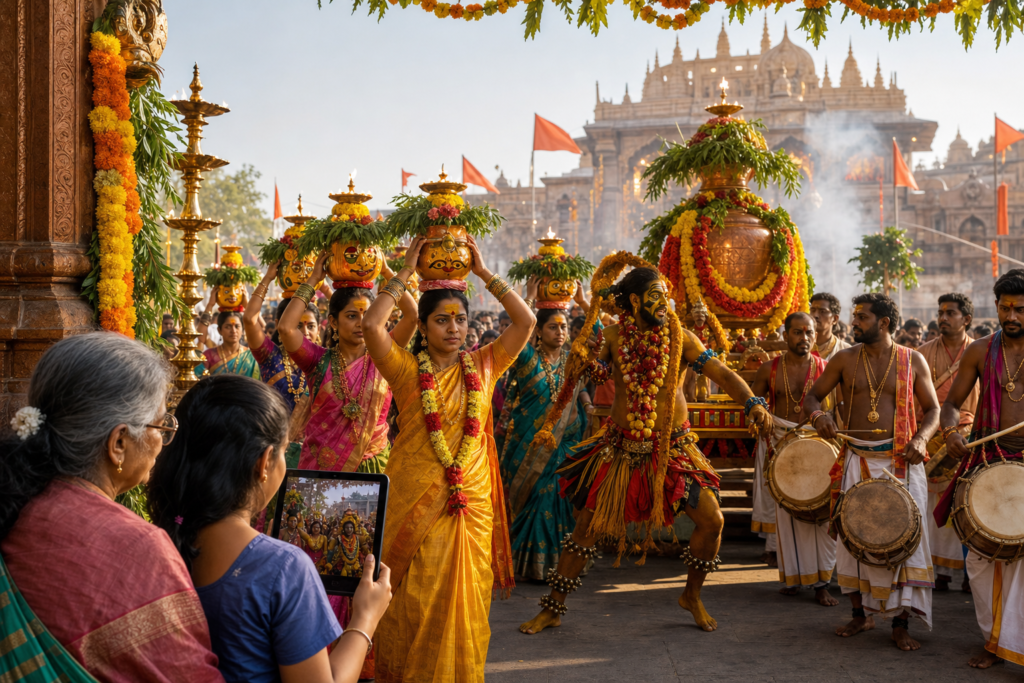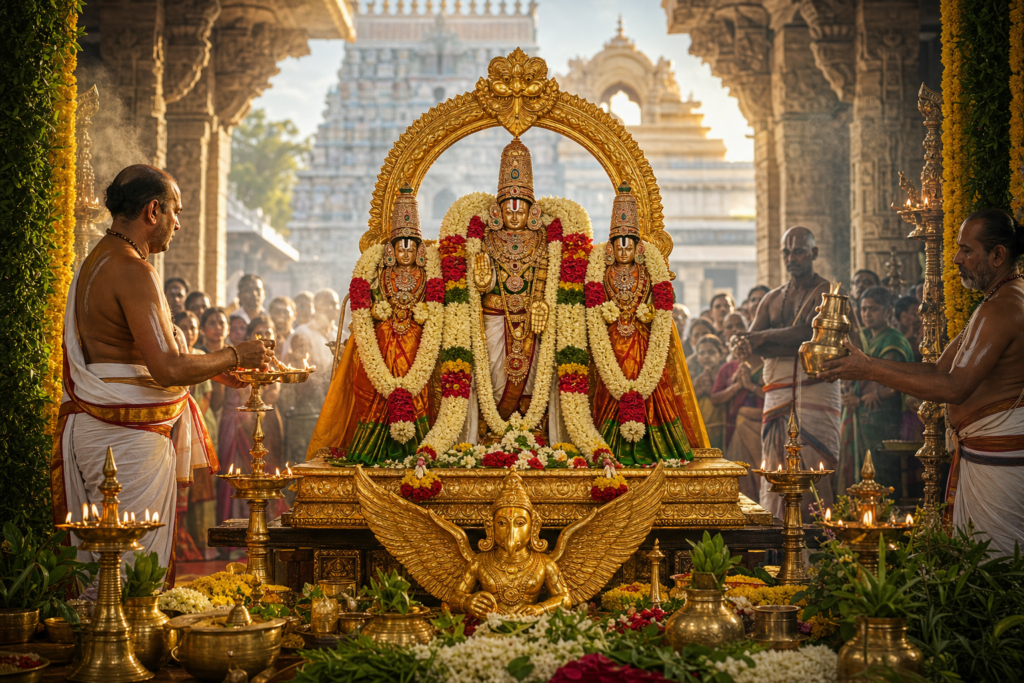
Yamuna Pushkaralu 2026 offers a rare, auspicious window to honor one of the most venerated rivers of the Indian subcontinent through sacred bath (snana), charity (daana), prayers (japa), homa, and ancestor offerings (tarpana). Rooted in the Vedic-Puranic calendar and timed to Jupiter’s transit, this Pushkaram is associated with the sign Mithuna (Gemini). Jupiter enters Mithuna in late May 2025 and remains there until early June 2026, making two heightened sacred windows especially important: the first twelve days after ingress (Adi Pushkaram, 2025) and the last twelve days before egress (Antya Pushkaram, 2026). For those observing in 2026, these concluding twelve days typically span late May to early June (verify exact muhurta with a regional panchang).
Sacred geography gives Yamuna Pushkaralu its depth and continuity. The Yamuna River rises from the Yamunotri Glacier on the southwestern slopes of the Bandarpunch massif in the Uttarkashi district of Uttarakhand at approximately 6,387 metres above sea level. From the Himalaya, it descends through the plains of Haryana and Delhi and continues across Uttar Pradesh, ultimately merging with the Ganga at the Triveni Sangam in Prayagraj. Over roughly 1,376 kilometers, the river’s basin sustains dense cultural landscapes that include ancient temples, major historic cities, and renowned tirthas.
Scriptural memory and living tradition converge along the Yamuna. Known as Kalindi and celebrated as Yami in early Vedic literature, the river is revered as a goddess and as the life-giving twin of Yama. In the Braj region, Yamuna is inseparable from the Krishna-lila; in Prayagraj, the river completes the sacred confluence at the Kumbh Mela. Through Yamuna Pushkaralu 2026, millions renew bonds with this heritage in ways that resonate across dharmic traditionsHindu, Buddhist, Jain, and Sikheach engaging tirtha as a pathway to ethical reflection, inner renewal, and communal harmony.
The astronomical basis of Pushkaram is straightforward and precise. When Jupiter (Brihaspati) enters the zodiac sign associated with a river, the river’s powers of purification are believed to be especially potent for a twelve-month period. For Yamuna, that sign is Mithuna (Gemini). Adi Pushkaram (the first 12 days after ingress) occurred in 2025, while Antya Pushkaram (the final 12 days before egress) falls in late May to early June 2026. Local panchangs should be consulted for exact ingress/egress timings, city-specific snana muhurta, and customary sankalpa phrasing.
Ritual observance during Yamuna Pushkaralu typically includes an early-morning or sunset dip at designated ghats, recitation of mantras to Goddess Yamuna, daana to the needy, and tarpana for ancestors. Many families complete a simple homa under the guidance of local priests and join evening aartis where available. Pilgrims often describe these acts as emotionally steadying and ethically clarifying, a recurring testimony to the shared dharmic understanding that personal discipline, service, and reverence for nature transform pilgrimage into lasting virtue.
Environmental care and safety are integral to dharmic practice. Where river health is challenged, authorities designate specific bathing points with appropriate flow, depth, and water-quality oversight. Use only permitted ghats; avoid barrages, fast-flow stretches, and unmonitored banks; follow police and municipal advisories; and support zero-litter practices. Many communities along the Yamuna now run volunteer-driven clean-ghat initiatives so that pilgrimage protects, rather than burdens, the riverine ecosystem.
Uttarakhand anchors the spiritual arc of Yamuna Pushkaralu. Yamunotri Dham, the source tirtha, houses the temple of Goddess Yamuna near Divya Shila and natural hot springs like Surya Kund used to prepare prasad. The temple stands at about 3,293 metres, reached via a well-trodden trek from Janki Chatti by foot, palanquin, or pony. Nearby Kharsali is home to a revered Shani Dev temple, and Hanuman Chatti and Barkot serve as staging points for pilgrims integrating Yamunotri within the wider Chardham Yatra 2026. Many report that the first sight of the dark, glacial waterstraditionally linked with the name Kalindievokes profound gratitude and resolve.
Downstream across the Himalayan foothills, Kalsi marks the confluence of the Yamuna with the Tons (Tamas) and preserves an Ashokan rock edictan archaeological anchor that complements ritual practice. A short distance away, Paonta Sahib on the Yamuna’s bank in Sirmaur (Himachal Pradesh) is a revered Sikh pilgrimage city associated with Guru Gobind Singh. During Pushkaralu, many interfaith families visit both Yamuna ghats and the gurdwara, a living example of the subcontinent’s shared sacred geographies.
Haryana’s Yamuna corridor extends from Hathni Kund Barrage near Yamunanagar through Karnal, Panipat, and Sonipat. Pilgrims should choose officially marked municipal or district ghats for snana and avoid barrages or canals. While the historic tirtha of Kapal Mochan (Bilaspur) lies on a tributary within the Yamuna basin rather than the main stem, families in the region sometimes include it within a wider circuit of basin sites as a complement to direct Yamuna dips.
Delhi preserves ancient and contemporary links with the river. Nigambodh Ghat remains the capital’s most recognizable traditional ghat, and seasonal arrangements for ritual baths are sometimes made at Geeta Colony Ghat, Kalindi Kunj, Wazirabad, and Sonia Vihar stretches under civic oversight. Large festival crowdsfor instance during Chhathhave led to improved safety protocols, and similar measures typically apply during Pushkaralu; travelers should heed Delhi Police advisories and use only notified access points.
In the Braj region of Uttar Pradesh, Yamuna Pushkaralu intersects deeply with Krishna devotion. Mathura’s Vishram Ghat is among the most important snana sites; nearby, Dwarkadhish Temple and the Krishna Janmabhoomi complex frame a classic tirtha circuit. In Vrindavan, Kesi Ghat is historically resonant, and the evening Yamuna aarti there is both moving and disciplined. Gokul’s Brahmand Ghat recalls the lore of the universal vision granted in Krishna’s childhood; pilgrims often blend parikrama, satsang, and Pushkaram snana to experience the river as a living presence in the Krishna-lila topography.
Agra district extends the Pushkaram map downstream. The Kailash Temple near Sikandra marks a traditional Shiva tirtha associated with the Yamuna. Further south-east, Bateshwar presents a rare, continuous riverbank complex of more than a hundred Shiva shrines facing the Yamuna; it is also home to historically significant Jain temples. During Pushkaralu, families frequently combine Shiva darshan with Yamuna snana at Bateshwar, noting the palpable quietude of its ghats compared to larger urban centers.
Near Etawah, the Yamuna meets the Chambal, and the broader Pachnada region encompasses the confluences of the Yamuna with Chambal, Sindh, Kunwari, and Pahuj rivers. Traditional snana at these confluences is sought for its composite sanctity; nonetheless, only officially designated ghats should be used given the dynamic currents and protected ravine ecosystems in the Chambal landscape. Local administrations typically publish do’s and don’ts during festival periods.
Kalpi in Jalaun district sits prominently on the Yamuna’s bank and is remembered for its role in the 1857 freedom struggle as well as for its temples and ghats. Hamirpur then offers another celebrated confluence: the union of the Betwa with the Yamuna. The Sangam at Hamirpur has long been a favored Pushkaram snana point, and families often recall the unhurried rhythm of its ghats as an occasion for extended mantra-japa and tarpana.
In Banda district, the Ken joins the Yamuna near Chilla Ghat, creating yet another powerful confluence tirtha. These stretches of the river reward pilgrims with open skies and broad water views; they also require careful adherence to posted safety signage and the guidance of local authorities, especially during pre-monsoon flows.
Kaushambi, ancient Kosambi on the Yamuna, carries profound Buddhist resonance. The Buddha resided here, and the site preserves the memory of Ghoshitarama along with traces of Ashokan patronage. For Yamuna Pushkaralu 2026, Kaushambi stands out as an integrative stop where families can combine snana with visits to Buddhist remains, honoring the blog’s objective of unity among dharmic traditions through shared pilgrimage ethicsnon-violence, truthfulness, restraint, compassion, and contemplative insight.
Prayagraj culminates the journey with the Triveni Sangam, where the Yamuna merges with the Ganga and the subterranean Saraswati. This is among the most organized and infrastructure-rich bathing sites in India, supported by extensive Kumbh Mela experience. Pilgrims often combine Pushkaram snana with darshan at Bade Hanuman Mandir and Akshayavat within the fort complex area. As always, using notified ghats and time slots ensures both sanctity and safety.
Across these places, Yamuna Pushkaralu 2026 invites a unifying practice that resonates with Hindu, Buddhist, Jain, and Sikh communities. Sikh devotees naturally gather at Paonta Sahib on the Yamuna’s bank; Jain families are drawn to Bateshwar’s temples; Buddhist pilgrims explore Kaushambi’s monastic archaeology; and Hindu families traverse the classic Yamunotri–Braj–Prayagraj arc. The festival’s spiritrespect for multiple paths, shared stewardship of sacred waters, and ethical conductreinforces inter-dharmic goodwill.
Planning considerations help transform good intent into a serene pilgrimage. Checking panchang details for 2026 Antya Pushkaram muhurta, pre-booking accommodation in Mathura–Vrindavan and Prayagraj, traveling early to hill regions like Yamunotri before weather turns, and keeping contingency days for river conditions all improve outcomes. Many districts publish temporary traffic plans, shuttle routes to main ghats, and medical-aid posts; collecting these notices in advance eases family movement, particularly for elders and children.
Pilgrimage ethics translate into practical choices: keep plastic use to an absolute minimum; avoid soaps and detergents in rivers; deposit offerings only in designated bins; support local communities through fair purchases; and choose community kitchens and langars that minimize waste. Such decisions express the same dharmic sensibility that motivates snana and prayerpurity in thought and act, and reverence for the living river.
In sum, Yamuna Pushkaralu 2026 is both a cartography and a consciencemapping from source to confluence through Yamunotri, Kalsi, Paonta Sahib, the Haryana corridor, Delhi’s historic ghats, the Braj kshetra of Mathura–Vrindavan–Gokul, Agra and Bateshwar, Etawah–Pachnada, Kalpi, Hamirpur, Banda–Chilla, Kaushambi, and finally Prayagraj. Pilgrims consistently describe a quiet joyan abiding sense that bathing, giving, and remembering at Yamuna’s ghats renews personal resolve while deepening bonds among India’s dharmic traditions. With thoughtful preparation, verified muhurta, and care for the river, the 2026 Pushkaram can become a profoundly integrative spiritual milestone.
Inspired by this post on Hindu Pad.