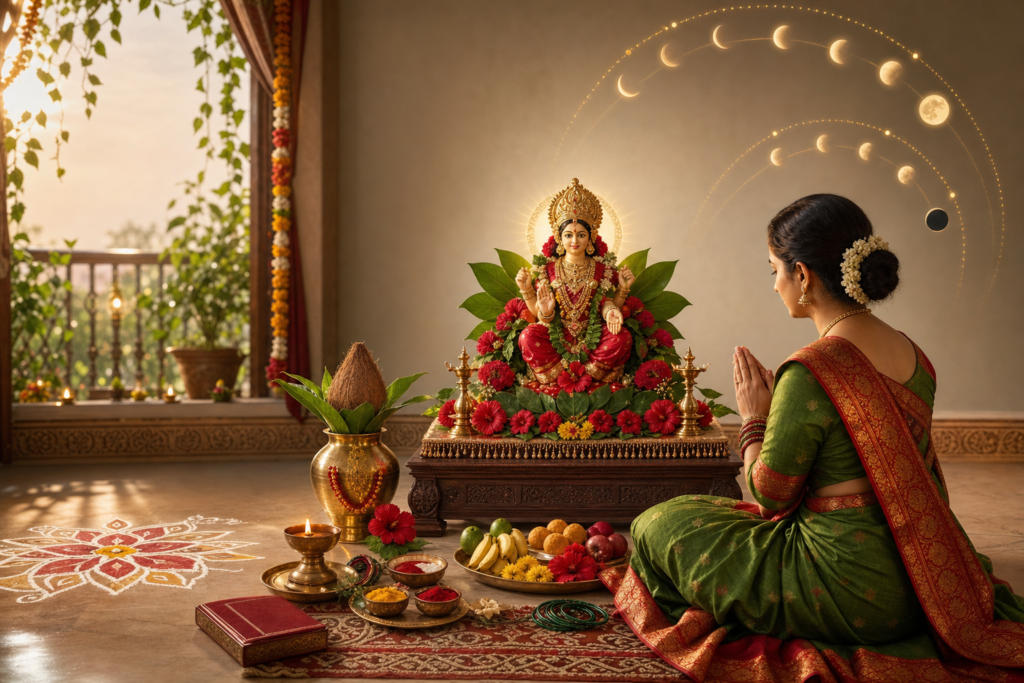
Vishukkani Darshan, often simply called Vishukkani or Vishukani, is the cherished “auspicious sight” that inaugurates Vishu, the Malayalam solar New Year. In Kerala households and Malayali communities worldwide, the arrangement typically centers on the yellow laburnum flower known locally as konna pua, a traditional bronze vessel ‘Uruli’ filled with rice, seasonal fruits such as mangoes and jack-fruit, and vegetables such as snake gourds and gourds. When seen at dawn, this carefully curated ensemble is believed to confer prosperity, clarity, and spiritual focus for the year aheadan ethos that underpins the enduring importance of Vishukkani Darshanam.
What is Vishukkani Darshan? In classical terms, “kani” means “that which is seen first,” while “darshan” marks a sanctified vision that purifies the mind and orients conduct. Together, Vishukkani Darshan signifies the first sight one beholds on Vishu morning: sacred light, abundance, purity, and the presence of the divine, usually represented by an image or murti of Vishnu or Krishna. The arrangement functions both as a ritual focus and a living symbol of auspiciousness, linking cosmological order (rta) with everyday wellbeing.
When is Vishukkani celebrated? Vishu falls on the first day of Medam in the Malayalam calendar, coinciding with Mesha Sankranti, the Sun’s sidereal ingress into Aries. Astronomically, this typically occurs on 14 or 15 April. In Kerala practice, the day of Vishu is anchored to the sunrise following the exact Sankranti time. Households therefore plan the Vishukkani overnight so that the darshan can be taken during the pre-dawn hours on Vishu morning.
The preferred muhurta for Vishukkani Darshan is Brahma Muhurta (approximately 1.5 hours before sunrise), extending to sunrise. This timing supports sattvic clarityquietude of mind, balanced prana, and attentivenesswhich are integral to receiving the full spiritual and psychological benefits of this first sight. Local panchangam references ensure precision, especially in years when Mesha Sankranti occurs close to sunrise or just after it.
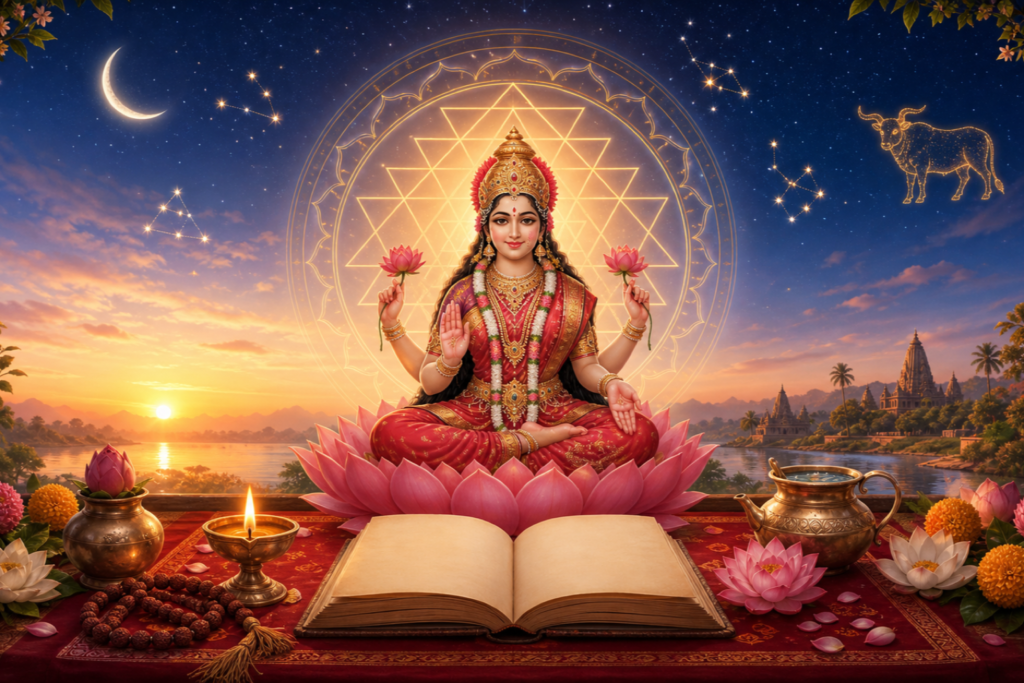
The canonical components of the “auspicious sight” are simultaneously devotional and agrarian. The konna pua (Cassia fistula) heralds the golden glow of abundance; the ‘Uruli’ with rice affirms food security; fruits like mangoes and jack-fruit represent sweetness and ripeness of effort; vegetables such as snake gourds and gourds nod to seasonal cycles and nourishment. Complementary elements often include a nilavilakku (traditional lamp), a mirror (kannadi), betel leaves with areca nut, coins or a small piece of gold, fresh garments (pudava), and a text such as the Ramayana or Bhagavad Gita to invoke dharmic guidance.
Each object in the Vishukani carries layered symbolism. Rice in the ‘Uruli’ signifies Lakshmi’s steady presence and the ethical stewardship of resources; the lamp denotes the triumph of light over inertia and confusion; the mirror reflects both the divine image and the viewer’s own face, subtly emphasizing inner alignment with sacred order. The konna pua’s golden hue evokes radiance and vitality, while fresh produce underscores interdependence with land, season, and communityfoundational values in Kerala’s cultural memory.
Preparation is typically completed on the eve of Vishu. The prayer space is cleaned and oriented to allow the lamp’s light to suffuse the arrangement. Many households line the base of the ‘Uruli’ with paddy or raw rice, layer fruits and vegetables for visual harmony, position the mirror so it reflects the lamp, deity image, and the ensemble together, and place a dharmic text where it can be reverentially sighted. The lamp is readied with wick and oil so it can be lit just before the darshan.
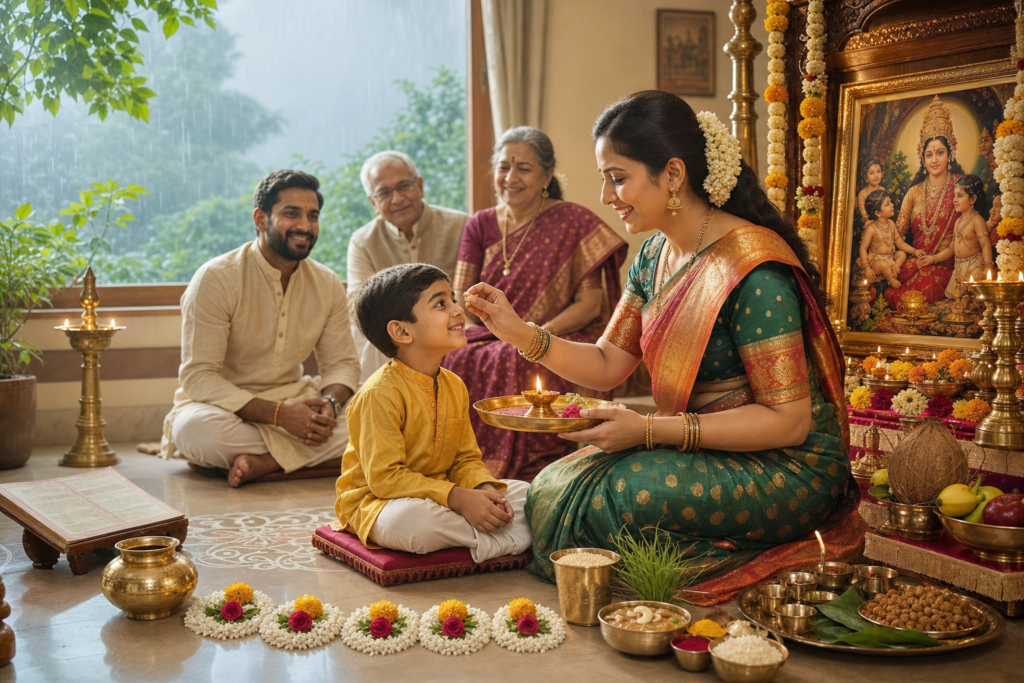
The act of Vishukkani Darshan typically unfolds at dawn. Elders guide younger membersoften with eyes gently closedinto the puja space, where the lamp is lit and mantras or stotras are softly recited. Upon opening the eyes, the first vision is the entire kani bathed in golden light. Many families describe a quiet hush, the scent of blossoms, and the warmth of the lamp as forming an intimate, shared moment that sets the emotional register for the new year.
Following darshan, families may offer arati to the deity, recite verses from the Ramayana, and share prasad. The custom of Vishukkaineettamelders gifting coins or small sums to children and dependentsextends the visual blessings into concrete acts of care and generosity. In many communities, this ethic scales outward into charitable giving, affirming that abundance finds its highest expression in shared wellbeing.
Culinary traditions complement the visual rite. Households prepare a Vishu sadya (festive meal) featuring seasonal and regionally distinct dishesoften including preparations with jackfruit and mango, thoran, erissery, avial, sambar, rasam, and payasam. In some areas, Vishu Katta (a seasoned rice-coconut cake) is favored for its festive simplicity and nourishing character. Food thus becomes an edible extension of the kani’s promise: balanced, abundant, and community-oriented living.
While the core grammar of Vishukkani Darshan is widely shared, variations exist across Kerala’s regions and diaspora communities. Some households add a valkannadi (traditional metal mirror), specific heirloom jewelry, or regionally available produce. Diaspora families adapt with locally sourced yellow blossoms (when konna pua is unavailable) and comparable brass or bell-metal vessels to honor both continuity and context. These adaptive practices underscore the ritual’s spirit over strict uniformity.
The astronomical and calendrical basis of Vishu situates the rite within a precise cosmology. Mesha Sankranti, the Sun’s sidereal entry into Aries, marks a reset in the solar cycle. In Kerala, Vishu Phalamannual forecasts often delivered by temple astrologersreflects the cultural interplay between astronomy, astrology, and ethics, encouraging households to pair hope with responsibility, and devotion with discernment.
The importance of Vishukani Darshanam extends beyond household walls, resonating with a broad dharmic ethos of unity in diversity. Across the subcontinent, cognate New Year observances cluster around mid-April: Puthandu (Tamil New Year), Vaisakhi (Sikh New Year and harvest celebration), and Pohela Boishakh (Bengali New Year), while Sri Lanka’s Sinhala and Tamil New Year shares similar seasonal rhythms. Although Jain communities mark their New Year around Deepavali, the shared valuation of auspicious beginnings, ethical prosperity, and communal harmony links these traditions within a wider civilizational embrace.
Practical guidance for setting a thoughtful Vishukkani begins with intention. Households plan a simple yet serene ensemble: the ‘Uruli’ with rice; fruits like mangoes and jack-fruit; vegetables such as snake gourds and gourds; a lamp, mirror, and a chosen scripture; and, if available, konna pua. The arrangement is placed where the first light of the lamp will be most effective. On Vishu morning, the lamp is lit in Brahma Muhurta, the family assembles quietly, darshan is taken, and Vishukkaineettam follows as an expression of gratitude and social care.
If konna pua is out of season or unavailable, other yellow blossoms may be used with reverence, recognizing that intentionality, purity, and gratitude carry the ritual’s essence. Similarly, if a traditional ‘Uruli’ is not at hand, any clean, decorous vessel can serve. Kerala’s ritual culture often privileges meaning over material rigidity, preserving the rite’s accessibility while maintaining its devotional and aesthetic integrity.
Safety and sustainability are integral contemporary considerations. Oil lamps should be placed on stable, heat-resistant surfaces away from curtains or drafts; children observe under adult supervision. Favoring locally grown produce and reusable metal or clay items not only honors Kerala’s craft traditions but also aligns the rite with ecological responsibilityan ethical arc entirely consistent with the values Vishukkani proclaims.
For those interested in technical timing, reputable panchangam or temple announcements in Kerala specify the exact Mesha Sankranti and sunrise window for Vishu. When Sankranti occurs after sunrise, local custom may shift practical observances; however, the central aim remains the same: to receive the first sight in a serene, sattvic period so that the mind naturally settles into clarity and steadfastness (dhriti) for the year’s endeavors.
Beyond aesthetics and timing, Vishukkani offers a psychological framework for the New Year. Sight anchors memory; memory guides habit; and habit shapes destiny. By choosing to see light, abundance, scripture, and the divine at the year’s first dawn, households institute a discipline of perceptiontraining attention toward what uplifts, dignifies, and unites. This discipline speaks to all dharmic paths, nurturing mutual respect and shared aspiration.
In sum, the Significance of Vishukkani Darshan rests on a triad of meaning: cosmological alignment (the Sun’s ingress setting the annual rhythm), ritual aesthetics (a curated, symbolic ensemble that speaks to prosperity and purity), and social ethics (Vishukkaineettam and shared meals affirming cohesion). Observed with understanding and care, Vishu’s “first sight” becomes a yearly covenantto live with light, steward resources responsibly, and extend abundance as solidarity across families, neighbors, and the wider dharmic family.
As Kerala marks Vishu with devotion and joy, the importance of Vishukani Darshanam continues to inspire: an academic may read in it a living cosmology; a cultural custodian, a continuity of heritage; a devotee, a blessing renewed. In every reading, its promise holdsbegin with what is luminous and wholesome, and let that first sight illumine the rest of the journey.
Inspired by this post on Hindu Pad.