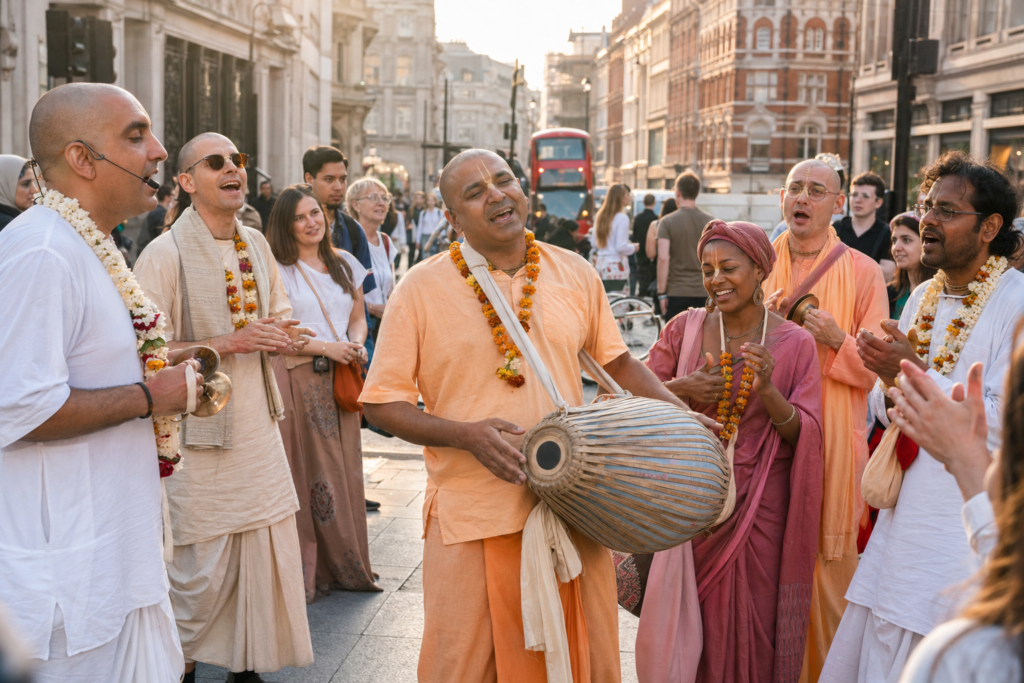
Vaisakha masa (Vaishakh month) is the second lunar month in the traditional Hindu Kannada calendar followed across Karnataka. In 2026, Vaisakhamasa begins on April 18 and concludes on May 16, aligned with the amanta lunisolar reckoning also used in Maharashtra, Andhra Pradesh, Telangana, and Gujarat. Widely honored as Madhava Masam, the month is dedicated to Lord Vishnu and is renowned in the Hindu calendar for auspicious vrata, dāna, and tīrtha-snāna.
In the Kannada Panchanga, months are calculated by the amanta method, from the day after the new moon (amavasya) to the next amavasya. Thus, the civil start on April 18, 2026 corresponds to Śukla Pratipada, and the civil end on May 16, 2026 coincides with Vaishakh Amavasya. Because tithis are astronomical intervals rather than fixed civil days, local sunrise, longitude/latitude, and time zone can shift observance to adjacent dates; for precise muhurta and vrata timings, consultation of a region-specific Panchang remains essential.
By contrast, many northern regions follow the purnimanta scheme (full-moon to full-moon) while retaining tithi-based festival observance. In practice, major vratas occur on the same tithi nationwide, even if the lunar month-label differs between amanta and purnimanta systems. This harmonization ensures continuity of practice across India’s diverse calendrical traditions.
Etymologically and astronomically, Vaishakha is named for the full moon occurring near the Vishakha nakshatra. Each tithi spans 12 degrees of Moon–Sun angular separation, not a uniform 24-hour period, which explains why a tithi can begin or end between sunrises. The month typically overlaps with the solar Mesha season and the cusp of Vrishabha, anchoring it in the April–May summer transition.
As Madhava Masam, Vaisakhamasa emphasizes devotion to Vishnu through parayana such as Vishnu Sahasranama, recitation of Madhava-related stotras, tulasi worship, anna-dana, and summer jal-seva. Puranic traditions extol Vaishakha snana at rivers and sacred tanks, simple sattvic discipline, and daana performed with inner purity. In many Kannada households, mornings begin with cool-water offerings and tulasi puja, reflecting a lived spirituality attuned to the season’s heat and the ethos of compassion.
Key observances within April 18–May 16, 2026 include Akshaya Tritiya 2026 on Vaishakha Shukla Tritiya, an all-auspicious day across Hindu communities and also venerated in Jain tradition in connection with Rishabhanatha. During the fortnight, vrata keepers observe Varuthini Ekadashi in Krishna Paksha for protection and steadiness, and Mohini Ekadashi in Shukla Paksha for clarity and devotion. Vaishnava homes mark Narasimha Jayanti on Vaishakha Shukla Chaturdashi with fasting, kirtana, and evening puja that evokes courage, compassion, and the triumph of dharma.
Vrata discipline in this month follows the standard tithi-first principle: parana for Ekadashi typically occurs on Dwadashi within prescribed sunrise windows, and pradosha vrata aligns with the sandhya period twice each lunar month. As always, local Panchang guidance is recommended for parana windows, pradosha spans, and temple-specific sankalpa formulations.
Vaishakha Purnima crowns the month with broad dharmic resonance. Many sampradayas observe Kurma Jayanti 2026 Vaishakh Purnima, celebrating the Kurma avatara of Vishnu. The same full moon is honored across the Buddhist world as Vesak or Buddha Purnima, associated with the Buddha’s birth, enlightenment, and parinirvana. This shared lunar milestone exemplifies the interwoven heritage of Hinduism and Buddhism and a spirit of harmony that animates the subcontinent’s spiritual life.
The closing Vaishakh Amavasya, which completes the month on May 16, is significant for pitṛ-kārya in many families, including tarpana and quiet remembrance. Positioned at the threshold of seasonal change, this amavasya invites reflective practice, study of dharma, and sankalpa for continued seva and inner cultivation.
Regional rhythms add further color. In Karnataka’s Kannada calendar observance, families often perform Satyanarayana Puja around full moon, offer seasonal naivedya to Vishnu and Lakshmi on Fridays, and organize community jal-dana waystations. In the wider pan-Indian landscape, Akshaya Tritiya inaugurates Chandan Yatra at Jagannath Puri, while temples across Maharashtra, Andhra Pradesh, Telangana, and Gujarat hold sandalwood processions and special abhishekam that bring cooling relief and devotional intimacy in the summer months.
Planning guidance for 2026 is straightforward: Vaisakhamasa opens immediately after Amavasya April 2026 and closes on Vaishakh Amavasya of May 16. Those scheduling vrata, sankalpa, griha puja, or tirtha-yatra should use a location-specific Panchang to confirm exact tithi spans, parana windows, and pradosha periods. Diaspora communities, especially outside India Standard Time, should allow for possible date shifts due to time-zone differences.
Inter-traditional context further enriches the season. While the lunar month maps the observances above, the solar new year Vaisakhi around April 13–14 serves as an adjacent seasonal marker with particular significance in Sikh tradition. Read together, the Sikh Vaisakhi, the Hindu Akshaya Tritiya, the Jain commemoration linked to Rishabhanatha, and the Buddhist Vesak on Vaishakha Purnima reflect a tapestry of shared seasonal rhythms, ethical commitments, and spiritual aspiration across dharmic paths.
In summary, Vaisakhamasa in the Kannada calendar spans April 18 to May 16, 2026. Dedicated to Vishnu as Madhava, the month’s devotional center includes Akshaya Tritiya, Varuthini and Mohini Ekadashi, Narasimha Jayanti, and Vaishakha Purnima, with Kurma Jayanti and Vesak underscoring unity across Hinduism, Buddhism, Jainism, and Sikhism. Aligning personal sadhana, charity, and pilgrimage with these tithis deepens both individual practice and collective well-being.
Inspired by this post on Hindu Pad.