Utpatti or Utpanna Ekadashi, observed on the eleventh lunar day of the dark fortnight (Krishna Paksha) in the Margashirsha Month (and in some regional traditions, the Kartika Month), is revered as the day the protective shakti named Ekadashi emerged to uphold dharma. The observance centers on dedication to Lord Vishnu through disciplined fasting, mindful conduct, and a focused puja routine. The purpose is both devotional and transformative: to purify intention, cultivate self-restraint, and deepen inner clarity while aligning with the compassionate, inclusive values common across dharmic traditions.
Preparation begins on Dashami (the day before Ekadashi) by adopting a saatvik regimen. A light, vegetarian meal taken before sunset supports steadiness in body and mind. Those following traditional guidelines avoid grains and beans from Dashami night onward; others may adapt based on health and guidance. Cleanliness of the home and altar, mental composure, and a clear sankalpa (vow) set with reference to tithi, place, and intent contribute to a rigorous yet serene observance. Local panchang should be consulted to confirm the exact Ekadashi and subsequent Dwadashi parana timing.
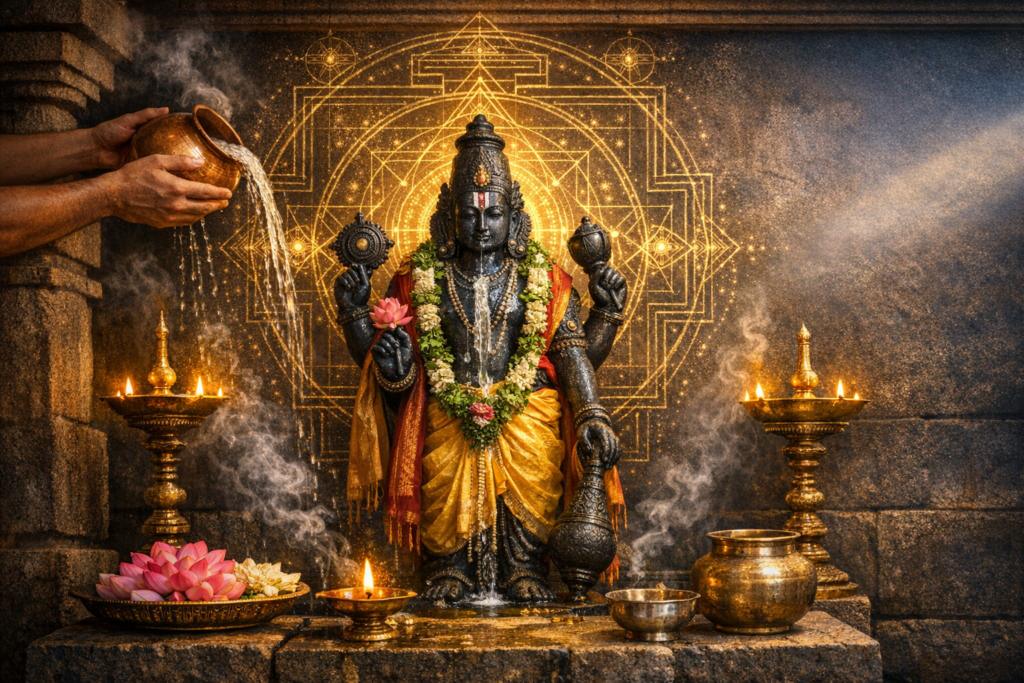
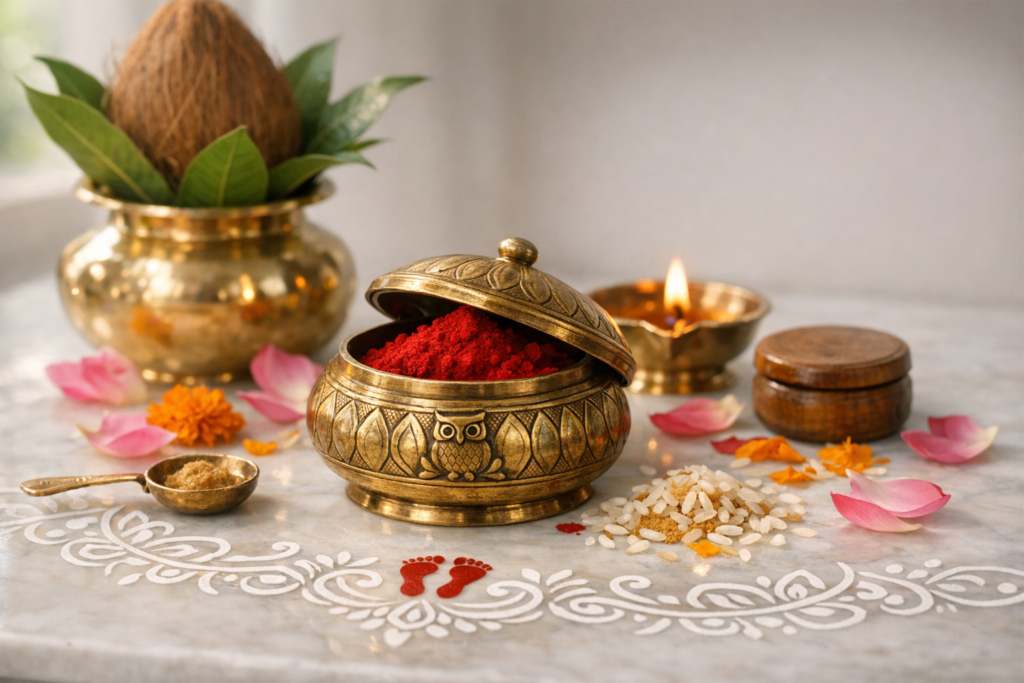
On Ekadashi, an early bath during Brahma-muhurta fosters clarity and reverence. The altar is arranged with an image or murti of Lord Vishnu, a steady lamp, water, flowers, Tulsi leaves, incense, and simple offerings. Practitioners often engage in gentle pranayama and quiet japa to steady attention before commencing formal worship. The inward tone is one of humility, gratitude, and focused remembrance of the Divine.
The puja for Utpanna Ekadashi may be performed in Panchopachara or Shodashopachara form, adjusted to time and capacity. A simple, traditional sequence includes invocation of Lord Vishnu; abhisheka with water or panchamrita (optional); offering of fresh flowers, sandal paste, Tulsi leaves, incense, and deepa; and naivedya of non-grain sattvic foods such as fruits, milk, nuts, or homemade preparations suitable for Ekadashi. Recitation of mantras—such as “Om Namo Narayanaya” and “Om Namo Bhagavate Vasudevaya”—along with Vishnu Sahasranama or select chapters from the Bhagavad Gita (commonly Chapters 12 or 15) enriches the devotional atmosphere and centers the mind.
Fasting on Ekadashi is approached with discernment and compassion. Traditional modes include nirjala (waterless), jala (water-only), phalahara (fruits and milk), or anukalpa (light, non-grain sattvic foods). Each path aims at self-discipline without self-harm. Elders, expectant mothers, those unwell, and individuals with medical conditions should adopt a moderated observance with appropriate nourishment and, if needed, medical advice. The emphasis remains on purity of intention, ethical conduct, and inner steadiness rather than austerity for its own sake.
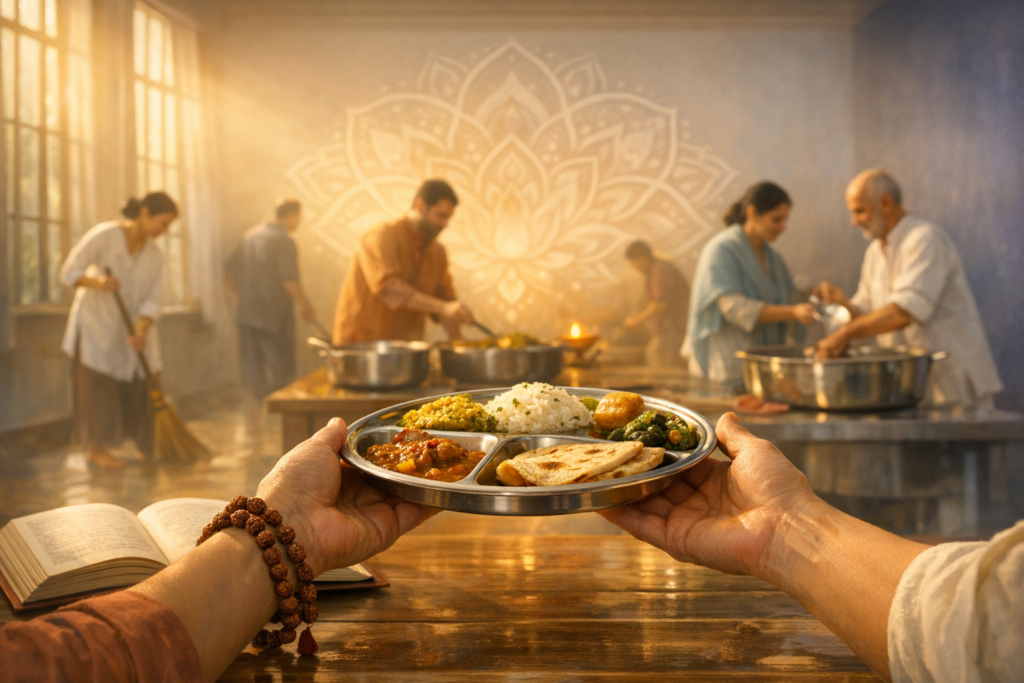
Conduct during the day reflects the vow: practitioners prioritize satya (truthfulness), daya (compassion), and shaucham (purity), while avoiding anger, harsh speech, and lethargy. Many keep a night vigil (jagaran) with bhajans, quiet scriptural reading, or contemplative silence. Charity offered with humility—feeding the needy, supporting community kitchens, or offering sewa—honors the spirit of Ekadashi as much as its form. In this spirit, the observance resonates with shared dharmic values across Hinduism, Buddhism, Jainism, and Sikhism: ethical self-restraint, compassion, mindful living, and service to others.
In the Utpanna Ekadashi Vrat Katha, when the asura Mura threatened cosmic order, a radiant shakti emanated and defeated him. Pleased, Lord Vishnu named this energy Ekadashi and granted that sincere observance on this day would uplift practitioners and absolve transgressions born of ignorance. The name “Utpanna” recalls this “origin” of Ekadashi’s protective vow and its promise of renewal through disciplined devotion.
Parana—the formal breaking of the fast—takes place on Dwadashi after sunrise, within the prescribed parana window noted in the local panchang. The initial portion of Dwadashi known as Hari Vasara is traditionally avoided; parana is performed after it concludes. Before breaking the fast, many offer simple food or seva in gratitude, place water at the base of a Tulsi plant, and share prasada. Parana itself is done gently with water and light sattvic foods to honor the body’s rhythm and the sanctity of the vow.
Regional calendars may list Utpanna Ekadashi under Margashirsha or, in some traditions, Kartika, and some sampradayas may calculate tithi observance differently. For accuracy, one should always follow the local panchang or sampradaya guidance, especially for sunrise-based parana rules. Travelers and diaspora communities may likewise consult reputable panchang apps or local temples for precise timings.
Utpanna Ekadashi Vrat Vidhi offers a balanced path of devotion, discipline, and reflection. Its structure—sankalpa, puja, japa, mindful fasting, charity, vigil, and precise parana—guides practitioners toward inner clarity and compassionate action. When practiced with humility and care, this vrata harmonizes personal transformation with social responsibility, reinforcing unity within and across dharmic traditions.
Inspired by this post on Hindu Pad.