
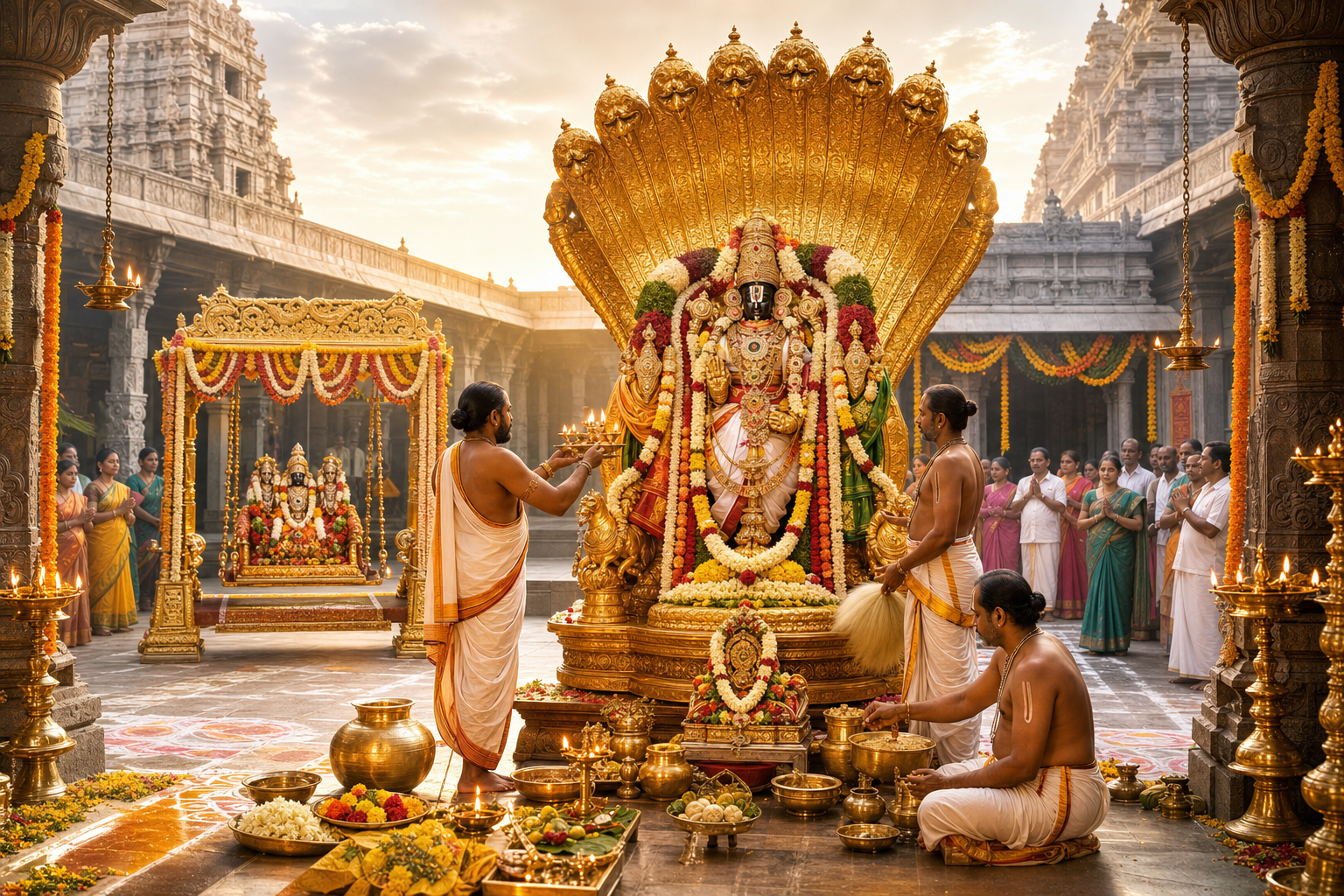
The Salakatla Sakshatkara Vaibhavotsavams at Sri Kalyana Venkateswara Swamy Temple, Srinivasa Mangapuram, are scheduled to be celebrated from July 17 to July 19, 2026. This three-day observance is one of the important annual temple festivals associated with Lord Venkateswara in the Tirupati region, bringing together ritual precision, devotional participation, and the living continuity of Vaishnava temple worship.
The festival will be observed with traditional religious fervour at the historic Sri Kalyana Venkateswara Swamy Temple, Srinivasamangapuram. The temple is closely associated with Lord Venkateswara as Kalyana Venkateswara, a form deeply connected with auspicious marriage, household harmony, and divine protection. For many devotees, especially newly married couples and families seeking blessings, Srinivasa Mangapuram carries a devotional significance second only to Tirumala in the wider sacred geography of the region.
During the three days of Sakshatkara Vaibhavotsavams 2026, special Snapana Tirumanjanam, Unjal Seva, and Vahana Sevas will be performed daily. These rituals are not merely ceremonial additions to the temple calendar; they represent a structured devotional sequence in which the deity is worshipped through sacred bathing, gentle ceremonial procession, and symbolic movement on divine vehicles. Each act allows devotees to encounter the Lord through sight, sound, fragrance, mantra, and collective prayer.
Snapana Tirumanjanam is among the most visually and spiritually meaningful parts of the celebration. In this ritual, the utsava murti is ceremonially bathed with sacred substances according to established temple tradition. The use of water, milk, sandal, turmeric, flowers, and other sanctified offerings expresses purity, renewal, and surrender. In Vaishnava worship, abhishekam is not understood as a symbolic washing alone; it is an intimate act of service in which devotees participate emotionally through darshan, chanting, and reverence.
Unjal Seva, the swing service, adds a tender devotional dimension to the festival. The Lord is placed on a decorated swing and worshipped with music, offerings, and prayers. The gentle rhythm of the seva creates a mood of closeness between the deity and the devotee. It reflects the bhakti tradition’s capacity to combine majesty with intimacy: Lord Venkateswara is worshipped as the supreme divine presence, yet approached with the affection of a household deity who receives care, music, and loving attention.
The Vahana Sevas form the public and processional heart of the Sakshatkara Vaibhavotsavams. As announced in the source schedule, Lord Kalyana Venkateswara will bless devotees on Pedda Sesha Vahanam on July 17, 2026. The remaining festival days continue the tradition of special vahana processions, with the Lord granting darshan to devotees in a form that is both theological and accessible. The vahanam is not a decorative carrier alone; it communicates divine qualities through sacred imagery.
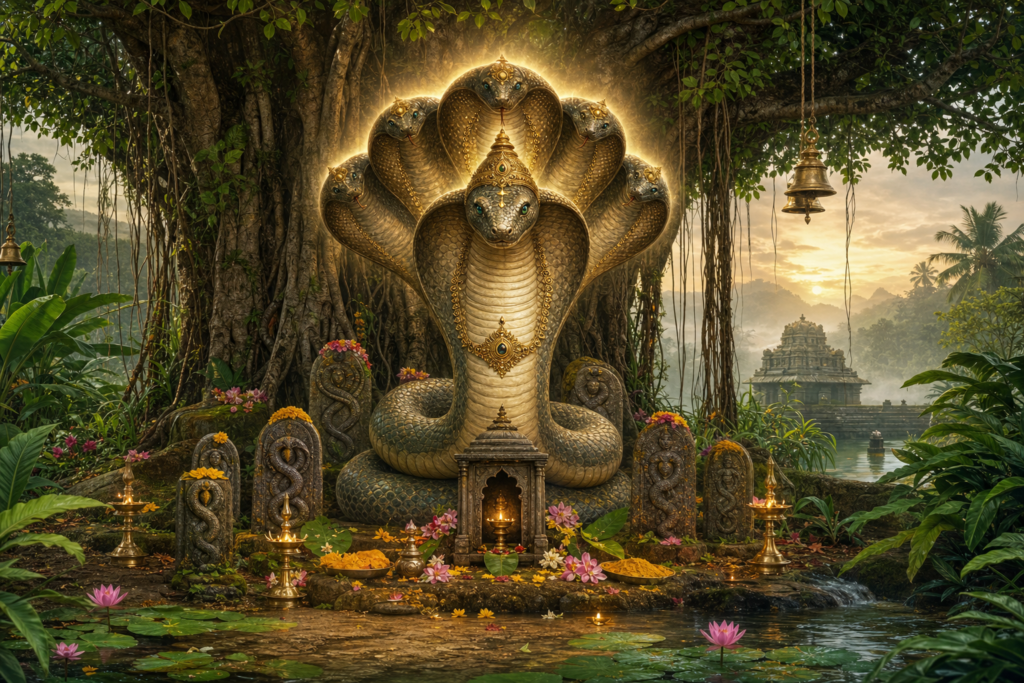
Pedda Sesha Vahanam is especially significant in the worship of Lord Venkateswara. Sesha, the great serpent associated with Lord Vishnu, represents cosmic support, surrender, and eternal service. In the Tirupati tradition, the Seshachalam hills themselves are understood through this sacred association. When Lord Kalyana Venkateswara appears on Pedda Sesha Vahanam, the darshan evokes the Lord as the one who rests upon, rules over, and sanctifies the cosmic order.
The temple at Srinivasa Mangapuram also carries historical importance. It is associated with the sacred narrative of Lord Srinivasa and Goddess Padmavathi after their divine wedding. Tradition holds that the Lord stayed here for a period after marriage before proceeding to Tirumala. This association explains why the temple is especially beloved by couples and families who pray for marital harmony, prosperity, and dharmic household life.
In a broader cultural sense, Sakshatkara Vaibhavotsavams preserve the relationship between temple, community, and memory. The word Sakshatkara suggests direct experience or realization, while Vaibhavotsavam points to a celebration of divine splendour. Together, the festival invites devotees to move beyond passive observation and enter a disciplined atmosphere of darshan, seva, and reflection. Such festivals keep sacred time alive in the modern world, where attention is often fragmented and spiritual practices require conscious renewal.
The daily rituals also demonstrate the technical sophistication of Hindu temple worship. Every stage has a ritual grammar: the timing of worship, the preparation of the utsava murti, the sequence of offerings, the music, the decoration, the movement of the vahanam, and the distribution of prasadam. Temple festivals such as this are living examples of Agamic practice, where theology, aesthetics, architecture, sound, and community organization come together in a disciplined sacred environment.
For devotees planning to visit between July 17 and July 19, 2026, the festival offers a rare opportunity to witness Sri Kalyana Venkateswara Swamy in special alankaram and vahana darshan. The experience is especially meaningful because Srinivasa Mangapuram is not merely a pilgrimage stop near Tirupati; it is a temple with its own devotional personality, its own history, and its own role in preserving the sacred presence of Lord Venkateswara outside the hill shrine of Tirumala.
The festival also reflects the unifying strength of dharmic traditions. Temple worship brings together people of different regions, languages, family backgrounds, and social experiences through a shared devotional rhythm. In that sense, the Sakshatkara Vaibhavotsavams are not only a Vaishnava celebration but also a cultural moment that strengthens Hindu continuity, dharmic identity, and community cohesion through reverence rather than division.
Sakshatkara Vaibhavotsavams at Srinivasa Mangapuram in July 2026 therefore deserve attention not only as a festival announcement but as a reminder of how sacred traditions endure. Through Snapana Tirumanjanam, Unjal Seva, and Vahana Sevas, devotees encounter Lord Kalyana Venkateswara in forms that are scriptural, artistic, and deeply emotional. The celebration offers a disciplined path into devotion, where historical memory and living faith meet in the presence of Sri Venkateswara.
Inspired by this post on Hindu Pad.




Leave a Reply
You must be logged in to post a comment.