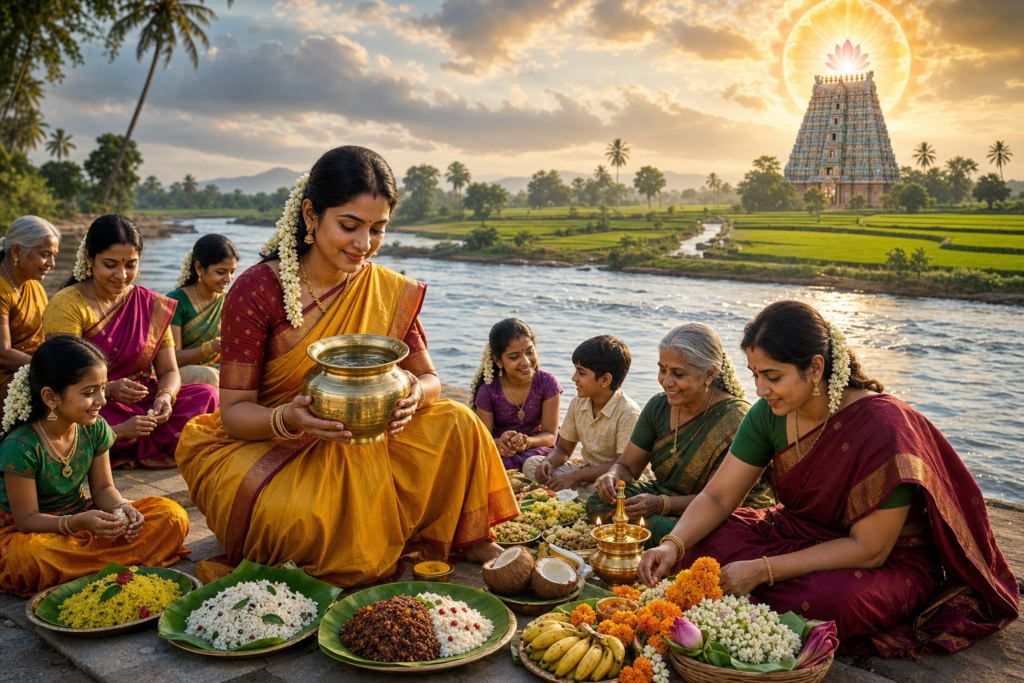
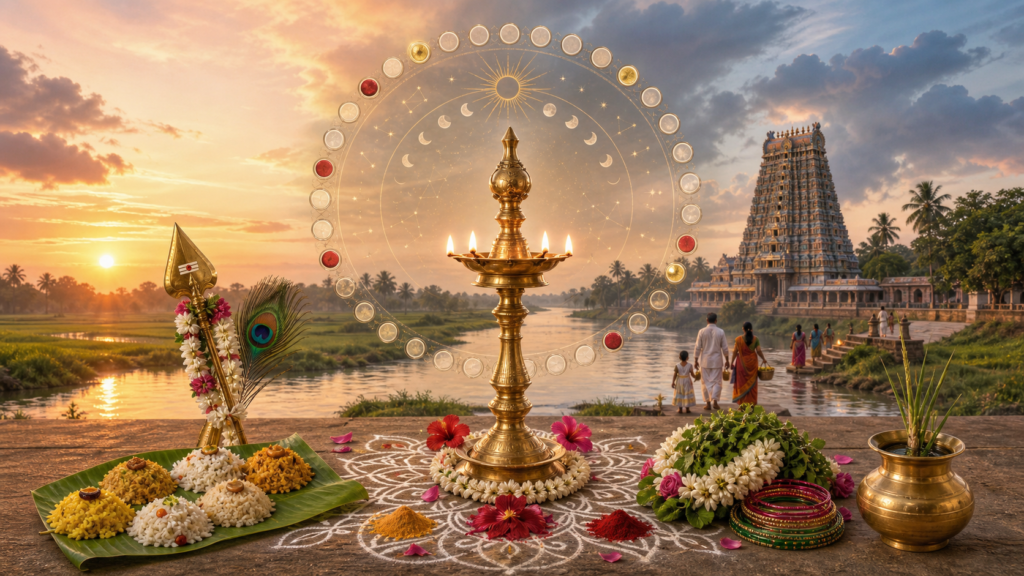
Ratha Saptami, observed on the seventh day of the waxing moon (Shukla Paksha) in the Hindu month of Magha, venerates Surya as the cosmic guide who ushers in the northward journey of the sun (Uttarayana). Among the day’s most distinctive observances is the ritual bath using seven erukkai (arka) leavesCalotropis giganteaperformed at sunrise to align body, mind, and intention with light, clarity, and renewal.
The erukkai leaf bath, often called arka-patra snana, employs seven leaves placed on specific points of the body before bathing while facing east. The customary placements are one on the head, one on each shoulder (two), one on the chest, one on the back, and one on each knee (two), totaling seven. In many regions, the leaves may be adorned with turmeric and akshata (uncooked rice) as an offering of purity and gratitude to Surya.
The number seven resonates across dharmic symbolism: sapta rishi (seven seers), sapta dhatu (seven bodily constituents), sapta lokas (seven realms), and the seven notes of sound (sapta swaras). Within this framework, the seven erukkai leaves become a tactile map of inner purificationintegrating the physical, mental, and ethical dimensions of practice into a single, contemplative act.
Each placement carries layered meaning consistent with Hindu ritual logic. The leaf on the head invokes clarity and discernment (jnana), directing thought toward truth. Leaves on the shoulders signify the acceptance of duty and responsibility (dharma) without undue burden. The leaf on the chest centers courage, devotion, and compassionate resolve. The leaf on the back acknowledges past weight and the conscious release of what no longer serves the path. Leaves on the knees affirm humility and forward movement, honoring the willingness to bow to the light while advancing in life with steadiness.
Mantra and mindfulness deepen this practice. Devotees commonly chant the Surya Gayatri, Suryashtakam, or passages from Aditya Hridayam at dawn as the first rays touch the horizon. The gentle warmth and luminosity of sunrise support a state of present-centered awareness, transforming a simple bath into a disciplined meditation on purity, gratitude, and renewal.
Botanically, erukkai (Calotropis gigantea) is a resilient plant with a milky latex that may irritate sensitive skin or eyes. A respectful, safety-conscious approach is therefore important: select clean, intact leaves; handle them gently to avoid latex seepage; and discontinue use if irritation occurs. Ethically mindful harvestingtaking only what is needed and avoiding harm to the plantaligns the ritual with ecological responsibility.
While Ratha Saptami is rooted in Hindu tradition, the reverence for the sun as a life-sustaining and illuminating presence is a shared motif across dharmic lineages. In Hinduism, Buddhism, Jainism, and Sikhism, the sun functions as a potent symbol of knowledge, clarity, and moral warmth. Practices differ and remain unique to each tradition, yet the underlying ethicgratitude, self-discipline, and servicefosters unity in diversity and mutual respect.
In contemporary life, the seven-leaf ritual offers a structured, meaningful way to mark a seasonal turning point: to cleanse, to reorient intent toward the good, and to recommit to ethical living. Through the symbolism of placement and the sincerity of prayer, Ratha Saptami renews a practitioner’s inner compasstransforming the beginning of Uttarayana into a lived affirmation of clarity, responsibility, humility, and compassionate action.
Inspired by this post on Hindu Blog.