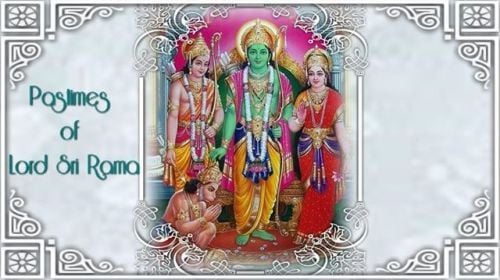
Rama Navami, celebrated on Chaitra Shukla Navami, honors the appearance of Lord Sri Rama and invites a deep engagement with the Ramayana’s ethical vision, devotional moods, and civilizational resonance. Framed by a thoughtful lecture delivered by Gauranga Prabhu at ISKCON Chowpatty, Mumbai, the theme of “Pastimes of Lord Sri Rama” becomes a comprehensive doorway into scripture, sadhana, and shared cultural memory. The discussion that follows synthesizes textual sources, lived ritual, and pan-Indian performance traditions while highlighting the festival’s enduring capacity to unify diverse dharmic communities.
Across India and the global diaspora, Rama Navami observances converge around the midday janma-utsava (birth celebration), collective kirtan, recitation of Sundara Kanda, and abhisheka of Sita-Rama-Lakshmana-Hanuman murtis. The occasion is not merely commemorative; it is transformative, centering on the ideal of Maryada Purushottamaexemplary conduct aligned to dharma under complex circumstances. Listeners and viewers of Gauranga Prabhu’s exposition often report a renewed appreciation for Rama’s leadership, compassion, and unwavering commitment to truth.
Within Vaishnava theology, Sri Rama manifests as an avatara of Vishnu, whose līlā communicates moral clarity and devotional intimacy without compromising realism. ISKCON’s Gaudiya Vaishnava lens honors Rama as the Supreme Lord’s expansion, yet the festival’s spirit remains intrinsically inclusive: it welcomes practitioners from various sampradayas and encourages respectful participation by those who recognize the value of dharmic ethics, seva, and inner refinement. This inclusivity mirrors the wider Indian civilizational principle of spiritual diversity within a shared ethical horizon.
Primary sources for Rama’s pastimes include the Valmiki Ramayana, the Adhyatma Ramayana, and regional retellings such as Tulsidas’s Ramcharitmanas. Modern scholarship benefits from the critical edition of the Valmiki Ramayana, which collates diverse recensions to illuminate textual history while preserving devotional access. Reading these texts side by side reveals a consistent portrait: Rama’s life integrates rajadharma (statecraft), svadharma (personal duty), and lokasangraha (the welfare of all).
Bala Kanda narrates Rama’s birth in Ayodhya to Dasharatha and Kausalya, the tutelage of sage Vasistha, and the training under Vishvamitraculminating in the protection of yajnas and the subduing of disruptive forces such as Tataka. The svayamvara in Mithila, where Rama lifts and strings Shiva’s bow, announces a union with Sita that blends cosmic destiny with exemplary conduct. These episodes foreground two enduring lessons: righteous strength deployed without cruelty, and humility maintained despite incomparable prowess.
Ayodhya Kanda presents an ethical crucible. Rama accepts fourteen years of vanvāsa to safeguard his father’s honor and the legitimacy of the royal word, modeling unwavering fidelity to dharma. Sita’s insistence on accompanying Rama, and Lakshmana’s inseparable loyalty, together illustrate dharma as a network of relational dutiestruth, companionship, and sacrificerather than a solitary code.
In the forest, Rama engages sages, protects hermitages, and navigates the balance between ahimsa and the kshatra-dharma that ensures social safety. Encounters with Atri and Anasuya, and later with Sabari, emphasize that devotion (bhakti) is not caste-bound or status-dependent; it is authenticated by sincerity. Sabari’s hospitalityoffering fruits with loving discernmenthas inspired households and monasteries alike to see seva and love as the essence of worship.
The episode of Surpanakha, the subsequent conflict with Khara and Dushana, and Sita’s abduction by Ravana mark a shift from pastoral exile to moral struggle on a civilizational scale. Kishkindha Kanda’s alliance with Sugriva is both strategic and ethical, testing Rama’s judgment in the Vali-vadha incident. Commentators have long examined Rama’s action through the prisms of rajadharma, treaty fidelity, and proportional justice, concluding that Rama’s intervention secured a just ruler to serve the commonweal while restraining personal animus.
Sundara Kanda centers Hanuman’s fearless devotionsravana, kirtana, and smarana congealed into kinetic seva. His leap across the ocean, respectful encounter with Sita in Ashoka Vatika, and measured destruction in Lanka demonstrate that zeal in service can coexist with restraint and discrimination (viveka). Hanuman’s dasa-bhava has become a devotional template across centuries, inspiring kirtans, vrata observances, and personal sadhana on Rama Navami and beyond.
With the aid of Nala and Nila, the vanara sena constructs the Setu to Lanka, combining engineering ingenuity with collective devotion. The bridgeRam Setuhas inspired pilgrimage, poetry, and inquiry, symbolizing the triumph of cooperative effort over seemingly insurmountable barriers. It stands, culturally and spiritually, for the proposition that faith and skill are not rivals but partners in service to dharma.
Yuddha Kanda narrates a dharma-yuddha shaped by counsel, warnings to the adversary, and measured force. Vibhishana’s principled dissent and subsequent refuge with Rama affirm that just order welcomes the ethically resolute, even if they arise from within an opposing camp. Ravana’s fall is not only the end of a tyrant; it is a reminder that brilliant minds without humility gravitate toward self-destruction.
Rama’s return to Ayodhya and the Pattabhisheka inaugurate Rama Rajyaa governance ideal remembered for justice, accountability, and the flourishing of all beings. For contemporary readers, the concept offers a template for leadership: transparent institutions, the rule of law tempered by compassion, and rulers who view office as service, not privilege.
Ritual observances on Sri Rama Navami vary regionally yet converge in intent. Many undertake a daytime fast, perform abhisheka with panchamrita, and recite selections from the Valmiki Ramayana or Sundara Kanda. Offerings such as panakam (jaggery-water), kosambari, and satvika preparations honor the sattvic mood of the day. In several traditions, Sri Rama Pattabhishekam is commemorated shortly after Navami, extending the meditative arc from divine birth to ideal governance.
ISKCON communities, including ISKCON Chowpatty, often weave extended kirtans, scriptural readings, and thematic lectures into the celebration, facilitating both rasa (devotional relish) and tattva (philosophical understanding). Gauranga Prabhu’s teaching style, rooted in shastra and applied insight, encourages practitioners to connect Rama’s pastimes to daily choicestruthful speech, disciplined mind, and compassionate strength.
Ethically, Rama exemplifies vow-keeping, clarity in crisis, and humility in victory. The exile, alliance-building in Kishkindha, and adjudication in Lanka serve as living case studies in decision-making under uncertainty. Leaders across sectors routinely draw on these episodes to reflect on moral courage, empathetic authority, and the primacy of duty over self-interest.
Rama Navami also illuminates unity across dharmic traditions. The Dasharatha Jataka in the Buddhist canon preserves a Ramayana-like narrative, attesting to shared cultural memory. The Jain Paumacariya by Vimalasuri reinterprets events within Jain ethical frameworks, while Sikh scripture frequently invokes Ram-naam as a name for the Divine, emphasizing the formless, all-pervading reality. These convergences invite mutual respect and demonstrate that the values celebrated on Rama Navamitruth, compassion, and righteous strengthbelong to a broader spiritual commons spanning Hinduism, Buddhism, Jainism, and Sikhism.
The performing arts translate Rama’s pastimes into communal experience. Ramlila, recognized by UNESCO as Intangible Cultural Heritage, stages the epic with music, dialogue, and ritualized symbolism. Classical and folk traditionsKathakali, Yakshagana, Kuchipudi, and regional Harikathacontinue to interpret Sita’s steadfastness, Lakshmana’s service, and Hanuman’s devotion, making the epic emotionally accessible across languages and generations.
Pilgrimage centers along the Ramayana’s sacred geography reinforce the festival’s narrative arc. Ayodhya evokes origin and rightful sovereignty; Chitrakoot and Panchavati recall contemplative exile; Hampi’s Kishkindha terrain suggests alliance and renewal; Rameswaram memorializes resolve through the oceanic crossing. Temples such as Bhadrachalam sustain living traditions that culminate in Sri Rama Pattabhishekam festivities, binding regional practice to pan-Indian devotion.
Scholarly inquiry enriches devotion without displacing it. Comparative studies of Ramayana recensions reveal both stability and creative adaptation, while commentarial traditions (from Advaita to Vishishtadvaita and various Vaishnava schools) examine theological nuances. Hermeneutically, readers balance itihasa (history-epic) with adhyatmika (spiritual) meanings, allowing Rama’s pastimes to inform both public ethics and inner transformation.
Within this integrative view, bhakti, jnana, and karma do not compete but converge. Rama’s conduct elucidates karma aligned to dharma, devotion refines the heart to recognize the sacred in all, and wisdom perceives unity behind manifold forms. The synthesis is practical: it yields equanimity, clear judgment, and the courage to act without attachment.
Practitioners observing Rama Navami commonly adopt simple, sustainable practices that deepen engagement: daily japa of the Rama-naam, study of a few sargas each week, and small acts of seva within family and community. Even modest offeringsassisting at a local temple, reading Sundara Kanda in a group, or distributing prasadatranslate inspiration into durable habit. Over time, these habits shape character, confirming the Ramayana’s claim that virtue ripens through consistent practice.
Emotionally, the festival helps resolve the apparent tension between strength and tenderness. Rama’s readiness to forgive, welcome Vibhishana, and grieve with Jatayu demonstrates that courage does not cancel compassion; it fulfills it. Many attendees of lectures and kirtans report that this integration becomes a personal anchor during times of uncertainty.
In sum, the pastimes of Lord Sri Ramapresented through scripture, ritual, and thoughtful expositionoffer a complete pedagogy for ethical living and spiritual growth. Rama Navami thus serves as both celebration and curriculum: it honors a divine life while cultivating the capacities needed to build just institutions, kind communities, and disciplined inner worlds. Embracing this vision with a spirit of unity across dharmic traditions strengthens shared heritage and illuminates a common path toward wisdom and peace.
Inspired by this post on Dandavats.