
Sanatana Dharma, also known as Hinduism, Buddhism, Jainism, and Sikhism, is a group of religions that share a common origin and values. These religions are known as “karmic” religions because they believe in the law of karma, which states that our actions have consequences and that we must take responsibility for our actions. The celebration of Parashuram Jayanthi is a perfect example of the commonalities between these religions.
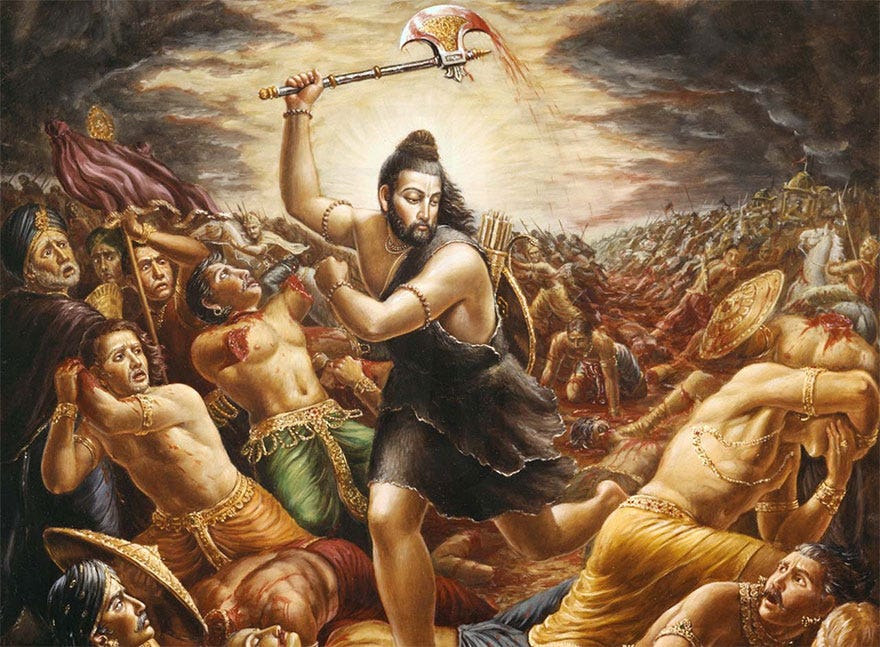
Parashuram Jayanthi is celebrated on the third day of the Hindu month of Vaishaka, which usually falls in late April or early May. This day is dedicated to Lord Parashuram, who is considered the sixth avatar of Lord Vishnu in Hinduism. Lord Parashuram is revered as a warrior god who fought for the common good and defeated corrupt rulers who oppressed the people.
History

The story of Lord Parashuram can be found in various texts of Sanatana Dharma. According to the Ramayana, Lord Parashuram was born to sage Jamadagni and his wife Renuka. He was raised in an environment of discipline and virtue and was taught the art of warfare by his father. Lord Parashuram was given a divine axe, Parashu, by Lord Shiva himself, which he used to defeat and kill the corrupt rulers of his time.
The story of Lord Parashuram is also mentioned in the Mahabharata, which describes how he challenged and defeated the Kshatriya warriors who had become corrupt and abusive towards the Brahmin community. The Mahabharata also describes how Lord Parashuram played a key role in the battle of Kurukshetra, where he fought alongside the Pandavas against the Kauravas.
Current State

Parashuram Jayanthi is celebrated in different parts of the world, especially in India, with great enthusiasm and devotion. In some regions, it is celebrated as a harvest festival, while in others, it is a day dedicated to the worship of Lord Parashuram. The celebration of Parashuram Jayanthi varies from region to region, but the message of the festival remains the same – the importance of fighting for what is right and standing up against oppression and corruption.
The celebration of Parashuram Jayanthi highlights the commonalities between the religions of Sanatana Dharma. Lord Parashuram is revered not just by Hindus, but also by Sikhs, Jains, and Buddhists. Lord Parashuram’s message of fighting for what is right and standing up against oppression and corruption resonates with all these religions.
Lord Parashuram’s use of the divine axe to defeat corrupt rulers also has deep symbolic significance in all these religions. The axe represents the power to destroy evil and bring justice to the oppressed. In Sikhism, the Khanda, a double-edged sword, represents the same message. In Jainism, the message of non-violence is emphasized, but the use of force to defend oneself and others against violence is also allowed.
Literature

The literature around Parashuram Jayanthi is vast and varied. The story of Lord Parashuram is mentioned in various texts. The story of Parashurama is deeply intertwined with the history and beliefs of the Sanatana Dharma. As such, it is important to delve into the literature and sources that form the basis of this concept to understand its significance and relevance to the modern-day.
Hinduism

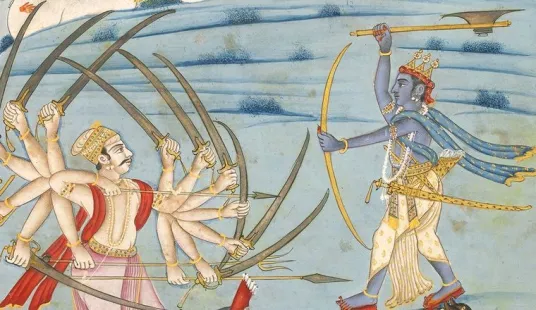
One of the earliest sources of the story of Parashurama is the Hindu epic, the Mahabharata. In this epic, Parashurama is depicted as the sixth avatar of the god Vishnu, who incarnates on Earth to rid it of the kshatriya or warrior varna, who had become corrupt and were oppressing the other varna. Parashurama is said to have destroyed the kshatriya race 21 times, wielding an axe, which is why he is often referred to as the “axe-wielding” god.
Another source of the story of Parashurama is the Ramayana, another Hindu epic. In this epic, Parashurama appears as a mentor to the hero Rama, teaching him the art of warfare and providing him with a divine bow.
The story of Parashurama is also mentioned in the Puranas, which are a collection of Hindu scriptures that contain detailed accounts of the gods, their deeds, and their interactions with mortals. In the Puranas, Parashurama is depicted as a fierce warrior who is uncompromising in his quest for justice.
तपस्विनं शूरं रामं दाशरथिं रणान्तिके । परशुरामं च विप्रोंतं धर्मज्ञं रघुनंदनम् ॥
Tapasvinam shuram ramam dasharathim ranantike. Parashuramam cha viprontam dharmajnam raghunandanam.
Rama, who is an ascetic, a hero, and the son of Dasharatha, along with Parashurama, a learned Brahmin and an expert in dharma.
~ Ramayana, Ayodhya Kanda
दत्ते तु कर्मणि परशुरामो रामस्य चापि त्रिदशेश्वरस्य च ।
Datte tu karmani parashuramo ramasya chaapi tridasheshvarasya cha.
Parashurama gave the divine weapon to both Rama and Tridasheshvara.
~ Mahabharata, Adi Parva
अदृष्टपूर्वं परशुरामो महात्मा रामवद्वैतं व्यसृजद्रणे कृष्णम् ॥
Adrishtapurvam parashuramo mahatma ramavadvaitam vyasrijadranne krishnam.
The great soul Parashurama, who had never before been seen, created Krishna as identical to Rama.
~ Harivamsa Purana, Vishnu Parva
Jainism
In Jainism, Parashurama is considered to be one of the 63 illustrious figures or salakapurushas. According to Jain tradition, he achieved moksha or liberation from the cycle of birth and death by practicing the Jain principles of non-violence, truth, and compassion.
While Vamana and Parashurama are primarily associated with Hinduism, Jainism also has its own unique interpretation of these figures.
According to Jainism, Vamana and Parashurama are not considered divine incarnations of Vishnu, but rather as ordinary human beings who attained spiritual liberation through their deeds. Vamana is revered as the 12th of the 24 Tirthankaras (spiritual leaders) in Jainism, while Parashurama is one of the 63 Salakapurushas (illustrious figures).
Jain texts such as the Kalpa Sutra and the Bhagavati Sutra feature stories about Vamana and Parashurama that differ from the Hindu versions. For example, in the Jain version of the Vamana story, Vamana is portrayed as a Jain monk who attains enlightenment by showing compassion to a poor Brahmin. In the Jain version of the Parashurama story, Parashurama is depicted as a hermit who achieves spiritual liberation by renouncing violence and living a life of non-attachment.
Jainism has its own distinct interpretation of well-known Hindu figures such as Vamana and Parashurama, portraying them as models of spiritual attainment through non-violence and compassion.
An interesting article of Jain understanding of Sanatana Itihaasa.
The reference to Parashurama being one of the 63 illustrious figures or Salakapurushas can be found in the text “Trilokasara” by Acharya Nemichandra Siddhanta Chakravarti, who was a 10th-century Jain monk and scholar. The text is a Jain cosmological work that describes the three realms of existence and the 63 illustrious figures or Salakapurushas associated with them. The reference to Parashurama can be found in the section describing the third realm of existence known as the Alokakasha.
Sikhism

Similarly, in Sikhism, Parashurama is venerated as a warrior who fought for the rights of the oppressed and marginalized. He is seen as a role model for those who are committed to fighting for justice and freedom.
Parashurama is mentioned in the Dasam Granth, which is a scripture in Sikhism that was composed by Guru Gobind Singh, the tenth Sikh Guru. In the Dasam Granth, Parashurama is primarily portrayed as a warrior who fought against evil forces and upheld righteousness.
One example of this can be found in the section known as “Bachitar Natak,” which is a composition in the Dasam Granth that describes the Guru’s spiritual journey and the battles he fought for justice. In “Bachitar Natak,” Guru Gobind Singh describes Parashurama as one of the great warriors who fought for the welfare of the world and defeated evil forces.
Additionally, the Dasam Granth also includes other compositions that mention Parashurama, such as “Chandi Charitar” and “Shastar Nam Mala,” where he is portrayed as a valiant warrior who uses his weapons to fight against the enemies of righteousness.
ਤੁਹੀ ਹੋਇ ਪਰਸਰਾਮ ਜਗ ਮਹਿ ਪ੍ਰਕਾਸੀ ॥
ਸਕਲ ਛਤ੍ਰੀਅਨ ਕਉ ਕਰੈ ਛੈ ਬਿਨਾਸੀ ॥Tuhī hoī parasarām jag mahi prakāsī.
Sakal chatrīan ka’u karai shai bināsī.You became Parasuram and manifested in the world.
~ Dasam Bani – Pannaa 1428
You destroyed all the warriors with your sword.
ਤੂਣਿ ਕਸੇ ਕਟ ਚਾਂਪ ਧਰੇ ਕਰ ਕੋਪ ਕਹੀ ਦਿਜ ਰਾਮ ਅਹੋ ॥
ਗ੍ਰਹ ਤੋਰਿ ਸਰਾਸਨ ਸੰਕਰ ਕੋ ਸੀਅ ਜਾਤ ਹਰੇ ਤੁਮ ਕਉਨ ਕਹੋ ॥
ਬਿਨ ਸਾਚ ਕਹੇ ਨੇਹੀ ਪ੍ਰਾਨ ਬਚੇ ਜਿਨਿ ਕੰਠ ਕੁਠਾਰ ਕੀ ਧਾਰ ਸਹੋ ॥
ਘਰ ਜਾਹੁ ਚਲੇ ਤਜ ਰਾਮ ਰਣੰ ਜਿਨਿ ਜੂਝਿ ਮਰੋ ਪਲ ਠਾਂਢ ਰਹੋ ॥Tūni kasē kaṭ chāmp dhharē kar kōp kahī dij rām ahō.
Grah tōri sarāsan sankar kō sīa jāt harē tum kaun kahō.
Bin sāch kahē nēhī prān bachē jin kant̤h kuthār kī dhār sahō.
Ghar jāhu chalē taj rām raṇan jin jūjh marō pal thān̤dh rahō.You wield a sword, hold a shield and roar in anger, calling out to Lord Rama.
~ Dasam Bani – Pannaa 2391
You break the equipment and weapons of your enemies in battle. Who can defeat you?
Without speaking the truth, one cannot save their life. Those who bear the axe on their shoulder, save their life.
It will be appropriate, if you leave the war-arena and run away to your home, otherwise if you stay here for another instant, you will have to die.
Buddhism

In Buddhism, Parashurama is not mentioned by name, but there are several stories in Buddhist literature that feature an axe-wielding warrior who embodies the principles of compassion and selflessness.
One such story can be found in the Jataka Tales, which are a collection of 547 Buddhist stories that are believed to be about the previous lives of the Buddha. The specific story in question is called “The Bodhisatta’s Search for Truth” and features a character named Prince Temiya, who wields an axe and embodies the principles of compassion and selflessness.
In the story, there are several incidents involving an axe that Prince Temiya wields. The first incident occurs when his parents order him to go on a hunting trip with them. Prince Temiya doesn’t want to harm any living beings, so he brings an axe with him and uses it to chop down trees and bushes to scare the animals away. When his parents find out, they become angry and accuse him of being useless on the hunting trip.
The second incident occurs when Prince Temiya’s father orders him to plow a field. Prince Temiya doesn’t want to harm any living beings, so he again brings the axe with him and uses it to chop down the weeds and grass instead of plowing. When his father finds out, he becomes angry and accuses him of being lazy.
The third incident occurs when Prince Temiya’s parents try to prevent him from leaving the palace to become a monk. Prince Temiya tries to reason with them, but they become violent and threaten him. In self-defense, Prince Temiya wields the axe and swings it around without actually harming anyone. This incident convinces his parents that he is determined to follow his path and they eventually allow him to leave.
These incidents show that Prince Temiya is committed to the principles of non-violence and compassion, even in situations where violence might seem necessary. The axe is a tool that he uses to avoid harm to living beings, rather than to cause harm.
Unifying ideas
In all of these sects of the Sanatana Dharma, Parashurama is revered as a god or a great figure who represents the ideals of justice, righteousness, and compassion. His story serves as an inspiration to those who seek to live a life that is in alignment with these principles.
However, it is important to note that the story of Parashurama is not simply a myth or a legend. It is deeply rooted in the history and culture of the Indian subcontinent, and there are many archaeological and historical records that support the existence of a warrior varna and the conflicts that arose between different varna during ancient times.
In addition, the story of Parashurama has been passed down through generations of people, who have used it as a way to teach important moral and ethical lessons to their children and to reinforce the values of their respective religions.
Today, the story of Parashurama continues to be an important part of the cultural heritage of India and the surrounding regions. It is celebrated annually on Parashurama Jayanthi, which is a day dedicated to honoring the god and his deeds.
Conclusion

In conclusion, the story of Parashurama is a fascinating and multifaceted one that has played an important role in the history and culture of the Sanatana Dharma. From his role as a warrior god to his status as a spiritual leader and teacher, Parashurama continues to inspire people of all ages and backgrounds to live a life that is grounded in principles of compassion, justice, and righteousness.