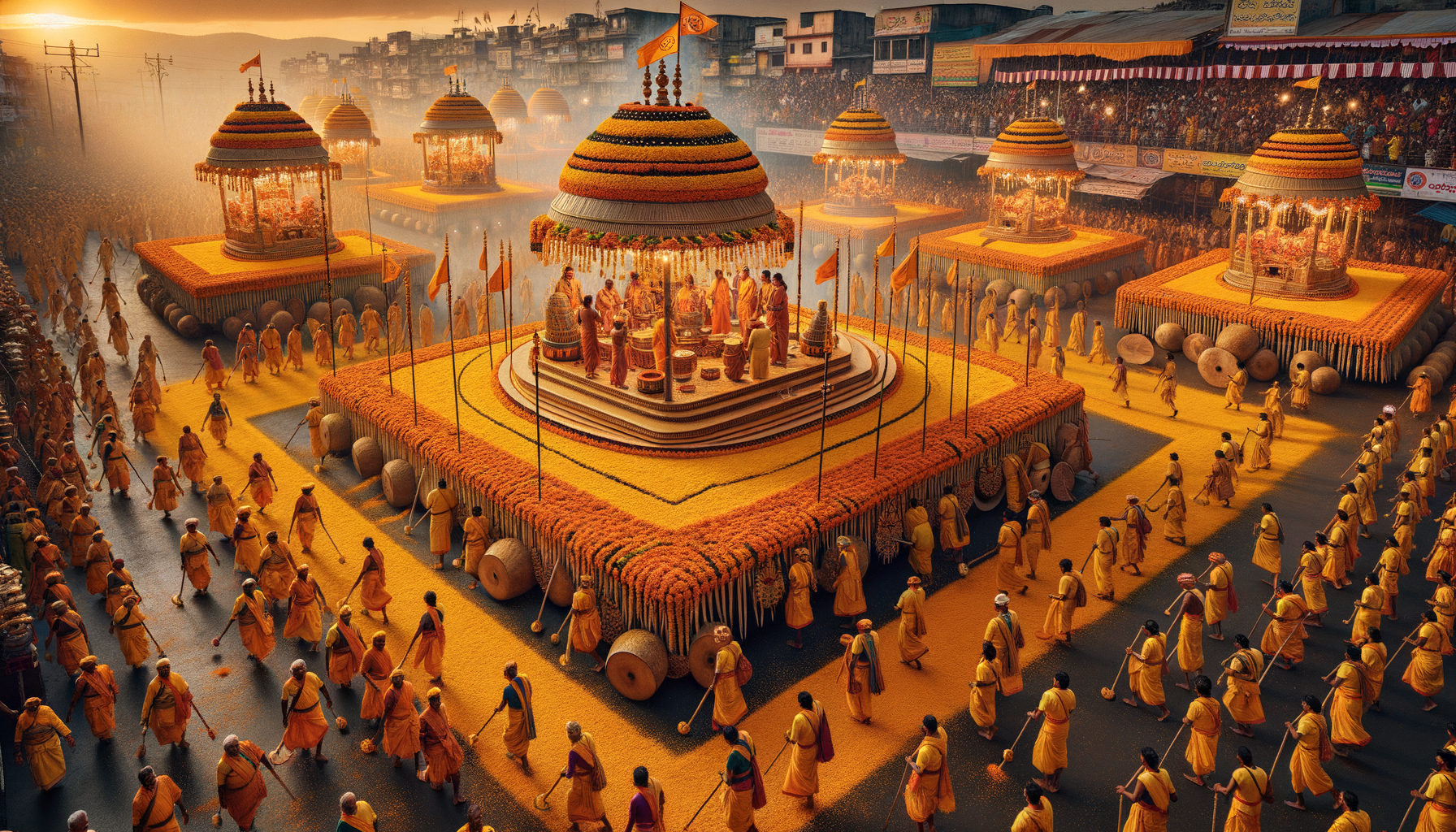
On 29 January 2026, the 2nd day of Medaram Jatara is marked by the solemn and celebratory arrival of Sammakka onto the Medaram Gaddhe (platform). The moment is observed with official honors from police and government representatives, reflecting the recognition of this sacred tribal festival as a living repository of cultural heritage in Telangana and beyond.
Medaram Jatara, often described as Asia’s largest tribal congregation, venerates the mother-daughter deities Sammakka and Sarakka (Saralamma). Rooted in the collective memory of the Koya and allied communities, the festival embodies resilience, communal harmony, and devotion. Its inclusive ethos resonates with the broader dharmic vision of unity in diversity across Hinduism, Buddhism, Jainism, and Sikhismanchored in reverence for nature, ethical conduct, and service.
The ritual sequence on Day 2 centers on the symbolic enthronement of Sammakka at the Medaram Gaddhe. Pujaris bring bamboo stickssacred insignia that signify the living presence of the deityand place them on the platform with ritual care. The space is sanctified through offerings, chants, and traditional adornments such as turmeric and vermilion, while devotees present customary offerings that include coconuts and jaggery.
‘Edurukolla Ghattam’ is widely noted as one of the most evocative events associated with the arrival sequence, particularly linked with Sarakka. This performative ritual symbolizes a principled confrontation with injustice and the collective duty to protect dharma. For many observers, the enactment provides an interpretive lens onto the community’s historical memory, valor, and moral order.
As processions approach the sacred site, rhythmic drums, conch calls, and the chromatic glow of turmeric and kumkum create a distinct atmosphere of sanctity. The official homage frames the event within a broader civic acknowledgement of indigenous traditions, while the gathering of pilgrims underscores the festival’s role as a bridge between local identity and pan-Indian cultural consciousness.
Held in Telangana’s Mulugu district and usually aligned with the Magha month, this biennial observance offers a carefully structured progression: Sarakka’s arrival on Day 1, Sammakka’s arrival on Day 2, large-scale offerings on the following day, and the ceremonial conclusion thereafter. The 2026 schedule follows this established rhythm, enabling first-time visitors and returning pilgrims to situate their participation within a clear and meaningful sequence.
For many pilgrims, the arrival of Sammakka evokes a deeply personal sense of protection, gratitude, and renewal. For researchers and cultural stewards, the day offers a rare window into the conservation of intangible cultural heritage, in which ritual objects, oral histories, and communal participation are interwoven to sustain continuity over centuries.
Together, these rites affirm a dharmic spirit that welcomes diverse paths while remaining rooted in place-based wisdom. By honoring Sammakka’s arrival with dignity and devotion, Medaram Jatara advances a shared cultural horizonone that fosters unity across traditions and strengthens the living fabric of India’s spiritual and social life.
Inspired by this post on Hindu Pad.