
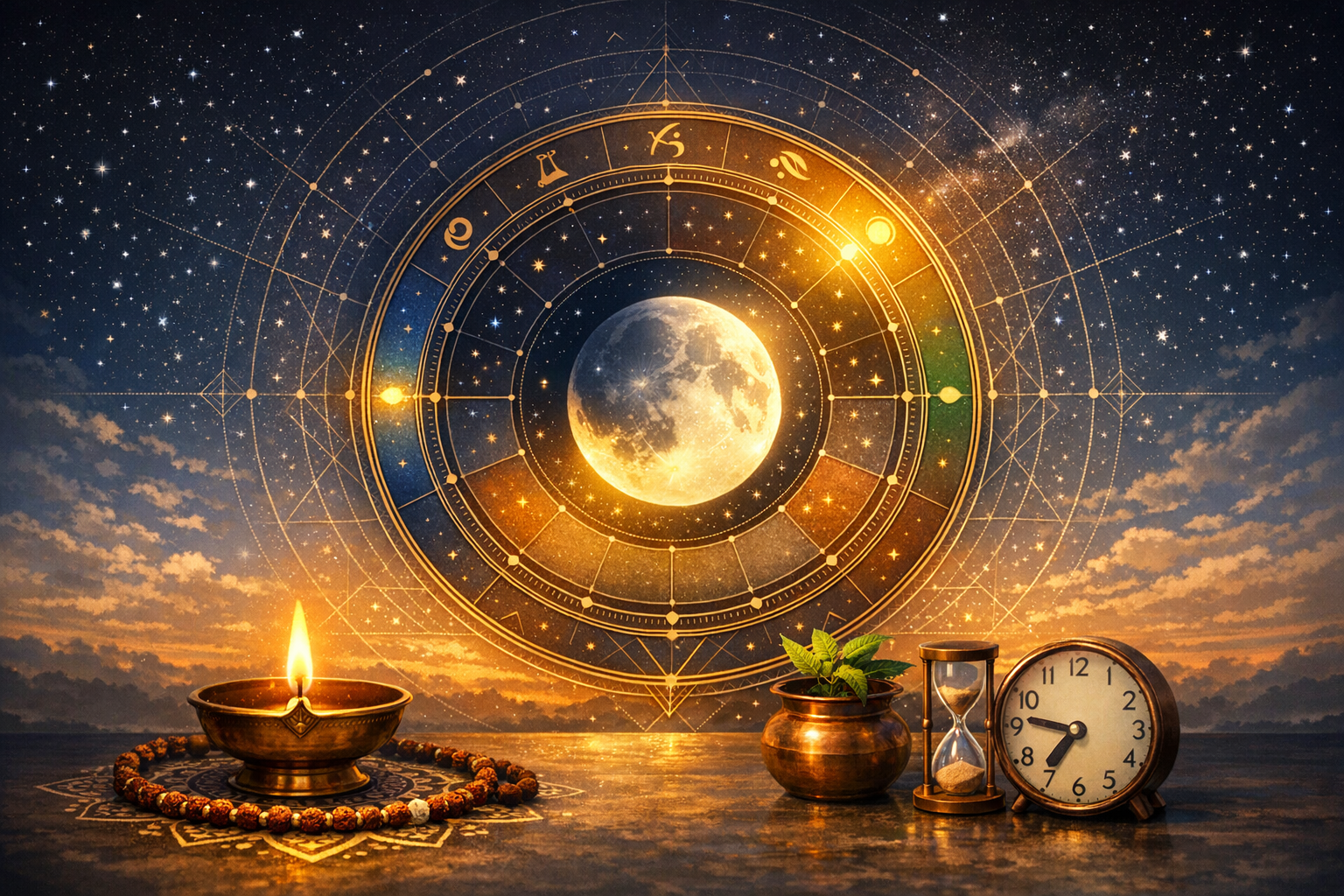
On Wednesday, May 27, 2026, the Hindu calendar (Panchang) notes Shukla Paksha Ekadashi prevailing until 7:49 AM, after which Shukla Paksha Dwadashi takes over for the remainder of the day in most regions. As with all lunar calculations, the exact end of the tithi can vary slightly by location and calculation school; households are advised to follow a reliable local Panchang aligned to their place of observance.
In Panchang astronomy, a tithi is marked by every 12° of angular separation between the Moon and the Sun. Shukla Paksha denotes the waxing phase of the Moon. Ekadashi is the eleventh tithi, and Dwadashi the twelfth. The transition at 7:49 AM indicates that sunrise on May 27 still occurs during Ekadashi, a detail that has ritual consequences for those observing vrata (fasting) and for the timing of parana (fast-breaking).
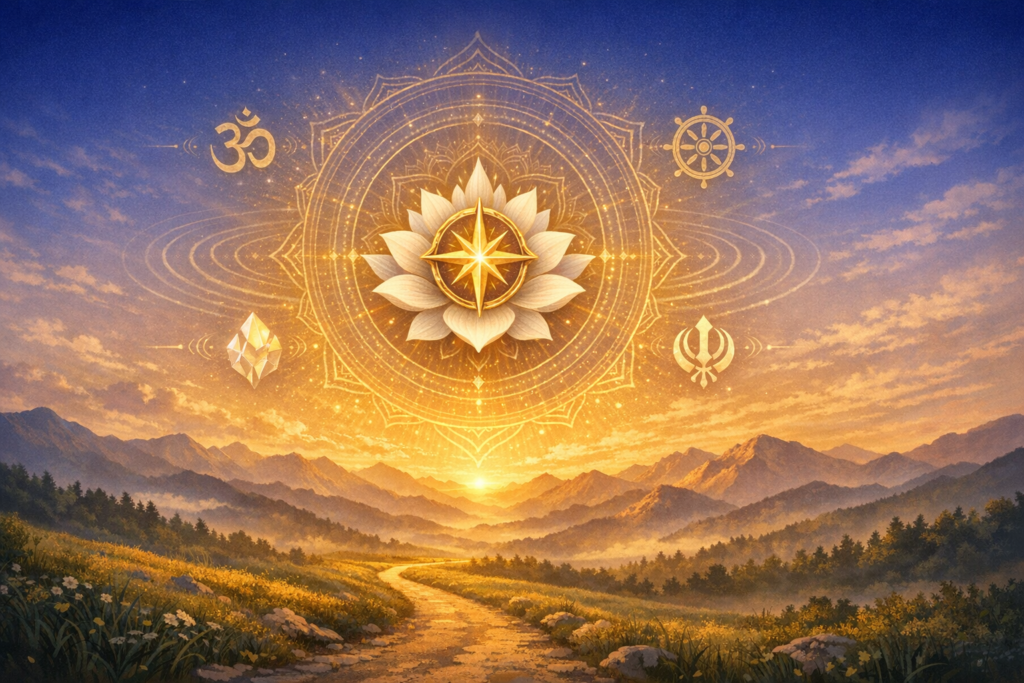
Ekadashi holds a special place across Hindu traditions for cultivating sattva (clarity, balance) through vrata, japa, and dana (charity). Many households experience a shared sense of quiet focus on Ekadashi mornings, finding that the day’s gentle rhythm encourages inner discipline, compassion, and mindful living. This ethos resonates across the broader dharmic family: Buddhism’s Uposatha, Jainism’s poshadha/Agiyaras (fasts aligned to lunar days), and Sikhism’s emphasis on simran and seva all affirm the same inner work of self-restraint, remembrance, and service.
For those observing Ekadashi vrata on May 27, the classical rule is to break the fast only during Dwadashi and preferably after sunrise, while avoiding Hari Vasara (the last quarter of Ekadashi). Because Dwadashi begins at 7:49 AM, the parana window, in principle, opens after that change of tithi. The precise parana interval depends on local sunrise and the duration of Dwadashi; therefore, consulting a trusted local Panchang for the exact window is essential, especially if Dwadashi’s post-sunrise span is brief in a given locality.
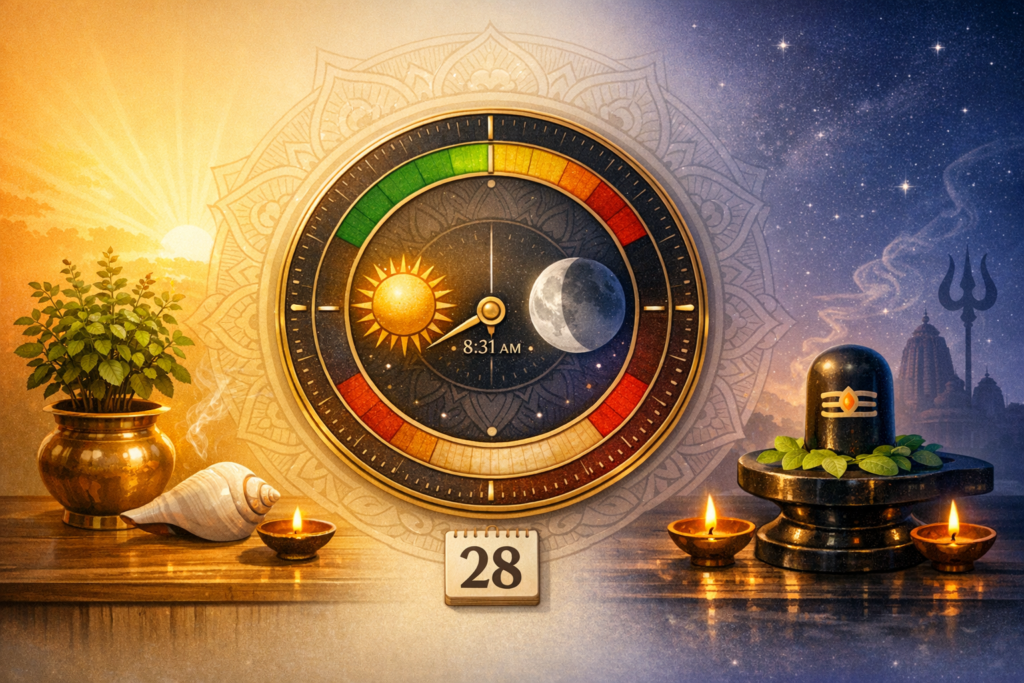
Planning auspicious activity (Shubh Muhurat) benefits from a few universal pointers. Abhijit Muhurta, centered on local solar noon, is traditionally recommended for undertakings that require decisiveness and protection from obstacles; it lasts roughly 48 minutes, straddling local midday. Brahma Muhurta, occurring about 96 minutes before sunrise, is esteemed for meditation, japa, and svadhyaya (study). Vijay Muhurta in the late afternoon is often cited for endeavors requiring momentum and success. These muhurats are anchored to local sunrise and solar noon; hence exact clock times must be derived from the local Panchang.
Avoiding inauspicious segments (Rahu Kaal, Yamaganda, and Gulikai) remains standard practice. Their clock spans shift with the season and are calculated by dividing the daylight interval into eight equal parts from local sunrise to sunset. For quick orientation only (assuming an idealized 6:00 AM sunrise and 6:00 PM sunset), Wednesday typically places Rahu Kaal around midday, Yamaganda in the early morning, and Gulikai in the late morning. Actual observance should always apply the local sunrise/sunset to compute the exact windows.
Nakshatra and Rashi for any civil date are determined by the Moon’s precise sidereal longitude at a given time and place. Because May 27 transitions from Ekadashi to Dwadashi in the morning, the operative Nakshatra and the Moon’s Rashi may shift within the day. A location-specific Panchang or astronomical ephemeris (using a consistent ayanamsha) will provide accurate Nakshatra, its pada transitions, and the Moon’s Rashi for one’s city. This precision matters when scheduling samskaras, homa, or sankalpa that explicitly require Nakshatra/Rashi alignment.
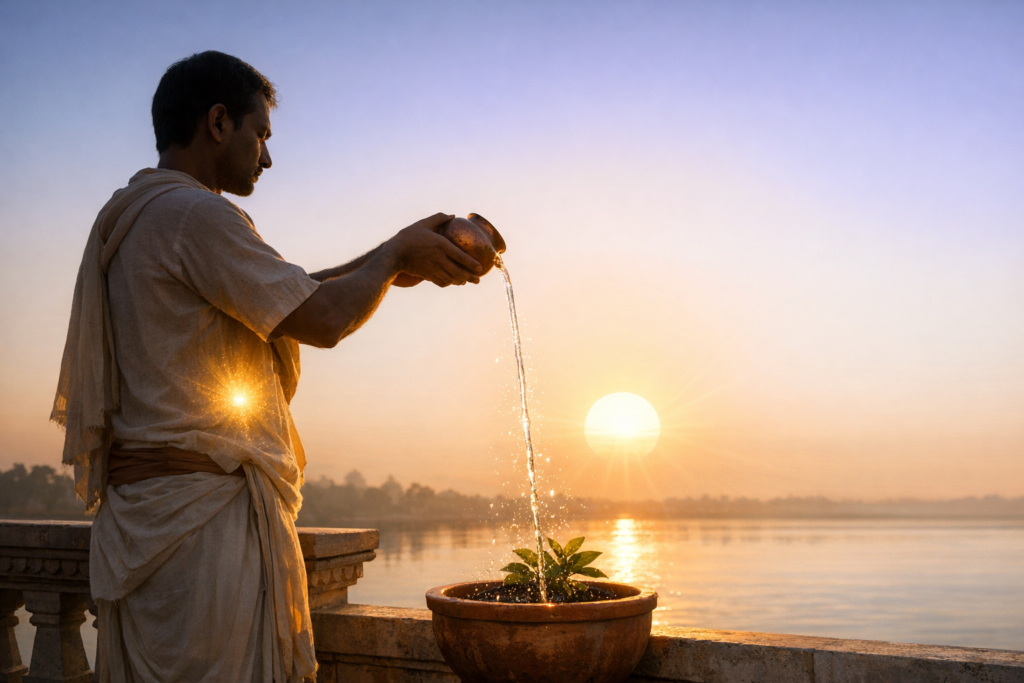
The spiritual tenor of Shukla Paksha Ekadashi traditionally emphasizes refinement of diet (sattvic ahara), moderation of the senses (indriya-nigraha), and remembrance (smarana). Simple practices—quiet japa of one’s Ishta-mantra, metta/maitri-bhavana (cultivation of goodwill), or a reflective reading from the Gita, Dhammapada, Jain agamas, or Sikh Gurbani—support the day’s intent. Many practitioners also engage in light seva, extending the Ekadashi ethic of inner clarity into compassionate action.
Regional calendar conventions can label this Ekadashi differently. The amanta (month ends on Amavasya) and purnimanta (month ends on Purnima) systems, along with intercalation rules, mean a civil date can fall in Vaishakha or Jyeshtha depending on locale. In 2026, many almanacs reckon an Adhik Jyeshta Maas 2026, so month names and festival nomenclature may vary, even while the underlying lunar computation and tithi boundaries remain consistent.
For households planning puja, a practical sequence aligns well with both tradition and modern schedules: pre-dawn or early-morning sankalpa during Ekadashi; mindful workday routines with sattvic moderation; and parana after Dwadashi begins and within the locally prescribed window. Those not observing a full fast may keep a partial fast, practice digital minimalism, or offer focused seva, maintaining the day’s spirit while adapting to health and work needs.
This alignment of time and intention also supports inter-tradition harmony. Whether framed as Ekadashi vrata, Uposatha reflection, poshadha discipline, or a day of simran and seva, the shared core is the cultivation of discernment, compassion, and equanimity. Honoring the Panchang thus becomes a unifying practice—respecting diversity in forms while celebrating oneness in values across Hinduism, Buddhism, Jainism, and Sikhism.
Key takeaways for May 27, 2026 are straightforward: Shukla Paksha Ekadashi persists until 7:49 AM, then Dwadashi prevails. Schedule parana during Dwadashi after sunrise per local Panchang guidance. Use Abhijit Muhurta for critical tasks and avoid Rahu Kaal, Yamaganda, and Gulikai based on locally computed daylight divisions. Derive Nakshatra and the Moon’s Rashi from a place-specific ephemeris to ensure precision for rites that require them.
With careful attention to local timings and a clear, compassionate intention, this day offers an opportunity to blend astronomical precision with meaningful practice—an approach that both preserves heritage and strengthens unity across the dharmic traditions.
Inspired by this post on Hindu Blog.


Leave a Reply
You must be logged in to post a comment.