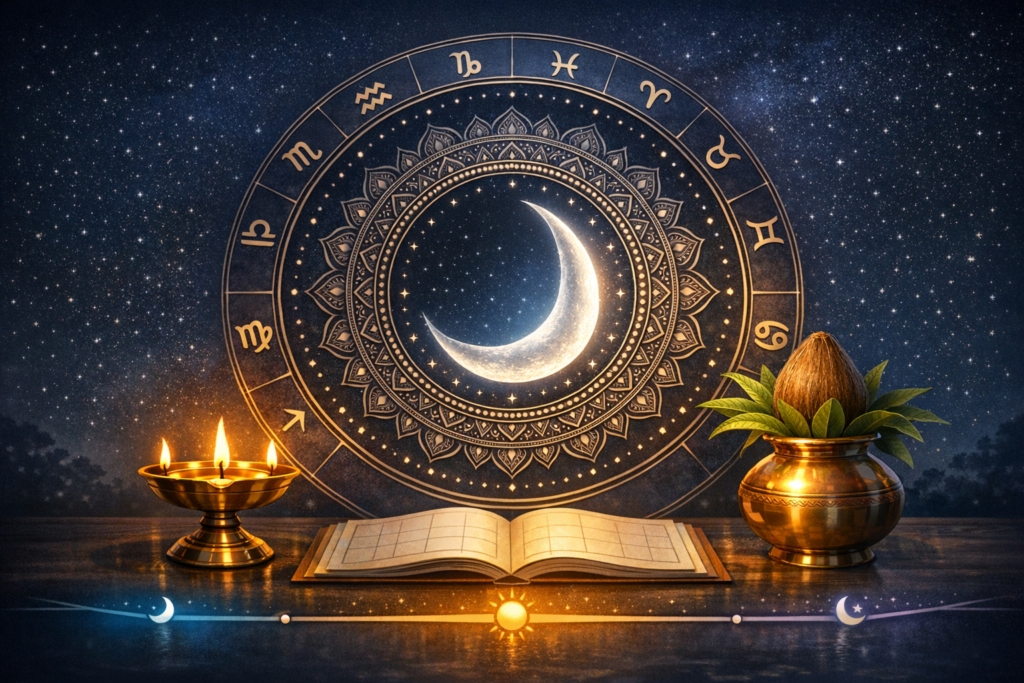
On Tuesday, March 3, 2026, the Hindu calendar (Panchang) marks Purnima Tithi (the full moon lunar day) until 4:33 PM IST, after which Krishna Paksha Pratipada (the first lunar day of the waning or dark fortnight) begins and continues until 4:15 PM IST on March 4. These timings are provided in Indian Standard Time (IST) and are broadly applicable across North, South, and Eastern India; minor local variations due to longitude do not alter the date but may shift intra-day windows slightly.
For readers outside India or those coordinating activities across time zones, the key transitions convert to approximately 11:03 UTC on March 3 for the end of Purnima Tithi and 10:45 UTC on March 4 for the end of Krishna Paksha Pratipada. Local calendars should be consulted for precise city-level muhurta, especially for rites requiring tightly defined windows.
Technically, a Tithi is determined by the longitudinal separation between the Sun and the Moon along the ecliptic. Each Tithi spans a 12° angular difference; Purnima occurs when the Moon’s geocentric longitude is approximately 180° from the Sun (complete lunar opposition in the sidereal framework used by Vedic astrology). When Purnima Tithi ends, the cycle recommences with Krishna Paksha Pratipada as the Moon begins its waning journey toward Amavasya.
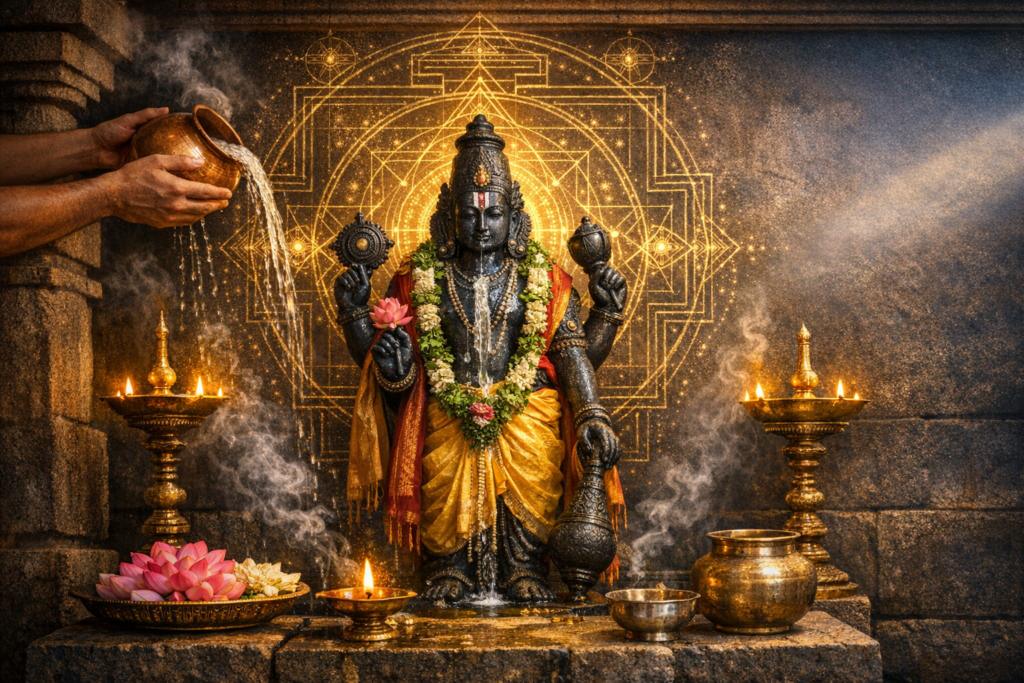
Purnima carries shared significance across dharmic traditions. In Hindu practice, it is widely regarded as auspicious for vrata (fasting), Satyanarayan Puja, daana (charitable giving), pilgrimage, and recitation of texts such as the Bhagavad-Gita or Vishnu Sahasranama. In Buddhism, full moon Uposatha is traditionally a time for intensified meditation and communal observance. In Jain practice, Purnima is conducive to svadhyaya (scriptural study), meditation, and charity. Among Sikhs, Pooranmashi is commonly noted in community almanacs, with many families dedicating the day to simran, seva, and paath. This convergence underscores a unifying ethos: the full moon as a collective invitation to clarity, compassion, and self-discipline.
Because Purnima Tithi on March 3 concludes in the late afternoon, households that follow the Pradosha Vyapini rule for Purnima fasting (i.e., Tithi should prevail during the evening twilight) may observe the fast or key rites on the preceding civil date in their regional tradition. Other traditions tie observance to sunrise on the civil date listed for Purnima. Panchang conventions differ regionally (and by family parampara), so aligning with local guidance preserves both accuracy and continuity of practice.
Devotees commonly report that Purnima fosters a calm, expansive focus for japa, dhyana, and sankalpa. Community experiences also reflect this rhythm: temple queues often lengthen on full moon days, group readings feel more attentive, and neighborhood food donations see broader participation. Such patterns illustrate how astronomical cycles and social life meet in shared ritual time.
With the onset of Krishna Paksha Pratipada at 4:33 PM IST, the fortnight shifts symbolically from expansion to inward refinement. The waning phase is traditionally associated with introspection, simplification, and steady tapas. Many structure the fortnight’s sadhana with this in mind—reviewing commitments, decluttering schedules, and strengthening daily disciplines that support clarity through Amavasya.
“Good Time” (Shubh Muhurat) selection on any day integrates the five limbs of the Panchang—Tithi, Vara (weekday), Nakshatra, Yoga, and Karana—along with sunrise-based segments. The goal is to choose intervals that are both auspicious and context-appropriate (e.g., study, travel, worship, transactions). Because these elements shift with location and date, city-specific Panchang data or ephemerides are essential for high-precision planning.
Abhijit Muhurta—centered around local solar midday—is traditionally regarded as a generally auspicious interval for many undertakings when specialized muhurta is unavailable. However, it should be validated against the other Panchang limbs for sensitive rites. Some traditions also apply Tara Bala and Chandra Bala checks for the individual or family nakshatra to fine-tune selections.
On Tuesdays, practitioners typically avoid Rahu Kaal for new beginnings; by canonical day-segmentation, it falls in the seventh part of daylight. For a nominal 12-hour day from local sunrise, this maps to approximately the 15:00–16:30 interval, but actual timing shifts with the season and longitude. Yamaganda and Gulika Kaal are likewise identified from sunrise-based segments and should be computed locally for accuracy.
Nakshatra and Rashi (Moon sign) refine the day’s qualitative tone. Nakshatra is derived from the Moon’s position among the 27 lunar mansions, while Rashi reflects the sidereal sign occupied by the Moon. These do not depend on Tithi and can change independently within the day. When planning rites that stipulate a specific Nakshatra or Moon sign (e.g., Pushya for certain initiations), local Panchang computation is recommended. The interpretive tradition links Nakshatra and Rashi to qualities of attention, communication, and relational flow that can be constructively aligned with one’s aims.
Yoga and Karana add further granularity. Yoga results from the sum of the Sun’s and Moon’s longitudes, while Karana halves a Tithi to capture subtler action tendencies. Many muhurta prescriptions prefer specific Karanas (e.g., Bava, Balava) for household tasks, travel starts, or learning milestones. Such selectivity is optional for general observance but valuable for those seeking classical precision.
Month nomenclature around this full moon can differ by regional calendar systems. Purnimanta calendars (common in North India) end the lunar month on Purnima, while Amanta calendars (common in parts of South India) end the month on Amavasya. Consequently, the same civil date may be referenced as Phalguna Purnima in one system and Magha Purnima in another. Both are correct within their respective traditions.
For temple visits and home puja on March 3, morning and forenoon are naturally aligned with Purnima Tithi. Where local circumstances make afternoon more practical, many households emphasize satvika activities and japa before Purnima ends, then transition to quieter, reflective practices as Krishna Paksha begins. If a Satyanarayan Puja is planned, it is prudent to consult the local muhurta framework and the family’s parampara regarding the evening-pradosha rule versus sunrise assignment.
Those integrating community service can align daana with the full moon’s ethos of shared welfare. Food distribution drives, study circles, and meditation gatherings on or near Purnima exemplify an inclusive spirit across Hindu, Buddhist, Jain, and Sikh communities. The shared calendar rhythm supports unity without erasing the distinctiveness of each tradition’s liturgy and theology.
Astronomically, the full moon reflects maximal lunar illumination; astrologically, Purnima symbolizes completeness and fruition. This conjunction of observable sky and symbolic meaning is a hallmark of the Panchang: it links celestial cycles to ethical and contemplative life, turning timekeeping into a discipline of alignment rather than mere chronology.
In summary, Tuesday, March 3, 2026 presents a clear structure: Purnima Tithi prevails until 4:33 PM IST, followed by Krishna Paksha Pratipada through the next afternoon. The day is well-suited for Purnima vrata, puja, study, and giving earlier in the day, and for inward-leaning practices as the fortnight turns toward the waning Moon. Selecting Shubh Muhurat is best done with local Panchang data that accounts for Nakshatra, Rashi, Yoga, Karana, and sunrise-based segments such as Rahu Kaal and Abhijit Muhurta.
This Panchang guidance aims to serve the broader dharmic family by emphasizing accuracy, inclusivity, and practical clarity. Observances may be adapted respectfully to regional calendars and family traditions while honoring the common aspiration for inner steadiness, compassion, and collective well-being that Purnima so beautifully invites.
Inspired by this post on Hindu Blog.