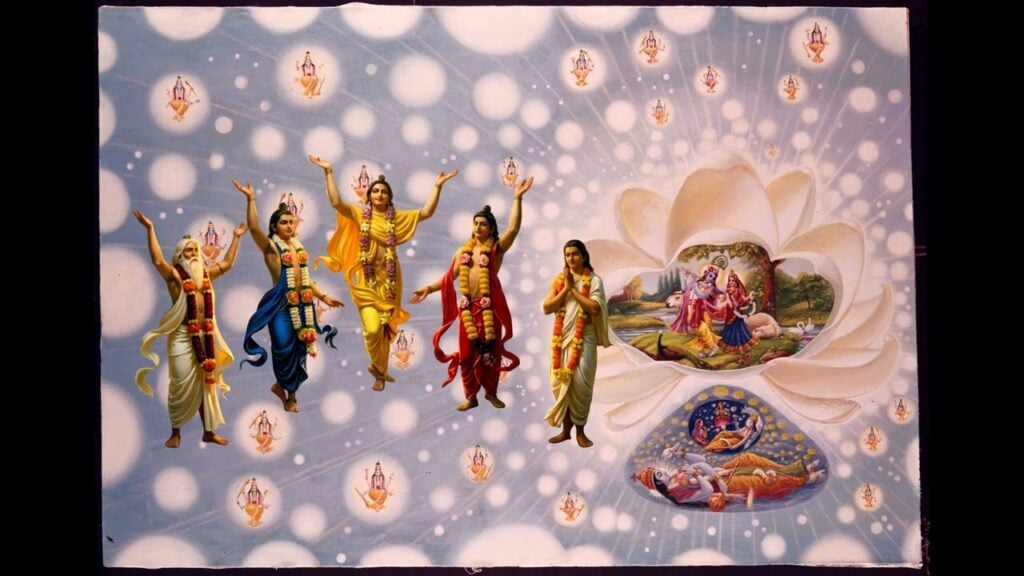
Lord Nityananda is celebrated on His Appearance Day as the epitome of compassion within the bhakti tradition. Revered across the Gaudiya lineage, His life embodies accessible spiritualitydevotion made visible through kindness, humility, and outreach to all. This commemoration invites a reflective engagement with devotion, emphasizing compassion as the living heart of spiritual practice.
Although venerated as the Supreme Personality of Godhead, Lord Nityananda embraced profound humility to please Lord Gaurasundara. This theological posture highlights a central insight: spiritual greatness is expressed not through power but through service, a principle that deepens the practice of devotion and strengthens community bonds.
Caitanya Mahaprabhu is honored as Patitapavana Avatara, one who extends mercy especially to those who feel far from spiritual life. In this vision, distributing divine love is not merely a doctrine but a lived ethic, making compassion the primary vehicle of transformation and social harmony.
In alignment with this mission, Lord Nityananda traversed both banks of the Ganges, approaching households in towns and villages with folded palms. He reached out to individuals in Kali yuga with gentle appeal, encouraging all to accept the mercy of Caitanya Mahaprabhu. This inclusive outreach modeled respectful dialogue, personal dignity, and the welcoming of every seeker into the circle of spiritual community.
Seen through an academic lens, this narrative demonstrates how humility operationalizes compassion: the messenger lowers himself to raise others. The imagery of walking from home to home reveals a praxis of devotion that bridges social distance. It also resonates with shared dharmic valueskaruṇā in Buddhism, dayā and ahiṁsā in Jainism, and seva in Sikhismaffirming that compassion-centered practice strengthens unity across spiritual paths.
Contemporary communities, including ISKCON and the broader Hare Krishna milieu, often honor this day through kirtan, service initiatives, and inclusive gatherings. Such observances translate theology into action, encouraging intercommunity respect and reinforcing the principle that love and tolerance are essential for social cohesion and spiritual progress.
Ultimately, Lord Nityananda’s Appearance Day offers a practical and contemplative invitation: approach others with folded palmsfiguratively and literallyand extend compassion without precondition. In doing so, devotion matures into civic virtue, and spiritual insight becomes a shared resource for building unity in spiritual diversity across Hinduism, Buddhism, Jainism, and Sikhism.
Inspired by this post on Dandavats.