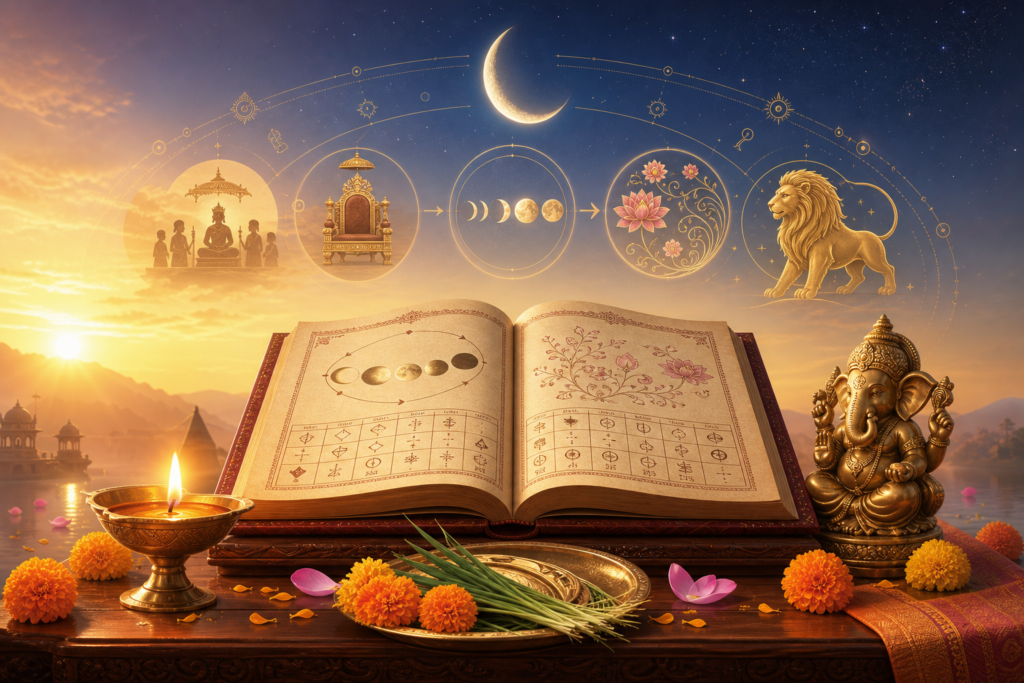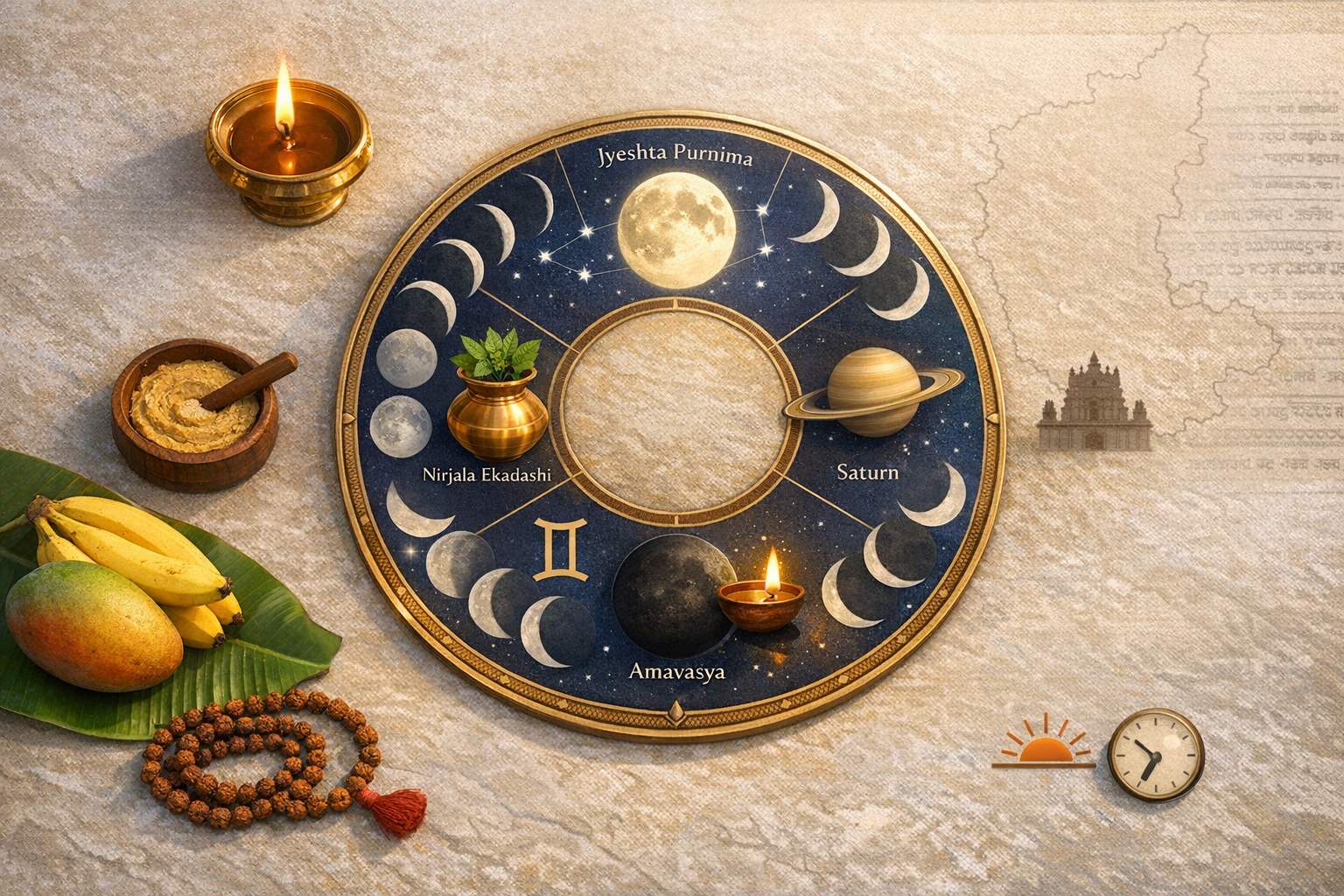
Jyeshta Maasa 2026 in the Kannada Panchanga spans from 15 June 2026 (Shukla Pratipada, the lunar day following Amavasya) to 13 July 2026 (Amavasya), calculated in Indian Standard Time as followed across Karnataka. This interval constitutes the third lunar month of the traditional Kannada calendar and is computed in the amanta system, wherein each month concludes on the new moon.
Also rendered as Jeshta or Jyeṣṭha, the month takes its name from the Jyeṣṭhā nakshatra, near which the full moon of the month is classically expected to occur. Because the Kannada Panchanga anchors observances to tithis rather than fixed civil dates, festival listings are sensitive to local sunrise and tithi end times, which can create minor date variations by location.
In 2026, the technical boundaries are straightforward: Vaishakha Amavasya on 14 June 2026 brings Vaishakha to a close; Jyeshta begins with Shukla Pratipada on 15 June 2026; and Jyeshta Amavasya on 13 July 2026 ends the month, after which Ashadha Maasa commences. Drik (observable astronomy) panchangas in Karnataka apply sunrise-based observance rules, whereas Surya Siddhanta–based compilations may show small differences in tithi end moments.
The month intersects with Mithuna Sankramana (the Sun’s ingress into Gemini), which typically arrives in mid-June and, in 2026, falls within the early phase of Jyeshta. While lunar rites follow tithis, many households integrate solar markers like sankramana with dana, snana, and sandhya, reflecting the harmonious blending of lunar and solar reckoning in lived practice.
Key observances widely associated with Jyeshta include Nirjala Ekadashi (Jyeshta Shukla Ekadashi), Jyeshta Purnima (observed in many regions for Vat Savitri/Purnima Vrat), and Shani Jayanti (observed on the Amavasya that concludes Jyeshta in the amanta convention). For Karnataka in 2026, the Shukla Paksha observances fall in late June, and Shani Jayanti aligns with 13 July 2026 (the month-ending Amavasya). Communities that follow the purnimanta naming tradition may mark Shani Jayanti on the mid-June Amavasya instead, so local panchanga guidance should be followed.
Vrata selection follows established tithi rules. For Ekadashi, the presence of Ekadashi at sunrise determines the fasting day; for Purnima and Amavasya, the observance is anchored in the tithi prevailing during the prescribed window (often sunrise or a specified muhurtam). Pradosha depends on Trayodashi’s presence during the evening twilight window, and Sankashti Chaturthi fasts are traditionally broken at moonrise on Krishna Chaturthi.
Because Karnataka spans multiple longitudes and elevations, tithi end times can differ by several minutes between Bengaluru, Mysuru, Mangaluru, Hubballi, Kalaburagi, and other districts. Accurate planningespecially for nirjala upavasa, purnima snana, and amavasya tarpanambenefits from consulting a trusted, location-specific Kannada Panchanga or a drik-based computational tool that outputs sunrise, moonrise, and tithi transitions for the chosen place of observance.
Seasonally, Jyeshta coincides with the close of peak summer and the approach of the monsoon. The ethos of Nirjala Ekadashidiscipline, compassion through dana, and mindful use of waterresonates with contemporary ecological sensibilities. These values align across dharmic traditionsHinduism, Buddhism, Jainism, and Sikhismthrough shared emphases on self-restraint, seva, daya, and reverence for life, reinforcing unity in diversity.
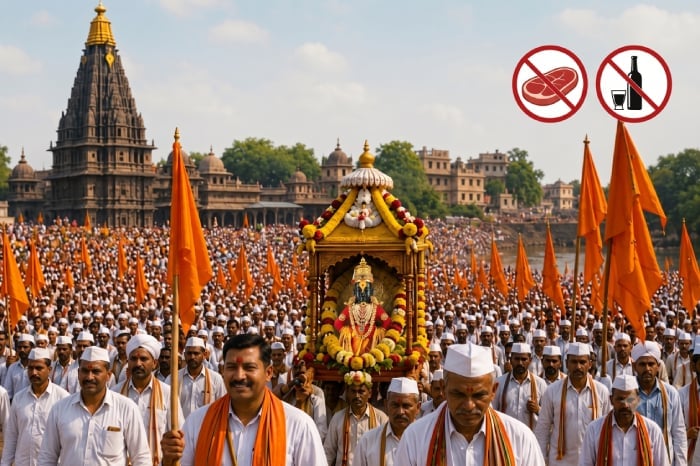
In temple practice across Karnataka, Jyeshta often features sheeta upacharas (cooling offerings) such as chandana and phala, alongside recitations like Vishnu Sahasranama or Shiva Sahasranama on auspicious tithis. Households emphasize satvika ahara, japa, sandhyavandana, and weekly Shani and Hanuman worship, especially as Shani Jayanti approaches, integrating personal discipline with communal devotion.
Panchanga compilers remind that the lunar month’s name is defined by the full moon, not the new moon. Thus, the month is called Jyeshta because its Purnima aligns with or lies near the Jyeṣṭhā nakshatra; whether the alignment is exact varies with year-specific astronomy and the siddhanta employed. This principle explains why the civil dates drift annually while the month names remain stable.
For planners in 2026, the essentials are clear: Jyeshta Maasa runs from 15 June to 13 July (IST), with Nirjala Ekadashi and Jyeshta Purnima clustered in late June, and Shani Jayanti on 13 July in the amanta system used in Karnataka. Scheduling temple darshan, sankalpas, and home pujas within this tithi window aligns practice with canonical Kannada Panchanga logic.
Where diverse customs convergeamanta and purnimanta, lunar and solar, regional and pan-Indicthe shared intention is unity in dharma. Jyeshta 2026 offers an opportunity to honor that unity through mindful observance, respect for calendrical diversity, and a living appreciation of the Kannada Panchanga’s precision, heritage, and inclusive spirit across the broader dharmic family.
Note on accuracy: All dates herein are framed for IST and the amanta Kannada Panchanga. As with any tithi-driven observance, if a local temple, matha, or authoritative panchanga prescribes a specific date or time for a sankalpa or vrata, that instruction should be followed.
Inspired by this post on Hindu Pad.