On 11 March 2026, ISKCON Vrindavan will observe the Boat Festival (Nauka Vihar), a devotional commemoration of Krishna’s aquatic pastimes in Vraja. The celebration integrates scriptural memory, ritual aesthetics, and congregational participation to evoke the sacred landscape of Vrindavan and deepen engagement with the Bhakti Tradition. It invites pilgrims and residents alike to contemplate the meanings of seva, darshan, and kirtan through an immersive ritual dramaturgy centered on the divine couple, Radha and Krishna.
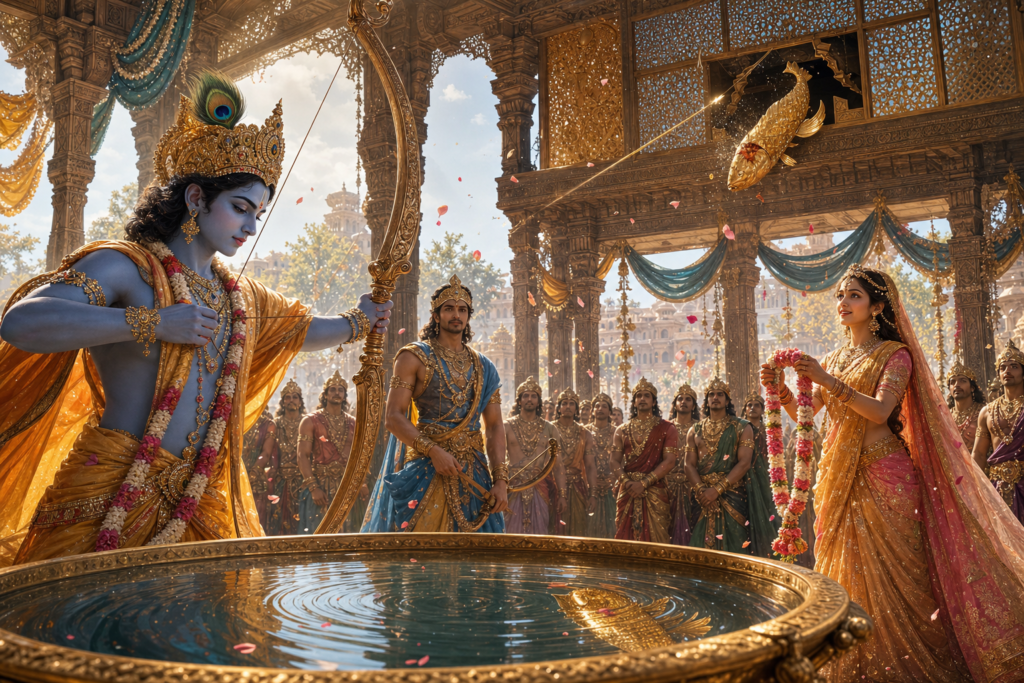
The festival’s narrative roots extend to Goloka Vrindavan, the eternal spiritual abode that undergirds Gaudiya Vaishnava theology. A celebrated literary source is Gopal Champu by Srila Jiva Goswami, which preserves a detailed account of Krishna’s playful boat pastime. In this lila, the gopisbearing pots of yogurt and butterarrive at the banks of Manasi Ganga to cross the water, only to be gently delayed by Krishna, who assumes the role of a boatman. The witty exchanges and affectionate tests present a poetic theater of bhakti, where divine love both conceals and reveals transcendence.
The Nauka Vihar lila articulates core Gaudiya Vaishnava concepts: Krishna as the supreme rasika, Radha as the embodiment of the highest devotion, and the gopis as exemplars of single-pointed surrender. The river, boat, and cargo become expressive symbols: the river mirrors the world’s currents and challenges; the boat marks the protective shelter of divine grace; the cargo signifies the devotee’s offeringsand attachmentstendered at the Lord’s feet. Through this hermeneutic, boating becomes more than movement across water; it is passage from forgetfulness to remembrance, from separation to loving union.
Vrindavan’s ritual geography supports these meanings. Manasi Gangatogether with Yamuna, Kusum Sarovar, and sacred kundsforms a matrix wherein sound (kirtan), sight (darshan), and touch (anjali, parikrama) steadily awaken memory of Krishna’s presence. Festivals such as the Boat Festival re-enact this geography within the temple precincts, allowing participants to internalize the narratives while maintaining fidelity to the lineage’s liturgical grammar.
At ISKCON Vrindavan, Nauka Vihar is typically interpreted through the Gaudiya Vaishnava lens pioneered by the Goswamis of Vrindavan and carried forward by contemporary devotional communities. The ritual commonly features a flower-laden boat set afloat upon a temporary kund within the temple courtyard. As the Deities embarkoften Sri Sri Radha-Shyamasundar and, at times, Sri Sri Krishna-Balaram or Sri Sri Gaura-Nitaithe congregation participates through responsorial kirtan, attentive darshan, and meditative reflection, aligning communal devotion with scriptural memory.
Ritual design follows the principles of alankara (sacred adornment) and shodasha-upachara (the sixteen classic offerings), adapted to the festival’s aquatic setting. Priests and sevakas coordinate the sequence: ceremonial awakening and ornamentation, offering of flowers and incense, deepa-aradhana with lamps, and the procession by boat. The soundscapemrdanga, kartals, conch, and congregational kirtanframes the visual signatures of the festival: shimmering water, floating blossoms, and the boat’s gentle arc before the Deities, which together produce a multisensory meditation on the divine names and forms.
Aesthetically, the Boat Festival exemplifies the Vaishnava theory of rasa (aesthetic relish). Here, madhurya-rasa predominates through Radha-Krishna’s confidential play, while sakhya- and vatsalya-dimensions resonate in the assembly’s affectionate guardianship and joy. Dhvani (suggestion) operates continuously: the playfulness of tolls and conditions intimates the inner economy of love in which the Lord asks not for wealth but for the devotee’s heart, time, and attentiongifts that return as grace.
The festival’s theological symbolism is complemented by practical liturgical craft. Event teams typically assemble a watertight platform with protective railings, calibrate buoyancy for the flower-boat, and ensure stable priestly access for offerings. Floral design emphasizes locally appropriate, seasonally available blooms; petals are gently strewn to generate a visual field of purity and tenderness. Crowd flow managementzoned queues, marked entry/exit points, and clear darshan sightlineshelps balance devotional intimacy with safety.
For participants, the experiential arc often unfolds in three movements. First, anticipation during queueing builds devotional focus; many quietly recite the maha-mantra or verses praising Radha-Krishna. Second, darshan at the water’s edge reveals the festival’s central tableauboat, blossoms, lampswhere rhythmic kirtan fosters inward concentration and collective joy. Third, post-darshan reflection consolidates insights, as devotees recall scriptural lines or personal prayers inspired by the lila.
Visitors commonly find the following etiquette supportive of a meaningful experience: arrive early to navigate queues calmly; maintain a respectful, unhurried gaze during darshan; keep movement coordinated with volunteer guidance; and allow space for elders, children, and those with mobility needs. Simple offeringsflowers or folded-hands pranamalign with the festival’s gentle tone. Photography policies, if any, are best honored as posted onsite to preserve the sanctity of worship.
In keeping with the unity of dharmic traditions, the Boat Festival’s core metaphorcrossing by the “boat” of dharmaechoes across Hinduism, Buddhism, Jainism, and Sikhism. Buddhist literature often speaks of the Dhamma as a vessel for crossing the flood; Jain teachings use the imagery of traversing the samsara-sagara through right faith, knowledge, and conduct; and Sikh bani invokes the journey across the sansar saagar sustained by remembrance of the Divine Name. This shared symbolism underscores a common aspiration: compassionate, ethical living anchored in spiritual practice.
Sustainability practices can deepen the festival’s alignment with dharmic stewardship. Temples increasingly consider seasonal, locally sourced flowers; post-event composting of petals; measured water use with recirculation where feasible; and biodegradable materials for any temporary structures. Such measures reflect the Vaishnava ethic of care (seva) toward all beings and the environment, complementing devotional intention with responsible action.
From a cultural heritage perspective, the Boat Festival represents living tradition: a narrative from Gopal Champu by Srila Jiva Goswami recontextualized within contemporary temple life. Its continuitiespoetry, music, ritual craftdemonstrate how ancient texts inhabit present time without losing texture or depth. For scholars and practitioners alike, the event offers a rare synthesis of textual hermeneutics, liturgical design, and communal devotion.
For families, the festival provides a gentle gateway to theology in practice. Children encounter Krishna’s compassion and humor through color, movement, and song; adults reconnect with meditative patience and the art of offering. Together, these experiences cultivate embodied learningbhakti not only as belief but as rhythm, gesture, and shared memory.
As 11 March 2026 approaches, the Boat Festival at ISKCON Vrindavan invites participants to re-enter a sacred story and allow its symbols to refine attention and soften the heart. By situating personal devotion within a lineage of scriptural narration and shared dharmic values, the celebration transforms a simple boat ride into a journey of remembrance. In the gentle sway of the flower-boat and the cadence of kirtan, many find a timely reminder: divine grace guides all sincere seekers across the currents of life.
Inspired by this post on Dandavats.