

The first day of ISKCON’s 60th Anniversary Week carried a significance far greater than that of an ordinary commemorative programme. It returned attention to 26 Second Avenue in New York City, the modest Lower East Side storefront associated with the institutional beginning of the International Society for Krishna Consciousness. From this small urban space, A. C. Bhaktivedanta Swami Prabhupada developed a religious community that would introduce Gaudiya Vaishnava theology, congregational kirtan, sacred literature and devotional service to audiences around the world. Sixty years later, revisiting that setting invited participants to examine not only how ISKCON began, but also why its practices proved capable of crossing linguistic, national and social boundaries.
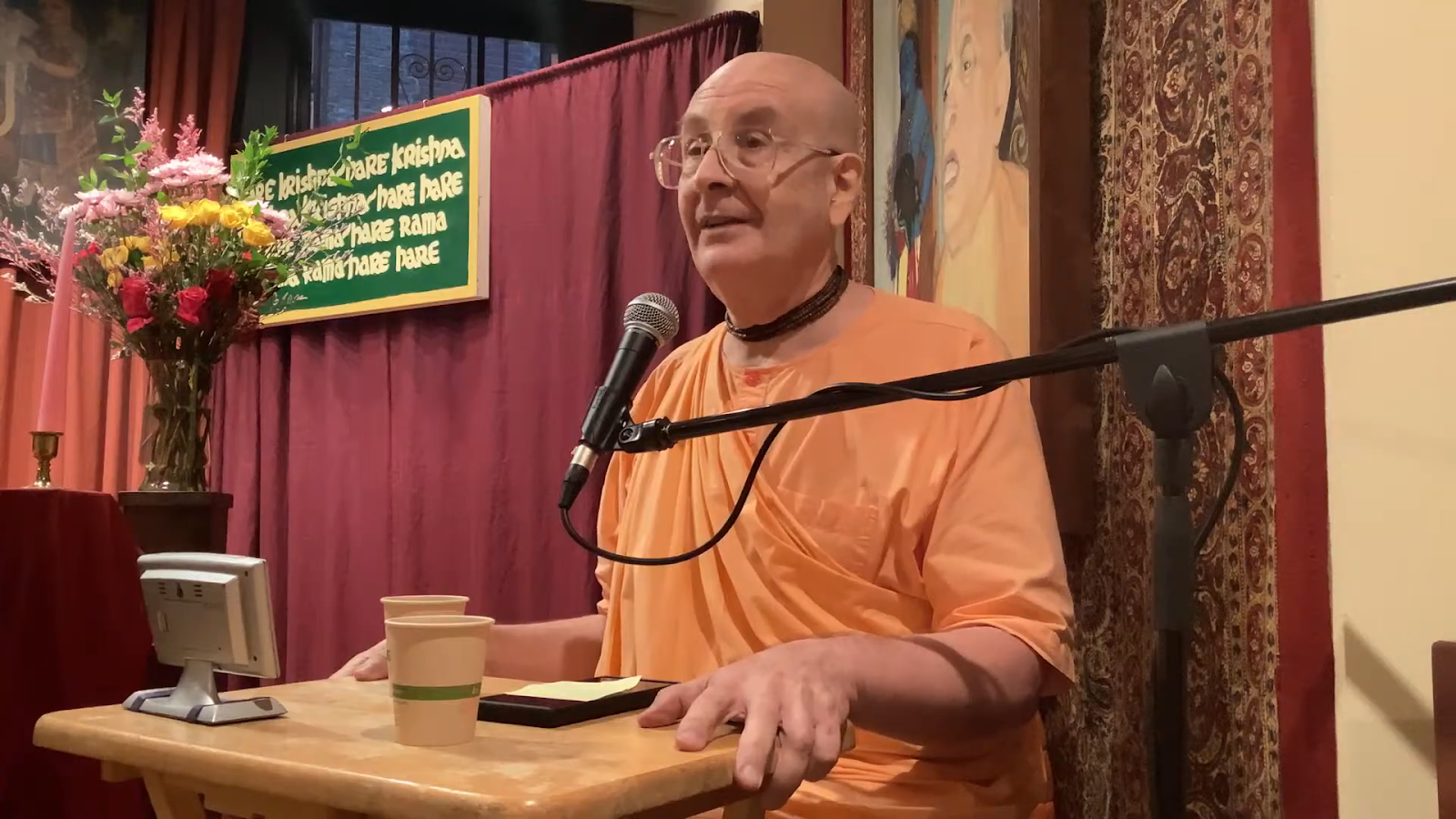
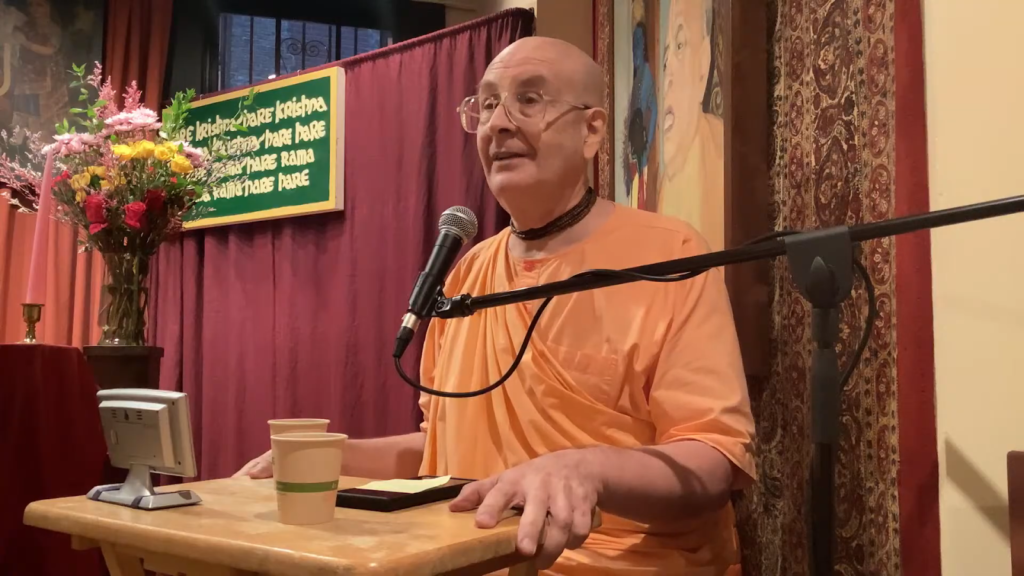
The anniversary week was organized around the period from July 6 to July 13, 2026, culminating in the commemoration of ISKCON’s incorporation in July 1966. The publicly announced programme identified Candrasekhara Swami as the principal speaker for the opening evening, scheduled from 6:00 p.m. to 9:00 p.m. at 26 Second Avenue. This choice placed living memory near the centre of Day One. Rather than treating the anniversary as a sequence of ceremonial gestures, the programme created space for senior practitioners to transmit recollections, interpret formative events and connect the movement’s early history with the responsibilities of its present generation.
A storefront that became a historical landmark. In 1966, 26 Second Avenue was not an imposing temple complex. The premises had previously operated under the name “Matchless Gifts,” a phrase that later acquired symbolic importance within ISKCON’s historical memory. Its physical modesty is essential to understanding the anniversary. The global Hare Krishna Movement did not begin with extensive institutional resources, political influence or a large administrative structure. It developed through repeated classes, chanting, personal conversation, shared food and the disciplined translation of a sophisticated devotional tradition into terms that unfamiliar listeners could begin to understand.
According to ISKCON’s official historical account, Srila Prabhupada travelled from Kolkata to the United States aboard the cargo ship Jaladuta in 1965, when he was sixty-nine years old. He arrived in New York with limited material support and spent many months lecturing wherever opportunities arose. In July 1966, while working from the Lower East Side storefront, he established the International Society for Krishna Consciousness. The contrast between those difficult beginnings and the movement’s later international reach gives the 60th anniversary its emotional force: a single teacher’s perseverance became the foundation of a multigenerational spiritual community.
This history should not be reduced to a dramatic success story detached from its intellectual foundations. Srila Prabhupada belonged to the Brahma-Madhva-Gaudiya lineage and presented Krishna consciousness as a continuation of the bhakti tradition associated especially with Sri Chaitanya Mahaprabhu. His teaching emphasized that the individual self is spiritual, that loving devotion to Krishna is the highest purpose of life and that disciplined practice can transform consciousness. The movement’s expansion therefore depended on more than organizational efficiency. It relied on a coherent theological system expressed through scripture, ritual, music, diet, ethical discipline, community and service.
Why Day One mattered. Opening an anniversary week at the place of origin establishes a particular form of historical consciousness. It asks a community to recover the scale of its beginnings before evaluating the scale of its achievements. Visitors familiar with large ISKCON temples in India, Europe, Africa or the Americas may find the Second Avenue storefront strikingly small. That encounter can make history tangible. Institutional growth is represented not by abstract statistics alone, but by the distance between a compact rented room in 1966 and a global network of temples, educational projects, rural communities, festivals, restaurants and food-relief initiatives sixty years later.
The opening programme also underscored the importance of oral history. Written documents establish dates, legal structures and stated purposes, but the memories of early participants preserve atmosphere, relationships, uncertainties and everyday decisions that official records often omit. Such testimony must be approached carefully. Memory is selective, and recollections recorded decades after an event can be shaped by later experience. Nevertheless, when oral accounts are compared with correspondence, photographs, recordings, legal documents and published histories, they become invaluable sources for understanding how a religious movement actually formed.
For younger devotees, this transmission of memory can produce a personal connection to events that otherwise seem remote. Many inherited a fully developed institutional culture and never witnessed the period when every lecture, rented room and public kirtan represented an uncertain experiment. Hearing the experiences of senior practitioners can reveal that established traditions are sustained by human choices: someone opens a door, prepares prasadam, prints a text, learns a melody, welcomes a stranger or continues serving despite discouragement. The resulting insight is both emotional and practical. A spiritual inheritance survives only when each generation accepts responsibility for carrying it forward with integrity.
The theological centre of the celebration. ISKCON’s public identity is closely associated with the Hare Krishna maha-mantra: Hare Krishna, Hare Krishna, Krishna Krishna, Hare Hare / Hare Rama, Hare Rama, Rama Rama, Hare Hare. Within Gaudiya Vaishnava theology, this chanting is not treated merely as devotional music or a technique for temporary relaxation. It is understood as nama-sankirtana, the congregational invocation of sacred names, through which attention is redirected from habitual self-centredness toward divine relationship. Repetition, rhythm and collective participation allow theology to be embodied rather than confined to intellectual discussion.
The anniversary schedule reflected this continuity between doctrine and practice. During the week, the storefront was announced as open during the day, while daily harinama processions were planned between Matchless Gifts and Tompkins Square Park. Evening sessions were devoted to senior disciples’ memories and recorded presentations from those unable to attend in person. Prasadam was also included after the programme. These elements—sacred space, public chanting, testimony, teaching and sanctified food—formed an integrated expression of bhakti rather than a collection of unrelated activities.
Tompkins Square Park occupies a special place in this history because Srila Prabhupada led public chanting there in 1966. The park linked the emerging community inside 26 Second Avenue with the wider civic environment of New York. Public kirtan made participation possible without requiring prior theological education, formal membership or familiarity with Sanskrit. A passer-by could listen, observe or join the response. This accessibility helped kirtan function simultaneously as worship, pedagogy and public culture.
From a technical perspective, congregational kirtan combines several mutually reinforcing processes. A repeated melodic structure reduces the difficulty of participation. Call-and-response singing distributes leadership between a principal singer and the assembly. Percussion establishes a shared temporal pattern, while bodily movement turns listening into an active experience. The sacred formula supplies semantic and theological content. Together, these features support sustained attention, collective coordination and emotional engagement. Devotees interpret the practice through bhakti theology, while scholars may additionally study it through musicology, ritual theory, psychology and the sociology of religion.
Scripture, translation and accessibility. The growth of ISKCON cannot be explained through kirtan alone. Srila Prabhupada’s translations and commentaries on texts such as the Bhagavad-gita, Srimad-Bhagavatam and Sri Caitanya-caritamrita provided the movement with an extensive textual curriculum. Lectures at 26 Second Avenue connected Sanskrit philosophical concepts with questions being asked by people in 1960s New York. This combination of textual authority and accessible explanation allowed new participants to encounter bhakti as a systematic worldview rather than as an isolated ritual practice.
Translation in this context involved more than substituting English words for Sanskrit terms. Concepts such as bhakti, atman, karma, dharma, guru, seva and prasadam carry networks of philosophical and ritual meaning. If translated too loosely, their precision can be lost; if left entirely unexplained, they may remain inaccessible. Srila Prabhupada’s pedagogical method commonly retained key Sanskrit vocabulary while surrounding it with definitions, examples and scriptural commentary. That method contributed to the creation of a transnational devotional vocabulary now used by communities far beyond India.
Day One therefore offered an opportunity to consider ISKCON as both a devotional community and a major translation movement. Its international expansion depended upon books, periodicals, lectures and later audio-visual media moving across borders. Translation teams extended this process into numerous languages, while temples and study groups supplied social settings in which the texts could be discussed and practiced. The movement’s durability has rested partly on this relationship between textual preservation and adaptive communication.
The seven purposes and an institutional vision. ISKCON’s founding documents articulated seven purposes that gave the new society a framework broader than the maintenance of a single place of worship. They included the systematic communication of spiritual knowledge, education in spiritual life, cultivation of Krishna consciousness through the Bhagavad-gita and Srimad-Bhagavatam, encouragement of congregational chanting, development of sacred places, promotion of a simpler and more natural way of life, and publication and distribution of relevant literature. Together, these aims linked individual transformation with community formation and public service.
The institutional design is notable because it integrates contemplation with outward action. Study is connected to teaching; chanting is connected to congregation; sacred space is connected to hospitality; agriculture is connected to ethical living; and publishing is connected to cultural transmission. This integrated model helps explain how a movement founded in a storefront could reproduce itself in widely different environments. A new centre did not require every feature to appear at once. It could begin with a home gathering, a reading group, a kirtan, a meal or a small temple and gradually develop additional functions.
At the same time, anniversaries invite evaluation as well as celebration. Institutional continuity is strongest when historical reverence is joined to ethical accountability, transparent governance, careful education and the protection of every community member. Respect for founders and senior practitioners need not prevent critical reflection; properly conducted, such reflection protects the principles a tradition seeks to transmit. A sixtieth anniversary is therefore not only evidence of endurance. It is an occasion to ask whether inherited structures continue to express compassion, humility, learning and responsible service.
Prasadam as theology in practice. The serving of prasadam after the anniversary programme had both social and theological significance. In Vaishnava practice, food prepared and offered to Krishna becomes prasadam, understood as divine grace received through a material medium. Sharing it joins worship with hospitality. Participants do not merely attend a lecture and depart; they sit with others, receive food and experience a form of community that crosses distinctions of age, occupation, nationality and social background.
Food has played an important role in ISKCON’s public presence because it makes an ethical and devotional principle immediately concrete. Vegetarian preparation expresses the tradition’s concern for nonviolence toward animals, while offering and distribution connect nourishment with gratitude and service. Large-scale food programmes later developed these ideas in humanitarian settings, although their administrative methods and objectives differ from temple prasadam distribution. The underlying association among food, compassion and sacred responsibility remains a recognizable feature of the movement.
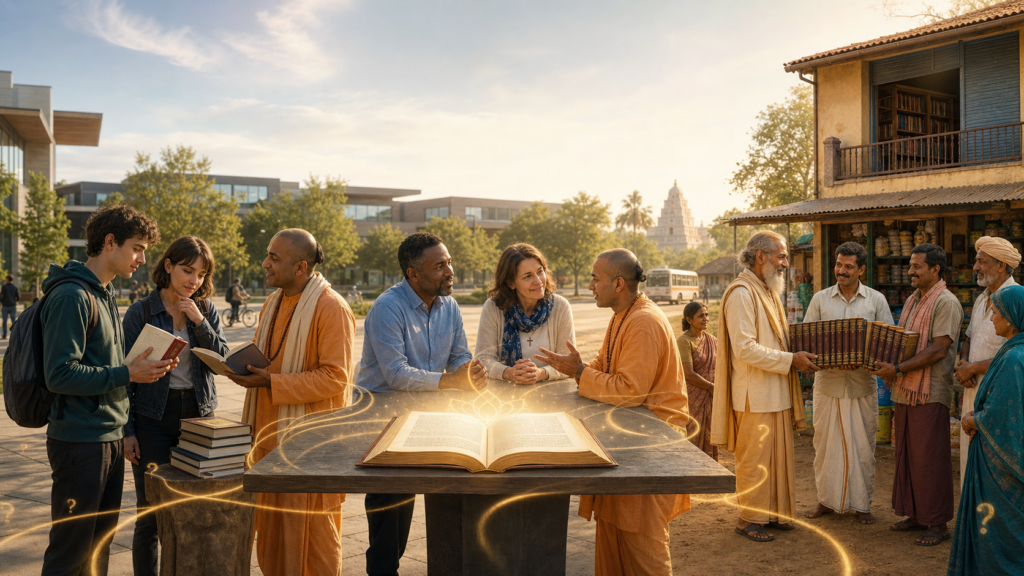
A Gaudiya Vaishnava contribution to the wider Dharmic family. ISKCON represents a particular Vaishnava theological lineage within the broad and internally diverse landscape of Hindu traditions. Its distinct teachings should be described accurately rather than flattened into a generic spirituality. At the same time, its anniversary can be appreciated within a wider Dharmic context that includes Hindu, Buddhist, Jain and Sikh communities. These traditions do not share identical doctrines, but each has developed disciplined approaches to ethical conduct, self-transformation, community, contemplation and compassionate service.
Unity among Dharmic traditions is most durable when it is based on informed respect rather than artificial sameness. A Gaudiya Vaishnava understanding of the eternal self differs from Buddhist analyses of anatta; Vaishnava devotional theology differs from Jain metaphysics and from Sikh teachings concerning the Divine and the Guru. Yet difference need not produce hostility. Dialogue can acknowledge distinct scriptures, histories and practices while identifying shared commitments to disciplined living, restraint, compassion, truthfulness and the overcoming of destructive egoism.
ISKCON’s international history also demonstrates how a tradition can retain a specific identity while entering cross-cultural conversation. The movement’s temples have introduced many people to Indian sacred music, Sanskrit vocabulary, vegetarian food, festival culture and philosophical literature. Such exchange carries responsibilities. Cultural forms should be presented with historical context, teachers should avoid simplistic claims and participants should recognize the diversity of Hindu thought. When handled carefully, global transmission can deepen cultural appreciation rather than reduce a living tradition to exotic imagery.
Memory, place and material heritage. The continued preservation of 26 Second Avenue demonstrates that religious heritage is not limited to monumental architecture. A small commercial storefront can become historically important because of the practices, relationships and decisions associated with it. Preserving such a site allows later generations to study scale, location and urban context. Photographs of the original interior, early recordings and recollections gain additional meaning when interpreted in relation to the physical setting in which events occurred.
This form of heritage preservation benefits from rigorous documentation. Images should be dated where possible; speakers and participants should be identified carefully; oral testimonies should be archived with contextual metadata; and conflicting recollections should be recorded rather than silently harmonized. Digital preservation is equally important because magnetic tapes, early video formats, websites and social-media broadcasts are vulnerable to deterioration or disappearance. The 60th anniversary offers a natural moment to consolidate these materials for future devotional, historical and academic study.
Day One may consequently be understood as part of a broader archival project. Every anniversary programme generates new evidence: recordings, photographs, schedules, interviews and reflections. When preserved responsibly, these materials document how the community understood its past in 2026. Future researchers will be able to compare that understanding with earlier commemorations and with primary sources from the 1960s. Commemoration then becomes more than remembrance; it becomes the production and stewardship of historical knowledge.
From charismatic beginnings to multigenerational continuity. Religious movements often face a difficult transition after the lifetime of a founding teacher. Authority must be organized, teachings transmitted, institutions maintained and new leaders educated. ISKCON’s six decades encompass this transition on a global scale. The anniversary’s use of senior disciples’ recollections preserved proximity to Srila Prabhupada, while the presence of younger devotees represented the movement’s future. The relationship between these generations is crucial: memory without renewal can become static, while innovation without memory can lose theological and ethical orientation.
Healthy continuity requires more than repeating inherited forms. It involves understanding why those forms developed and determining how their purposes can be served under changing conditions. A printed book table, for example, once occupied a media environment very different from the contemporary world of digital libraries, streaming video and online discussion. Public kirtan now takes place in cities shaped by new regulations and social expectations. Educational programmes must address audiences with varied cultural backgrounds. Adaptation is therefore unavoidable, but it remains most coherent when anchored in careful study and transparent reasoning.
The Lower East Side beginnings provide a useful model for this balance. Srila Prabhupada retained the central claims and practices of his lineage while communicating through the language, technologies and social networks available in New York. He taught Sanskrit concepts in English, used recorded music and print media, welcomed people unfamiliar with Indian customs and established a legal religious corporation suited to the American context. This was adaptation without the abandonment of theological identity. The example remains relevant to communities negotiating the relationship between tradition and modernity.
A celebration measured by service. The most meaningful interpretation of the 60th anniversary lies not in numerical longevity alone but in renewed commitment to the purposes for which ISKCON was established. Historical memory gains practical value when it inspires better education, deeper spiritual practice, ethical leadership, compassionate outreach and respectful community life. The opening day at 26 Second Avenue symbolically returned the movement to a time when little could be taken for granted and every act of service mattered.
That perspective can be deeply moving even for those who were not present in 1966. A quiet storefront, a circle of listeners and the sound of a mantra may appear small when compared with the later global institution. Yet enduring cultural change frequently begins through such intimate encounters. One person teaches, another listens, a third returns with a friend and a community slowly forms around shared discipline and hope. The anniversary makes this human scale visible beneath the movement’s international identity.
ISKCON’s 60th Anniversary Week thus began with an encounter among history, theology and living memory. Day One honoured Srila Prabhupada’s perseverance, the early community that gathered around him and the devotional practices that sustained the movement’s expansion. It also raised forward-looking questions about preservation, education, accountability and intergenerational responsibility. By returning to 26 Second Avenue, the commemoration suggested that the future of a global spiritual institution may still depend on the same foundational qualities evident at its beginning: attentive listening, disciplined practice, intellectual seriousness, hospitality and selfless seva.
Inspired by this post on Dandavats.






Leave a Reply
You must be logged in to post a comment.