Hanuman Jayanti, revered as the birth festival of Anjaneya Swamy, honors the appearance of Lord Hanuman as the ideal of unwavering bhakti, courageous service, disciplined celibacy, and luminous wisdom. Rooted in the Chaitra Purnima tradition across much of India, the observance integrates meticulous ritual (puja vidhi) with fasting (vrat), chanting, and community service, offering a complete path for inner strength and compassionate action.
In 2026, Hanuman Jayanti (Chaitra Purnima) falls across April 1–2. Because the lunar Purnima tithi may straddle two civil dates, regional practice generally follows the udaya-tithi principleobserving the Jayanti on the day Purnima prevails at local sunrise. Devotees are advised to confirm the exact date via their regional Panchang or temple notice, as customs differ by sampradaya and geography.
Preparation and cleanliness (shuddhi) are fundamental. The worship area is thoroughly cleaned, a fresh cloth (preferably kesariya/orange) is spread on a stable altar, and the murti or image of Hanuman is placed facing east or north. Personal purity through a bath, clean attire, and a calm, prayerful mind establishes the sanctity essential for effective sadhana.
Hanuman Vrat on Jayanti is commonly observed as nirjala (waterless), phalahara (fruits and water), or satvik ekabhukta (one simple vegetarian meal), chosen according to age, health, and guidance. The vrat is not a test of endurance but a discipline to align body and mind to seva and dhyana; medical needs always take precedence, and water or light nourishment may be taken if required.
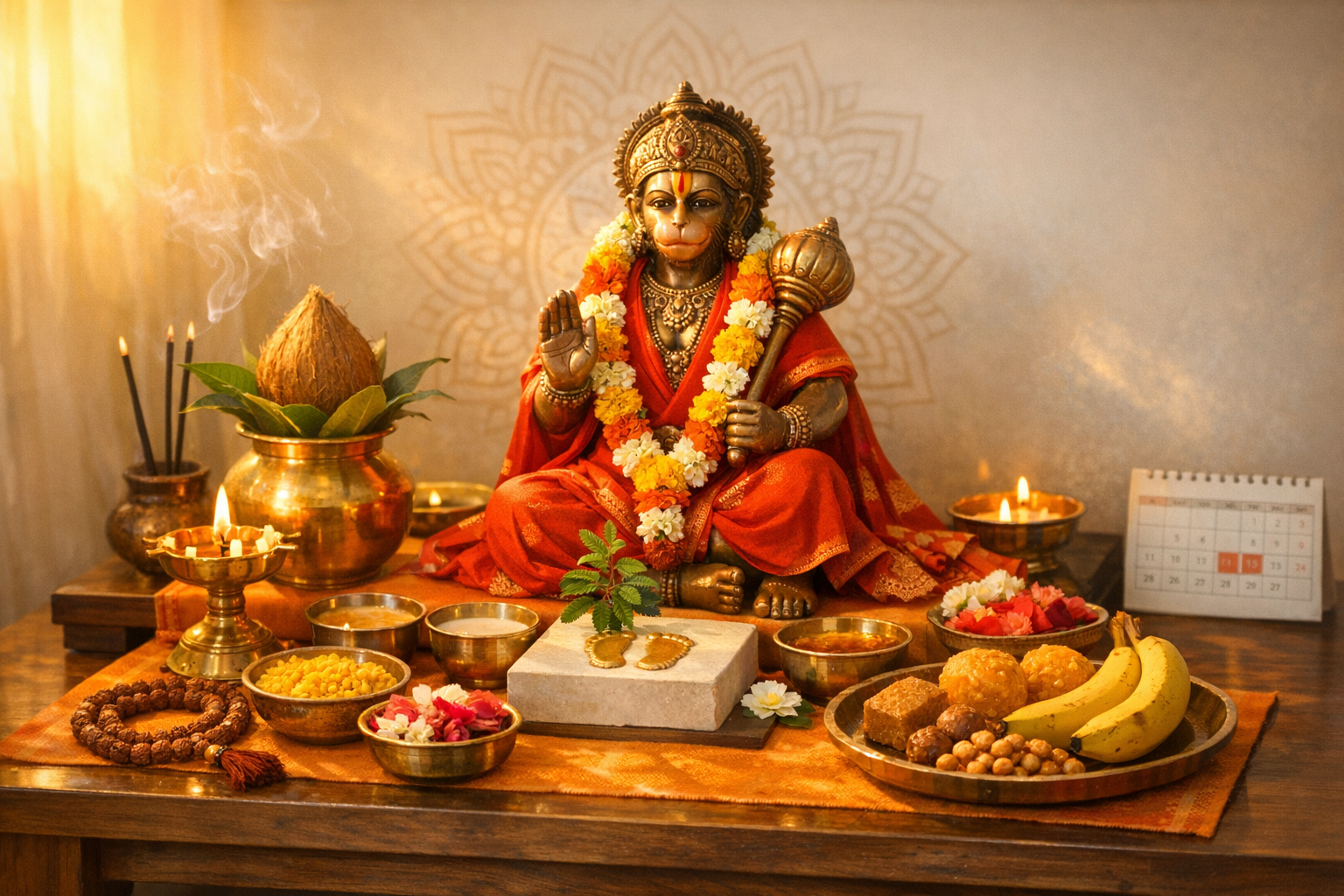
A concise materials checklist helps sustain ritual flow: a clean Hanuman murti or image; kalasha with pure water, mango leaves, and a coconut; tilak (kumkum and/or chandan), akshata (turmeric-mixed rice), flowers (marigold and jasmine are traditional), incense (dhoop), lamp (deepa) with ghee or sesame oil, panchamrita (milk, curd, ghee, honey, sugar), pure water for rinsing, fresh cloth or vastra, yajnopavita (janeu) if customary, fruits (banana), sweets (boondi laddoo), jaggery, roasted gram (chana), betel leaves and nut (if observed), and sindoor with jasmine or sesame oil for chola offering. Where Sri Rama is worshipped alongside Hanuman, tulsi leaves may be respectfully offered to Sri Rama.
A formal sankalpa anchors the worship: the devotee states place, date, lunar details (Chaitra Purnima), and intentperforming Hanuman Jayanti Puja and Vrat for inner strength, protection, removal of obstacles, and welfare of all beings. This conscious vow frames the rite as a disciplined spiritual undertaking.
Invoking auspicious beginnings, Ganesha dhyana (Om Gam Ganapataye Namah) and Guru vandana are performed. A kalasha is sanctified with sprinkling (prokshana) and placed on the altar as a symbol of life-energy (prana) and the sacred presence that permeates the puja space.
Hanuman avahana (invocation) follows, with focused contemplation on Hanuman as Vayuputra, Anjaneya, and Kesari-Nandan. Core mantras include the bija mantra Om Hanumate Namah and the celebrated Gayatri: Om Anjaneyaya Vidmahe Vayuputraya Dhimahi Tanno Hanumat Prachodayat. Dhyana verses may be chanted from regional stotras such as Maruti Stotra or Sankat Mochan Hanuman Ashtak.
The snana or abhisheka is performed with reverence. A gentle pour of clean water is followed by panchamrita abhisheka (milk, curd, ghee, honey, sugar) and a final rinse with pure water. Care is taken to ensure the material of the murti (stone/metal) is treated appropriately; the abhisheka is steady, not hurried, and accompanied by soft mantra-japa of Om Hanumate Namah.
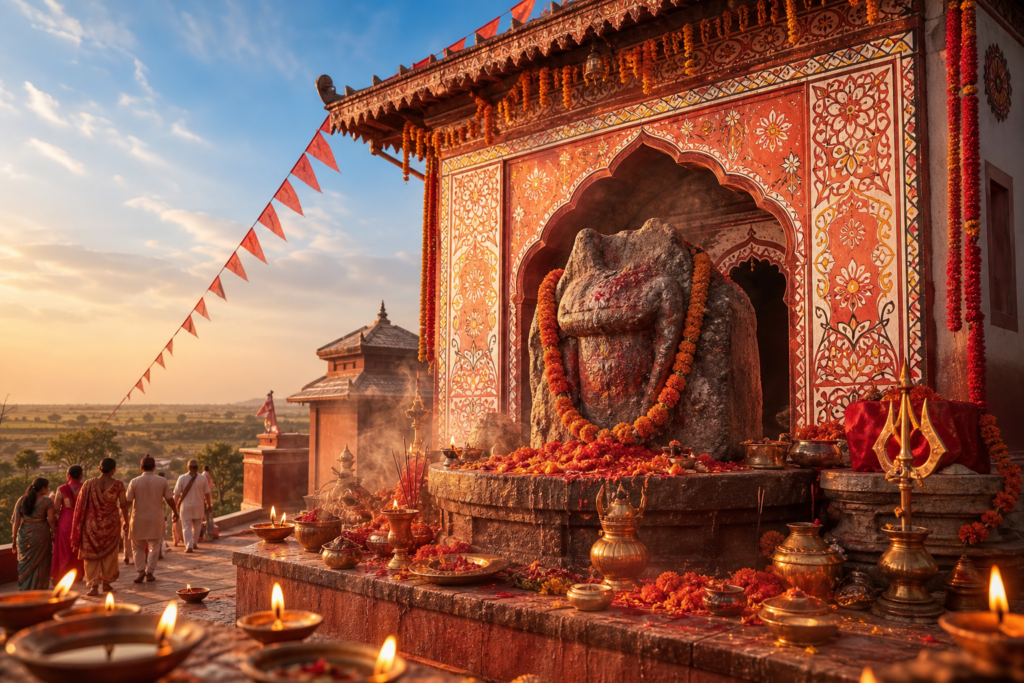
Alankara (decorative worship) then proceeds. The murti is patted dry with a dedicated clean cloth, tilak is applied, vastra may be offered, and a yajnopavita can be placed if customary. A small quantity of jasmine- or sesame-oil-mixed sindoor (the chola) may be applied to Hanuman’s form, honoring the devotional legend of sindoor signifying total dedication to Sri Rama and Sita. Flowers and a modest garland complete the adornment.
Shodashopachara or Panchopachara offerings are made according to time and ability. The sequence typically includes offering a seat (asana), water for feet and sipping (padya, achamaniya), fragrant paste (gandha), flowers (pushpa), incense (dhoop), lamp (deepa), food (naivedya), betel (tambula), and respectful salutations (namaskara). Each upachara is performed slowly, with clear mental intention and mantra.
Naivedya remains simple and satvik: fruits (especially banana), boondi laddoo, jaggery and roasted gram (chana), and clean water are appropriate. If rice items are offered, they are prepared without garlic or onion. A portion is mentally dedicated to Sri Rama, reflecting Hanuman’s identity as the perfect servant of Rama. After the aarti, naivedya becomes prasada to be shared with family and guests.
Chanting is the heart of Hanuman Jayanti Puja Vidhi. Devotees recite Hanuman Chalisa with full attention and often add Sundara Kanda parayana (entire or selected sargas), Sankat Mochan Hanuman Ashtak, Bajrang Baan (as per sampradaya guidance), Anjaneya Dandakam (South Indian tradition), and Ashtottara Shatanamavali (108 names). A set count11, 21, or 108 repetitions of Om Hanumate Namahsustains one-pointedness and deepens the meditative state.
Aarti with camphor or ghee-lamp is performed, circling the flame clockwise with devotional singing. The concluding prayers include kshama-prarthana (seeking forgiveness for any lapses), pushpanjali (offering flowers with mantras), and pranam. The atmosphere at this moment often feels tangibly serene; many devotees describe a felt sense of protective grace and inner courage.
For those short on time or new to ritual, a dignified Panchopachara Hanuman Puja suffices: light a lamp, offer incense, apply tilak, present flowers and naivedya, chant Hanuman Chalisa, and perform aarti. Sincerity of feeling and clarity of sankalpa carry the essence of the rite.
Vrat parana (breaking the fast) generally follows aarti, either in the evening when temple rituals conclude or the next morning according to local guidance. Parana begins with water and a small portion of prasada, followed by a light satvik meal. The vrat’s purposecultivating strength, compassion, discipline, and serviceshould continue beyond the ritual day as daily character.
Regional observances vary. While much of North India marks Hanuman Jayanti on Chaitra Purnima, Tamil Nadu observes it in the Margazhi month, and parts of Karnataka and Andhra–Telangana follow distinct dates and extended Hanuman Deeksha traditions. The core Hanuman Vrat Pooja Procedure presented here adapts across regions; in all cases, established family customs and local temple instructions take precedence.
Symbolically, Hanuman unites devotion (bhakti), strength (shakti), intellect (buddhi), and skillful means (yukti). These virtues resonate across the dharmic family: the spirit of seva central to Sikhism, compassion (karuna) cherished in Buddhism, and disciplined restraint (brahmacharya, aparigraha) in Jainism find shared expression in Hanuman’s life. Observing Hanuman Jayanti as a festival of courage, humility, and service thus affirms unity across Hindu, Buddhist, Jain, and Sikh traditions.
Practical considerations support a calm experience. Keep fire safety in view when using lamps and camphor, handle sindoor and oils gently around murtis, avoid plastic where possible, and distribute prasada and flowers respectfully. Offering food or assistance to those in need extends the puja beyond the altar into living seva, honoring Hanuman as Sankat Mochanthe remover of difficulties.
A final reflection deepens the observance: Hanuman Jayanti is not only a day of rites but a training in steadfast love for dharma, fearless commitment to truth, and joyful humility in service. With a clean space, a clear vow, thoughtful upacharas, heartfelt chanting, and compassionate action, the Hanuman Jayanti Puja Vidhi becomes a complete sadhanaenergizing body, mind, and spirit for the welfare of all.
Inspired by this post on Hindu Pad.