Sri Padmavathi Ammavari Temple in Tiruchanur (Alamelu Mangapuram), administered by Tirumala Tirupati Devasthanam (TTD), upholds an exacting liturgical calendar rooted in the lunar tithi system. During March 2026, a series of special religious events are scheduled in addition to the widely observed Ugadi and Sri Rama Navami. This guide presents a comprehensive, academically grounded overview of the expected observances, the ritual grammar behind them, and practical considerations for pilgrims planning a Tirtha-Yatra to Tirupati and Tiruchanur.
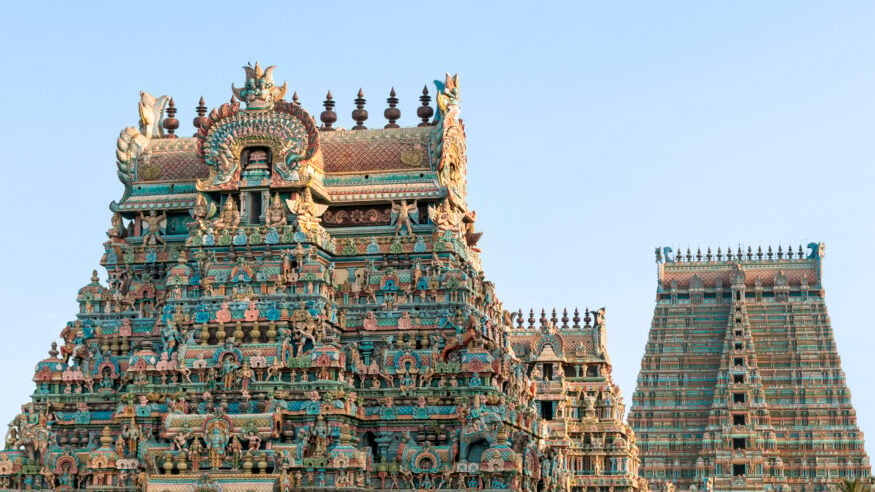
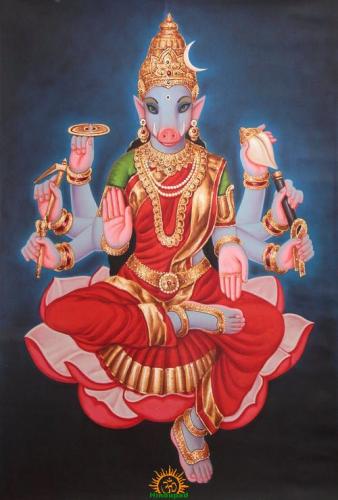
Situated a few kilometers from Tirupati, the temple venerates Sri Padmavathi Ammavaru, the compassionate Sri-Lakshmi aspect and divine consort of Sri Venkateswara. The sacred precincts feature classical South Indian temple architecture and a ritual ecosystem designed to channel sattvic devotion. The presence of the Padma Pushkarini (temple tank) and the iconographic emphasis on Sri, Shakti, and auspicious abundance define the temple’s theological orientation within the Vaishnava tradition while embodying an inclusivist ethos that resonates across dharmic paths.
March in the Gregorian calendar spans the latter half of Phalguna and the onset of Chaitra in the Hindu lunisolar system, aligning with Vasanta (spring). Seasonal liturgy typically emphasizes renewal, auspicious beginnings, and kalyana (harmonizing) energies associated with Sri-Lakshmi. Because festival timings are tithi-based, exact dates for March 2026 observances at Sri Padmavathi Ammavari Temple will follow the Panchang and are finalized via TTD’s monthly schedule; devotees should verify timing details close to their travel dates.
Beyond Ugadi and Sri Rama Navami, March customarily hosts a variety of temple-centered sevas accenting Sri-Lakshmi’s grace: special alankarams (festive adornments), enhanced archana, Unjal Seva framed by floral décor, and sahitya-parayana (scriptural recitation) conducive to contemplative worship. In many South Indian Vaishnava temples, the Tamil calendar’s Panguni Uthiram in March–April inspires kalyanotsava-themed offerings; Tiruchanur, as the abode of Ammavaru, typically foregrounds the nuptial symbolism of Sri-Lakshmi–Narayana through ritual motifs of prosperity, harmony, and protection, subject to the temple’s officially announced programme.
Ugadi (Chaitra Shukla Pratipada) inaugurates the new Samvatsaram and is observed across TTD institutions with Asthanam (royal court ceremony), mangalasnanam, and special harati; if Ugadi falls in March 2026 per tithi reckoning, devotees at Tiruchanur can expect intensified darshan flows and expanded archana. Sri Rama Navami (Chaitra Shukla Navami), whether in late March or early April that year, is marked with Ramayana parayana and seva arrangements honoring Maryada Purushottama Sri Rama; while the principal Sri Rama Navami festivities are centered at other TTD shrines, Sri Padmavathi Ammavari Temple maintains aligned devotional programming and alankaram consonant with the season’s dharmic tenor.
Among the core rituals at Tiruchanur, Abhishekam (ceremonial bathing) and Snapana Tirumanjanam (cleansing and cooling rites) are distinguished by their mantric precision, use of sanctified dravya (e.g., water infused with herbs, turmeric, sandal), and liturgical sequencing that culminates in deepa and naivedyam. Theologically, these rites enact purification (shuddhi), consecration (abhisheka-vidhi), and the re-inscription of divine presence (sannidhyam) within the murti and the devotee’s inner awareness.
Kalyanotsavam, at once symbolic and experiential, ritualizes the celestial marriage of Sri-Lakshmi and Sri-Narayana as a template for concord (saubhagya) and household welfare (grihakshema). Families often choose this seva for sankalpa aligned with marriage, fertility, and intergenerational harmony. In March, with springtime associations of renewal, the kalyana motif acquires additional seasonal resonance, although participation remains subject to daily quotas and pre-booking norms on official TTD channels.
Sahasranamarchana and Kumkumarchana exemplify nama-japa in formal temple mode: the collective recitation of Sri-Lakshmi’s names is coordinated with mudra, bell cadence, and archana offerings (particularly kumkumam and pushpa). The spiritual intent is twofoldsamskara through sound (shabda) and stabilization of the heart-mind in devotion (bhakti-nishtha). Fridays (Sukravara), traditionally dear to Sri-Lakshmi, often see heightened participation; however, the exact weekly cadence in March 2026 should be confirmed against the issued TTD schedule.
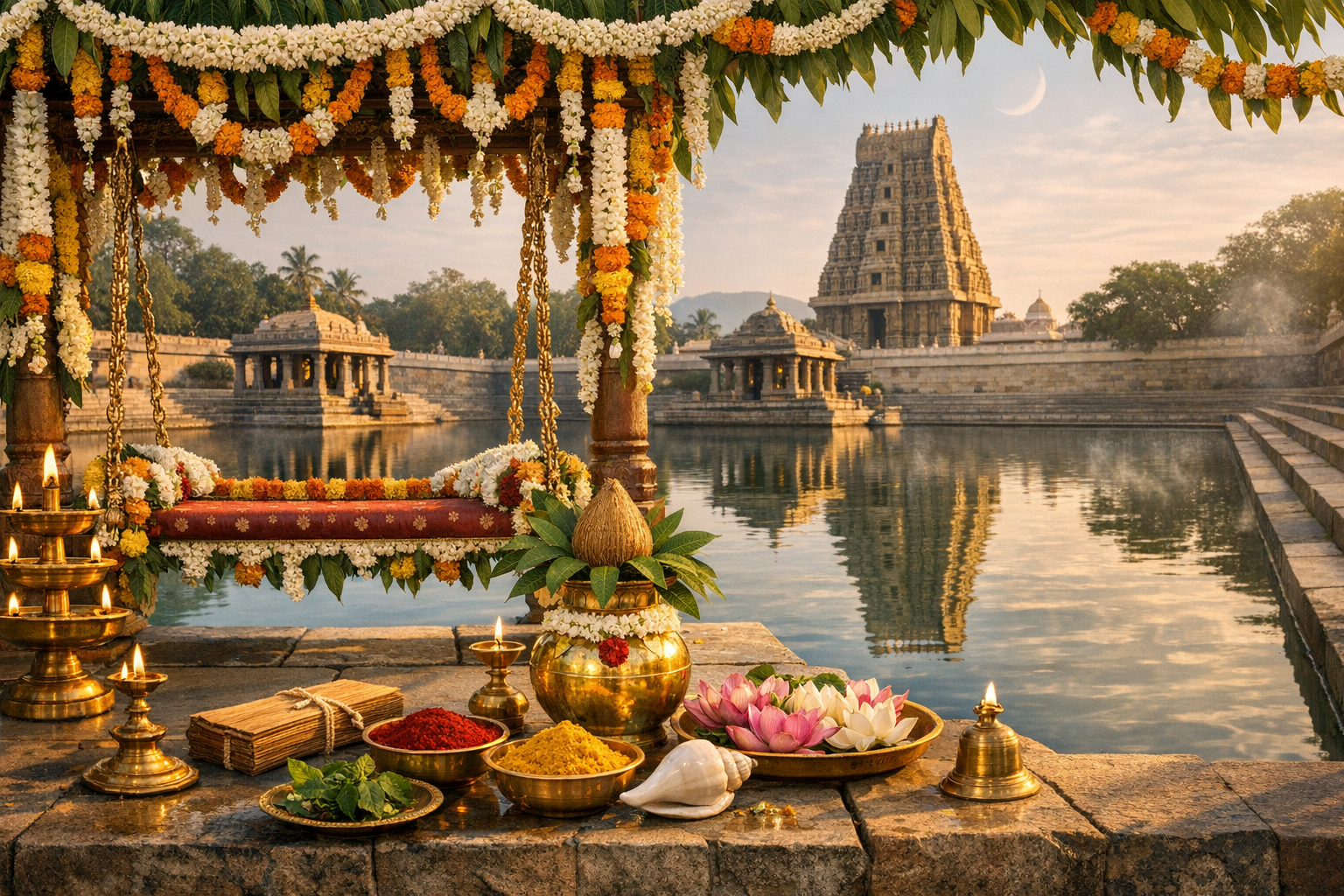
Unjal Seva (swing festival) draws attention to the rhythm and repose of the divine presence. The gently oscillating unjal under a floral canopy serves as both a visual theology of grace in motion and a meditative device helping devotees internalize laya (harmonious tempo). In spring, the décor frequently emphasizes fragrance and color to invite contemplative engagement while maintaining the temple’s disciplined queue and seva protocols.
Monthly phases such as Pournami and Amavasya typically entail specific alankarams, additional parayanam, and extended harati sequences conducive to reflective darshan. While these observances are pan-Hindu, each temple situates them within its own vaidhika framework; at Tiruchanur, the emphasis remains on Ammavaru’s protective and nourishing aspects, which many devotees experience as a calming, restorative field.
The Padma Pushkarini embodies the temple’s sacred geography. Pilgrims often circumambulate its perimeter with mindful japa before entering the sanctum pathways. The famed Panchami Tirtham of Tiruchanurthough associated with the annual Brahmotsavam in Kartikacontextualizes the primacy of sacred waters in Ammavaru’s worship. In March 2026, Panchami Tirtham is not expected, yet the Pushkarini continues to orient the devotee’s inner pilgrimage toward purity and auspiciousness.
The shared devotional language at Sri Padmavathi Ammavari Templereverence, self-discipline, and inner quietuderesonates across the dharmic spectrum. Hindu, Buddhist, Jain, and Sikh pilgrims frequently attest that the temple’s satvika ambience invites ethical contemplation, gratitude, and unity. By foregrounding respect for diverse spiritual practices while celebrating a common aspiration toward truth and compassion, the March observances naturally support harmony among dharmic traditions.
Planning for March 2026 should begin with verifying dates on the TTD portal once monthly schedules are released. Seva participation (such as Kalyanotsavam, Abhishekam, Unjal Seva, and archana) typically requires advance booking; reporting times, identity verification, and attire guidelines (modest, traditional clothing) are strictly observed. Devotees are encouraged to arrive early for darshan, carry minimal belongings, follow queue discipline, and refrain from photography where restricted.
Practical considerations include weather and logistics. March in Tirupati–Tiruchanur is warm and often humid; early-morning or late-evening darshan eases heat and crowding. Tiruchanur is accessible by road from Tirupati bus and railway stations, with local transport options widely available. Accommodation ranges from TTD-managed facilities to private lodgings; securing rooms in advance is prudent during festival windows and weekends.
Ritual terminology in this guide follows standard usage: Abhishekam (ceremonial bathing), Snapana Tirumanjanam (cooling and cleansing rite), Archana (name-recitation offering), Sahasranamarchana (thousand-name recitation), Kumkumarchana (archana with kumkum), Unjal Seva (swing festival), Kalyanotsavam (symbolic divine wedding), and Asthanam (royal court-style ceremonial sitting). Each rite is anchored in mantric recitation and precise procedural order as preserved in the temple’s vaidhika manuals.
In summary, March 2026 at Sri Padmavathi Ammavari Temple promises a spiritually dense sequence of rituals and sevas in the spirit of spring, over and above the major observances of Ugadi and Sri Rama Navami. The month’s worship cadence highlights Sri-Lakshmi’s grace through alankaram, archana, and kalyana symbolism while offering pilgrims a calm, disciplined environment for prayer. With timely verification of tithi-based dates, thoughtful planning, and adherence to TTD guidelines, devotees can experience a meaningful, unifying, and well-ordered pilgrimage in Tiruchanur.
Inspired by this post on Hindu Pad.