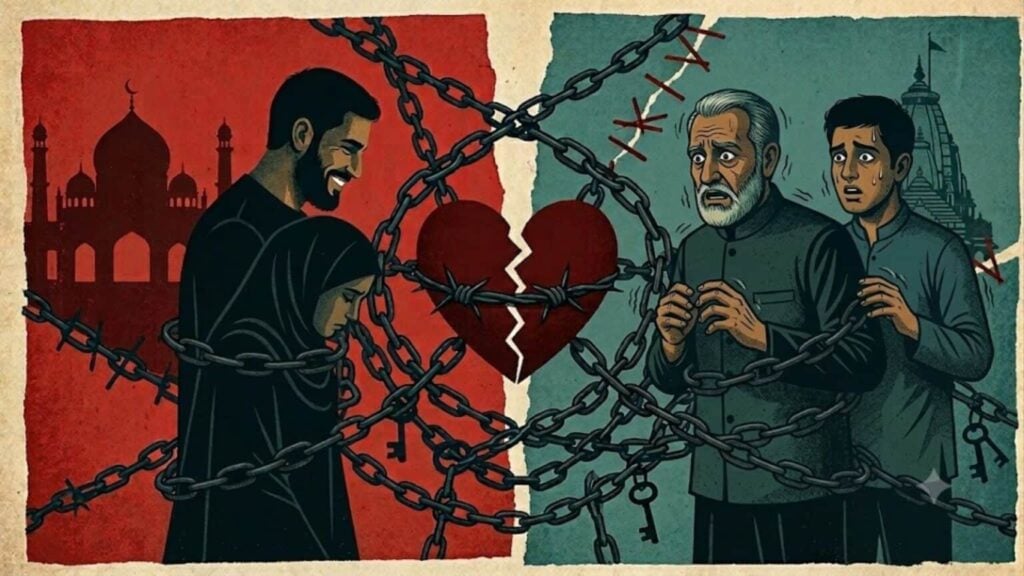
Across recent decades, analysts and security practitioners have highlighted persistent concerns about transnational terror networks operating from Pakistani soil and their impact on regional stability. India and Afghanistan have borne significant costs from cross-border terrorism, and the latest attack in Kashmir again raises the central question: how can India respond effectively while upholding international law, safeguarding civilians, and advancing a long-term peace? This analysis synthesizes viable, multi-domain options aligned with dharmic principles of responsibility, restraint, and compassionprinciples shared across Hindu, Buddhist, Jain, and Sikh traditions.
Strategic context matters. India’s economy is on a firmer footing, defense modernization is steady, and innovation ecosystems are stronger than at any time in recent memory. As strategy scholars often observe, war is waged not only on the battlefield but also in factories, logistics hubs, and financial systems. Pakistan, by contrast, faces economic fragility, civil–military imbalance, and threats from non-state actors such as TTP and insurgent groups in Balochistan, alongside diplomatic headwinds. Yet Pakistan retains the ability to create disruption along the Line of Control and beyond. Any Indian response must therefore impose asymmetric costs without triggering uncontrolled escalation, while protecting communities on both sides of the border.
Proportionate, precision responses are a first axis. Precedents such as Uri and Balakot demonstrated that India can conduct limited, intelligence-led actions against terror infrastructure under the inherent right of self-defense articulated in Article 51 of the UN Charter. Target selection must be narrow and grounded in evidence to minimize civilian harm and signal clear intent: degrading terror capability while avoiding actions that risk broadening the conflict. Credible communicationboth public and backchannelhelps keep deterrence dominant over escalation.
A second axis is graduated border deterrence. Calibrated mobilization near the International Border and the Line of Control can stress hostile logistics, sharpen readiness, and test India’s supply chains and industrial capacity under realistic conditions. These activities also function as live assessments of communications security, ammunition resupply, and combined arms integration. Robust deconfliction mechanisms, hotline use, and adherence to ceasefire understandings are essential to safeguard border populations and prevent inadvertent spirals.
The cyber domain forms a third axis. India’s maturing cyber capabilities can be employed to harden domestic networks, disrupt hostile command-and-control nodes, and expose disinformation. The emphasis should remain on defensive resilience and narrowly tailored, reversible actions that comport with emerging international cyber norms. Any contemplated activity that risks cascading effects on civilian critical infrastructuresuch as power grids or hospitalsshould be avoided to maintain moral credibility and legal propriety. Where warranted, calibrated pressure on illicit financial conduits may be explored, though such actions remain less likely and must be evidence-led.
Economic statecraft is a fourth axis. Airspace restrictions, targeted trade measures, and sanctions on entities credibly linked to terror financing can increase costs on malign ecosystems without punishing populations. Multilateral coordination is crucial: FATF processes, anti–money laundering/counter–terror financing (AML/CFT) frameworks, and cooperative financial intelligence can all tighten the net around designated actors. Maritime measures must comply with UNCLOS and other legal regimes; hard blockades are instruments of declared war and fall outside peacetime policy. Transparency with supply-chain partners, including on projects tied to CPEC, reduces risk and improves compliance.
Sustained counterterror operations constitute a fifth axis. Intelligence-led interdictionsacross air, land, maritime, and space-based ISRcan systematically degrade infiltration pipelines and logistics nodes. Drawing analogies from global counterterrorism practice, the emphasis remains on imminence, necessity, proportionality, and post-action accountability. Parliamentary oversight, judicial review where applicable, and rigorous human-rights compliance help maintain legitimacy at home and abroad.
Financial pressure on the military–commercial complex forms a sixth axis. Pakistan’s civil–military imbalance has long been reinforced by corporate holdings and quasi-state conglomerates. Leveraging AML/CFT tools, international cooperation, and targeted designationswhere evidence meets standardscan constrain illicit flows without indiscriminately harming ordinary citizens. Anti-corruption initiatives and asset-freeze actions should focus on individuals and entities credibly implicated, irrespective of nationality, and proceed with due process.
Internal dynamics within Pakistanranging from political contestation to militant threatsare a seventh axis to evaluate, not to exploit. A policy that refrains from supporting non-state violence and focuses instead on information transparency, humanitarian channels, and people-to-people linkages is more consistent with India’s dharmic and constitutional ethos. Highlighting the dividends of peace, trade, education, and connectivity speaks directly to the aspirations of families whose lives are shaped by border realities.
Lawful special operations and lawfare are an eighth axis. In rare scenarios involving imminent threats and the absence of feasible alternatives, tightly scoped missions may be necessary. Expanding the use of drones for intelligence, surveillance, and reconnaissance improves situational awareness and reduces risk to personnel. Any action should be anchored in legality, guided by de-escalatory messaging, and followed by diplomatic engagement to prevent miscalculation.
A ninth axis addresses overseas dimensions. Rather than extra-judicial approaches, the emphasis should be on mutual legal assistance treaties, extradition frameworks, Interpol notices, and coordinated prosecutions. Community safety for the South Asian diaspora and protection of diplomatic premises must remain paramount. Legal pathways, not clandestine violence, are the enduring route to accountability.
The political track is a tenth axis. Durable stability inside Pakistan ultimately depends on rule of law, civilian supremacy, and inclusive economic reform. While India should avoid interference in internal politics, it can consistently support regional norms: conflict de-escalation, electoral legitimacy, independent media, and human rights. A stable, prosperous Pakistanat peace with itself and its neighborsserves the interests of all South Asians.
Diplomacy constitutes the eleventh and continuous axis. India can build coalitions across the Global South, engage constructively with the OIC membership, and advance a principled agenda at the UN and FATF: zero tolerance for terror financing, protection of civilians, and respect for sovereignty. The diplomatic objective is to isolate violent ecosystems, not societies; to sanction impunity, not identity. Track 1.5 and Track 2 dialogues, cultural exchanges, and religious diplomacy that honors the shared civilizational ethics of Hinduism, Buddhism, Jainism, Sikhism, and Islam can gradually rebuild trust.
Historical background offers context, not determinism. Pakistan emerged from the trauma of Partition, the two-nation theory, and a rapid attempt to consolidate a diverse set of provinces under a single national framework. Choices regarding language policy, federal design, and civil–military relations shaped the young state’s trajectory. The 1971 war and the birth of Bangladesh underscored how unresolved political and cultural grievances, compounded by conflict, can rupture national compacts. These episodes caution all in South Asia that inclusive institutions and accountable governancenot coercionare the foundations of durable peace.
Common scholarly critiques of Pakistan’s state structure focus on three interlocking issues: identity debates that unsettle pluralism; a persistent civil–military imbalance; and economic vulnerabilities heightened by limited industrial depth and external dependencies. Addressing these concerns is a task for Pakistan’s society and institutions. For its part, India can reduce the ambient risk by strengthening border communities, investing in resilience, and pursuing principled, predictable policies that distinguish between violent actors and ordinary citizens yearning for normalcy.
Scenario planning helps frame uncertainty. One pathway envisions reforms that restore civilian primacy, deepen federalism, and normalize tradereducing incentives for proxy conflict. Another contemplates extended fragility marked by sporadic crises. A worst-case scenario projects fragmentation under stress. The responsible Indian posture is to reduce the likelihood of escalation in any scenario, protect its citizens, and keep open the door to dialogue that turns adversarial routines into cooperative habits over time.
In sum, a complete, lawful playbook blends precision deterrence, cyber resilience, financial countermeasures, measured border posture, legal accountability, and sustained diplomacy. The aim is not the humiliation of a neighbor but the transformation of a dangerous equilibrium into a stable peace, grounded in international law and dharmic ethics. Anyone who has met families divided by the Radcliffe Line understands what is at stake: the right of future generationsacross religions and regionsto inherit a subcontinent where security, dignity, and shared prosperity are the norm rather than the exception.
Inspired by this post on RightViews.