For devotees planning a pilgrimage to Sri Venkateswara Temple, the Tirumala Tirupati Devasthanam (TTD) darshan and accommodation quota for May 2026 is among the most sought-after monthly releases. Demand typically peaks during the summer period, and a structured, well-informed approach makes a measurable difference in securing both darshan and lodging. This guide consolidates how TTD generally schedules and manages monthly quotas, outlines the online booking process, clarifies documentation norms, and presents on-ground expectations in Tirumala and Tirupati. It is designed to help pilgrims plan methodically while adhering to TTD’s rules and the broader ethos of dharmic pilgrimage.
TTD manages one of the world’s largest pilgrimage flows through timed darshan slots, regulated accommodation, and Arjitha Seva allocations. Quotas are typically released online in phases, with specific dates and times announced by TTD in advance through its official website and mobile app. Because operational policies can change to improve crowd management or to align with festival calendars and public holidays, pilgrims are advised to treat the May 2026 quota as subject to official notification and to verify details directly on TTD’s channels before booking.
In practice, “quota release” refers to time-bound online windows during which tickets are made available for different services: Special Entry Darshan, Slotted Sarva Darshan (SSD) where applicable, Arjitha Seva opportunities, and accommodation in Tirumala and Tirupati. Phased releases help distribute traffic, protect system stability during peak loads, and ensure more equitable access. For May 2026, devotees should expect separate announcements for each service category, potentially spread across multiple days within the release period.
Darshan options are broadly categorized to balance inclusivity and throughput. Special Entry Darshan offers time-slotted access with a prescribed fee determined by TTD, while Sarva Darshan facilitates free entry subject to crowd and safety controls. Slotted Sarva Darshan, when operational, adds predictability by assigning time bands. There are also provisions, when in force, for senior citizens and persons with disabilities. Terminology and eligibility conditions may be refined periodically; pilgrims should therefore cross-check applicability close to their intended dates.
Arjitha Seva constitutes a distinct and devotional category. Sevas such as Suprabhata Seva, Thomala Seva, Archana, Kalyanotsavam, Unjal Seva, and others are traditionally limited in capacity and may be allocated via first-come-first-served opening, an electronic lucky dip, or a mix of both, as notified by TTD for the relevant month. Given the devotional significance and limited seats of Arjitha Seva, competition is intense and pilgrims should be prepared with accurate details and flexible date preferences.
Accommodation quotas encompass a range of TTD-managed cottages and guest houses across Tirumala and Tirupati. Properties differ by tariff, amenities, and proximity to key facilities. Online booking generally follows the same account-based model as darshan, with defined check-in windows, occupancy rules, and identity verification at arrival. Current booking counters and on-ground allotment policies, when available, are governed by real-time crowd and room availability conditions and may be adjusted for operational efficiency.
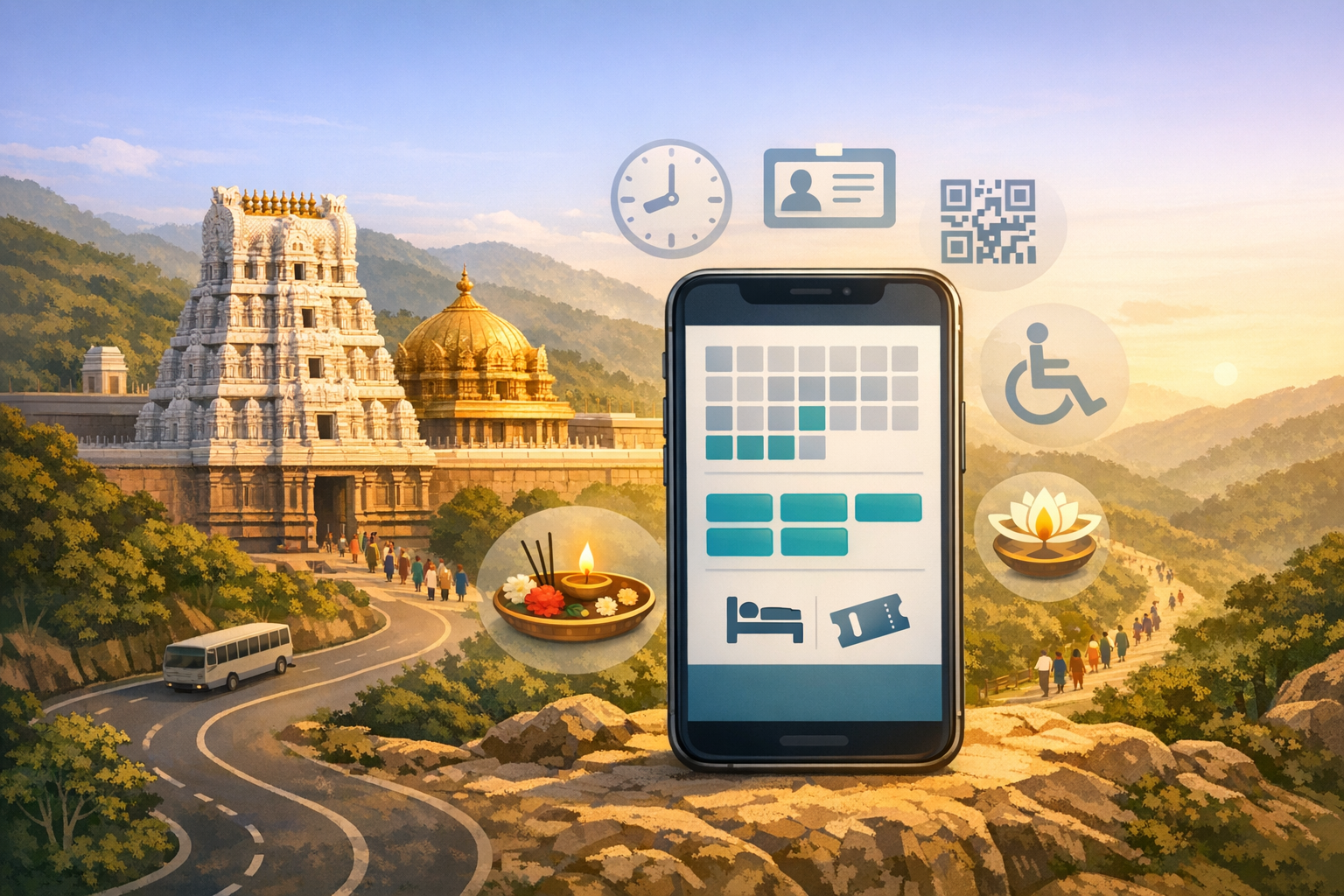
The online process is straightforward when prepared in advance. Pilgrims should create and verify a TTD account well before the May 2026 release, update profile details with accurate names and ages, and confirm that accepted identity documents are on hand. During the release window, one selects the service type, preferred date and time slot, enters pilgrim details exactly as on the chosen ID, confirms the summary, pays through the enabled gateway, and downloads the e-ticket. Confirmation receipts sent by email or SMS should be retained and presented when reporting for darshan or accommodation check-in.
Identity documentation is critical to ensure secure and fair allocation. A valid government-issued photo ID is typically required for each pilgrim on the ticket, and names, ages, and gender entries must match the ID precisely. For international devotees, a valid passport usually serves as the primary document. Policies on children’s entry, including age thresholds for ticketing and ID requirements, are periodically updated; families should verify the current rule set on official sources before booking.
Tariffs and fees for Special Entry Darshan, Arjitha Seva, and accommodation are set by TTD and displayed during booking. Ancillary offerings such as laddu prasadam or additional services follow the rates in force at the time of purchase. Because prices and inclusions may evolve, pilgrims are advised to rely on the amounts shown on the official booking interface and receipt rather than third-party summaries.
Monthly release windows, including those for May 2026, are usually announced ahead of time and executed in stages to prevent systemic overload. A common pattern is separate time blocks for Arjitha Seva, Special Entry Darshan, and accommodation, though the precise order and timing are subject to official notification. Large concurrent demand should be expected. Practical readinesssuch as a reliable internet connection, a device with a stable browser session, and pre-filled pilgrim profilesimproves booking outcomes during the initial surge.
From a capacity-management perspective, TTD’s phased approach, slotting, and identity checks are essential to maintain safety, fairness, and predictability. Given the prevalence of phishing and look-alike websites during high-demand releases, devotees should type the official URL manually, avoid clicking unverified links, and never share OTPs or passwords. Payment failures or partial confirmations can occur under peak load; patience, careful record-keeping of transaction references, and immediate cross-verification within the account dashboard are recommended.
Accessibility remains a core component of TTD’s service ethos. When operational, separate darshan provisions for senior citizens, persons with disabilities, and caregiving companions help reduce physical strain. Wheelchairs and assistance points may be available at designated counters. The availability, timings, and eligibility criteria are periodically fine-tuned; prospective users should review the latest advisory before the journey and carry medical or eligibility documentation as instructed.
Many pilgrims also choose to trek via Alipiri or Srivari Mettu footpaths when conditions permit, both as a spiritual vow and to ease transport congestion. TTD has historically implemented mechanisms such as tokens for those arriving by foot when feasible; however, these depend on operational status, season, and capacity controls. Walkers should begin early, carry sufficient water, adhere to posted guidance, and confirm any token-related advisories directly with TTD close to travel dates.
On the day of darshan, adherence to dress code and reporting time is essential. Traditional attire is encouraged; modest clothing that respects temple norms improves entry efficiency. Pilgrims should arrive at the designated gate before the slot time, deposit prohibited items at authorized counters, and follow queue instructions from security and volunteers. Infrastructural checks such as baggage scanning are standard. Laddu prasadam redemption, where included or purchased, is facilitated at counters identified on the e-ticket or via signage on site.
Accommodation check-in requires presentation of the e-booking receipt and the same identity documents used during online reservation. Occupancy caps and room transfer restrictions help curb misuse and ensure broader access. Early check-in, late check-out, or extension requests are subject to availability and the rules in force on that day. To avoid inconvenience, pilgrims should align train or flight timings with the check-in window displayed on the booking confirmation.
Cancellation and modification policies vary by service type. Some darshan and Arjitha Seva bookings are strictly non-transferable and non-refundable due to their limited capacity and devotional nature. Accommodation may allow cancellation or partial refunds within defined timelines. Duplicate or conflicting bookings can trigger automatic flags; it is prudent to finalize travel plans before locking reservations to reduce the need for changes.
Ethical and safe pilgrimage practices are integral to TTD operations. Devotees are urged to avoid touts, middlemen, or unauthorized offers of tickets and rooms. All bookings should be made only through official TTD channels. Reporting suspected fraud to authorities protects the larger community and upholds the integrity of the pilgrimage system.
May typically coincides with school vacations, leading to heightened demand on weekends and around auspicious days. Families seeking smoother crowd conditions often prefer mid-week dates and early morning or late evening slots, subject to availability. Flexibility in travel dates, openness to Tirupati-based lodging when Tirumala is full, and readiness to book as soon as quotas open have proved effective for many households planning their TTD visit.
The spirit of Tirtha-Yatra within Sanatana Dharma is shared across the broader dharmic familyHinduism, Buddhism, Jainism, and Sikhismthrough values of discipline, seva, compassion, and communal harmony. While Tirumala is a specifically Hindu pilgrimage site, the practices of mindful conduct, non-injury, respect for sacred spaces, and collective responsibility resonate across dharmic traditions and contribute to a culture of unity and mutual respect.
Responsible pilgrimage also includes ecological sensitivity. Minimizing single-use plastics, using designated waste bins, choosing shared or public transport where feasible, and observing silence and cleanliness in queues contribute tangibly to the sustainability of sacred spaces. Annadanam and other forms of seva can be undertaken in line with TTD guidelines, reinforcing the ethic of service that underlies Tirtha-Yatra.
Travel logistics to Tirupatiby rail, air, or roadshould be coordinated with the uphill transit to Tirumala. Ghat road regulations, intermittent weather considerations, and parking arrangements can affect arrival time. Pilgrims are advised to build reasonable buffers into their itinerary and to keep contingency plans for delays. When walking up the footpath, hydration and time management are critical.
Common booking concerns include payment timeouts, duplicate debits, or delayed confirmations. In most cases, transactions reconcile automatically; retaining the payment reference, refraining from repeated refreshes during payment, and verifying the order history in the account help resolve ambiguity. If an e-ticket is misplaced, a reprint from the dashboard is usually possible, and SMS or email confirmations can be shown on arrival alongside valid ID.
Data privacy and digital hygiene are part of modern pilgrimage planning. Logging out from shared computers, avoiding the storage of IDs on unsecured devices, and using strong, unique passwords reduce risk. During release windows, heightened vigilance against unsolicited messages or calls requesting OTPs or payment details is essential.
A simple readiness framework can improve outcomes during the May 2026 TTD darshan and accommodation release: create and verify the account early; confirm names, ages, and IDs in the profile; keep a shortlist of flexible dates and time slots; test payment methods beforehand; log in a few minutes before the announced time; proceed carefully through each step; and download or print confirmations immediately after successful payment.
In summary, the May 2026 TTD darshan and accommodation quotas will be governed by phased online releases, identity-secured bookings, and on-ground protocols aligned with safety, fairness, and devotion. By following official announcements, preparing documentation, and adopting responsible, dharmic conduct, pilgrims can navigate the process with clarity and confidence. All specific dates, fees, and eligibility norms should be confirmed on TTD’s official website or mobile app, which remain the only authoritative sources for final information.
Inspired by this post on Hindu Pad.