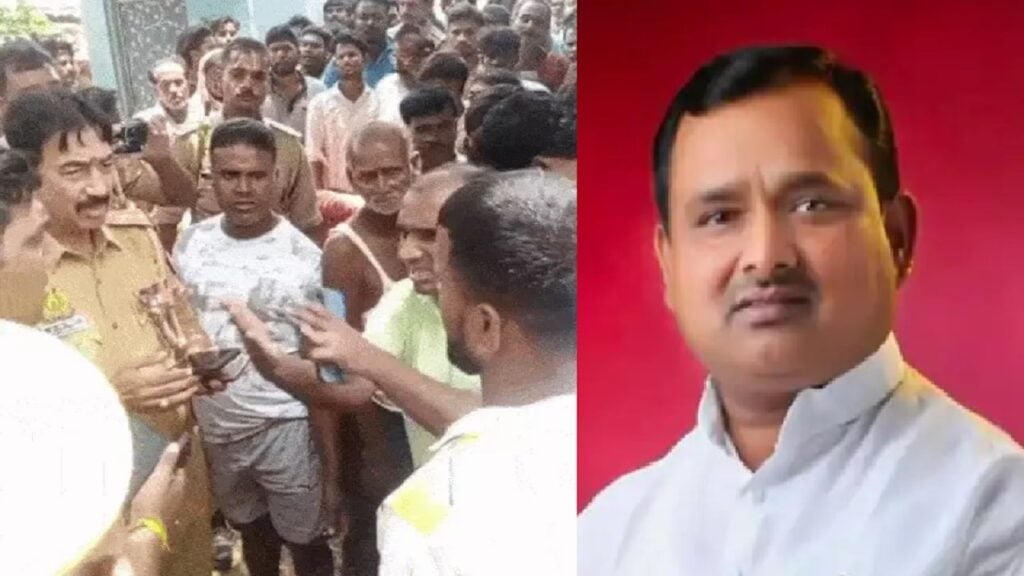
On March 15, 2026, near Bopdeo Ghat in Pune, a local land dispute reportedly intersected with a small Ramzan Iftar gathering, leading to an altercation and the registration of a First Information Report (FIR). Early accounts in local reportage indicate competing claims over land use and access in a peri-urban pocket where revenue boundaries and informal customary practices often overlap. Maharashtra Police have confirmed that an FIR was registered, and the investigation is underway to establish the sequence of events, individual roles, and applicable legal provisions. The incident has drawn attention not only because it occurred during Ramzan but also because it sits at the sensitive junction of property rights, religious observance, and neighborhood relations.
Understanding how an everyday land dispute can spill into a moment of worship is essential for preventing recurrence. When religious calendars and local land-use patterns collide, even small misunderstandings can escalate. For residents across India, the evening Iftar is a dignified ritual of community and faith; for neighbors contending with unsettled boundaries, the same time and space can feel contested. Sustainable solutions therefore require two tracks moving in parallel: legal clarity on property and fair, timely policing under the rule of law, alongside intentional, trust-building dialogue between communities.
Bopdeo Ghat sits on the Pune urban–rural edge, where agricultural titles, new layouts, and shared commons frequently intersect. In such contexts, paper records may lag behind ground realities, historic footpaths are reinterpreted as private approaches, and seasonal or festival-related gatherings can test informal arrangements. This local geography matters: the probability of friction rises when cadastral demarcations are ambiguous or when customary permissions are assumed rather than documented.
Ramzan Iftar carries a clear social meaning: it marks the sunset meal after a day of fasting and is closely tied to dignity, safety, and mutual respect. Sensitivity to such observancesjust as with temple aarti, langar in gurdwaras, or pravarana gatheringscan de-escalate tension before it begins. Communities that pre-coordinate time, space, and access during festivals find fewer flashpoints and more opportunities to extend hospitality across lines of identity.
Legally, the registration of an FIR is governed by Section 154 of the Code of Criminal Procedure (CrPC). Following the Supreme Court’s ruling in Lalita Kumari v. Government of Uttar Pradesh (2013), police are obligated to register an FIR upon receiving information disclosing a cognizable offence. A complainant is entitled to a free copy of the FIR, and a Zero FIR may be lodged at any police station and later transferred to the station with territorial jurisdictionan important tool for prompt redress in fast-evolving situations.
Without presuming facts that only investigation can establish, altercations linked to religious contexts and property access commonly invoke provisions such as Indian Penal Code (IPC) Sections 141/149 (unlawful assembly/common object), 323/325 (voluntarily causing hurt/grievous hurt), 341 (wrongful restraint), 352 (assault), 427 (mischief), 447 (criminal trespass), and 506 (criminal intimidation). Where allegations touch communal harmony or religious sensibilities, Sections 153A (promoting enmity) and, in rare and specific circumstances, 295A (deliberate and malicious acts intended to outrage religious feelings) may be examined. Parallel preventive powers under the Maharashtra Police Act and CrPC Sections 107/116 (bonds for keeping the peace) can be used to defuse imminent risks.
Once an FIR is filed, investigation typically proceeds with collection of medical evidence (where relevant), scene-of-occurrence documentation, witness statements under Section 161 CrPC, and seizure of material objects. Arrests, if contemplated, are bound by the proportionality and necessity tests reiterated in Arnesh Kumar v. State of Bihar (2014), with preference for Section 41A CrPC notices where appropriate. The police must file a final report/charge-sheet under Section 173 CrPC upon completion of investigation. Parties retain rights to anticipatory or regular bail, to legal counsel, and to fair, non-discriminatory treatment grounded in Articles 14 and 21 of the Constitution.
Behind many such incidents lies a civil law core. In Maharashtra, the Maharashtra Land Revenue Code, 1966 (MLRC), read with allied rules and the registration regime, governs critical processes: surveying and demarcation, mutation entries (ferfar), and maintenance of revenue records such as the 7/12 extract (satbara) and 8A. Where boundaries are contested, parties can seek official demarcation through the Talathi/Tehsildar or the office of the District Inspector of Land Records (DILR/TILR). For title clarity, remedies in civil courtsdeclarations, injunctions, and specific reliefare the appropriate forum rather than ad hoc assertion on the ground.
Practical steps on the civil side often yield quick de-escalation: obtain current 7/12 and 8A extracts from MahaBhulekh, verify mutation chronology, request a joint demarcation in the presence of both parties, and minute the outcome with geo-referenced sketches where available. If an approach path, rasta, or shared ingress is disputed, consider interim, court-endorsed use arrangements while final adjudication proceeds. Clear paper trails reduce the likelihood that faith-related gatherings will be misunderstood as assertions of possession or encroachment.
On the public order side, police and local administration have well-tested preventive toolkits. Station-level peace or mohalla committees, quarterly interfaith coordination meetings before festival seasons, and speaking orders under the Maharashtra Police Act can align expectations. As needed, CrPC Section 144 can be invoked to temporarily regulate assemblies in narrowly tailored ways consistent with constitutional tests. These mechanisms are most effective when co-designed with gram panchayat representatives, civil society mediators, and key community elders.
Standard operating practices for sensitive periods help everyone: disclose event details to the local police in advance; avoid disputed parcels for gatherings until demarcation is complete; time events to minimize friction with agricultural or residential routines; and maintain a single point of contact for neighbors and authorities. Simple, visible stepsclear signage, lighting, and pre-agreed parking or access lanesreduce uncertainty and the space for rumor.
A dharmic lens offers additional guidance for communal harmony. Traditions within Hinduism, Buddhism, Jainism, and Sikhism converge on ahimsa, sahishnuta (tolerance), and seva as core civic virtues. These values support the constitutional promise that every personirrespective of faithcan practice religion peacefully (Article 25) subject to public order. Emphasizing shared ethics across dharmic communities creates a sturdy cultural basis for protecting all neighbors, including Muslims observing Iftar, and for discouraging any rhetoric that undermines fraternity.
Misinformation accelerates conflict. Communities benefit from a simple norm: verify first, forward last. Designate ward-level volunteers to coordinate with the local police station on rumor control; rely on official updates rather than social media speculation; and preserve digital evidence responsibly when needed. The IT Act and IPC penalize the spread of provocative falsehoods, but the better path is upstreampreventing their creation and circulation through trusted, multilingual communication.
Where tempers have already frayed, restorative pathways can complement due process without replacing it. Structured dialogues facilitated by neutral mediators, apologies where harm is acknowledged, community service that benefits all residents, and, where the law permits, compounding of minor offences under Section 320 CrPC can help heal wounds. Lok Adalats and community mediation cells can craft forward-looking settlements on the civil aspects while the criminal process addresses accountability.
A practical checklist emerges from episodes like the Bopdeo Ghat altercation: map and document boundaries early; engage revenue authorities before festivals; publish neighborhood calendars of major religious events; nominate interfaith peace stewards for each lane; and establish a rapid-communication line to the beat constable. These low-cost, high-trust measures reduce ambiguitythe frequent spark for disputes labeled as communal but rooted in land-use friction.
As the Pune investigation proceeds, it is prudent to await verified findings and the charge-sheet under Section 173 CrPC. Regardless of outcomes, the broader lesson remains durable: robust land governance and courteous, pre-emptive coordination around religious observances are mutually reinforcing. Upholding the law while centering compassionconsistent with both constitutional rights and dharmic ethicsoffers the surest path back to calm, dignity, and communal harmony.
Inspired by this post on Struggle for Hindu Existence.