
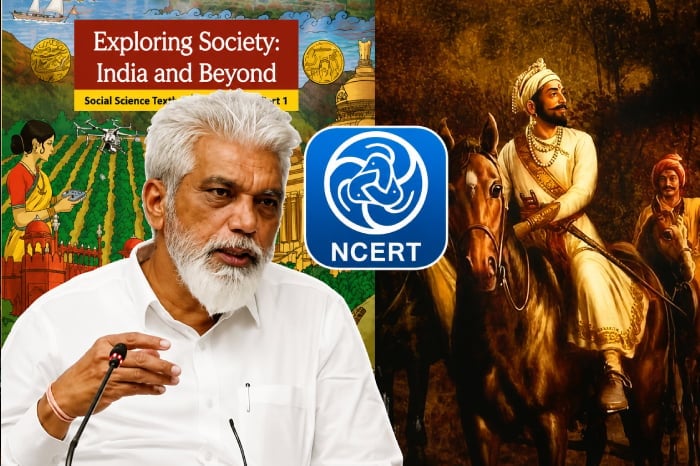
The Maharashtra Government’s decision to open discussions with NCERT and the Central Government over the restoration of references to Chhatrapati Shivaji Maharaj and the Maratha Empire in school textbooks is more than a routine curriculum matter. It touches a deeper question that has shaped Indian education for decades: how should a civilisationally diverse nation teach its children about political courage, cultural continuity, regional memory, and historical evidence without reducing history to either sentiment or ideology?
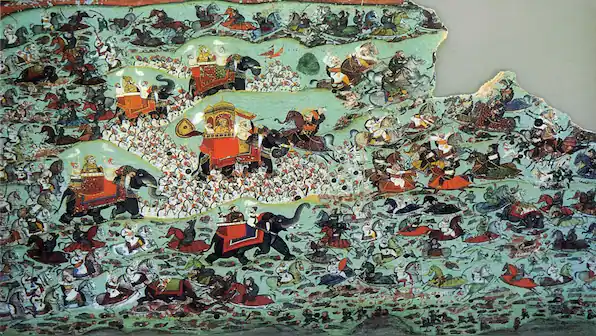
The issue gained public attention after opposition arose to the reported removal or reduction of material connected with Chhatrapati Shivaji Maharaj and the Maratha Empire. Public reporting in 2026 also highlighted controversy over the omission and revision of a Maratha Empire map in NCERT’s Class VIII social science material, especially after objections over territorial representation. Those reports indicated that NCERT had cited concerns about historical generalisation while political leaders, historians, and cultural organisations in Maharashtra argued that the omission risked weakening students’ understanding of a decisive period in Indian history.
At the heart of the debate is not merely a map, a paragraph, or a chapter heading. The central concern is whether national textbooks can represent the Maratha achievement with sufficient accuracy, proportion, and interpretive seriousness. Chhatrapati Shivaji Maharaj was not only a regional ruler of seventeenth-century western India; he was a state-builder whose legacy shaped military strategy, governance, fort architecture, maritime thinking, revenue policy, and the political vocabulary of Swaraj. Removing or minimising that legacy can create a distorted impression of India’s early modern past.
Chhatrapati Shivaji Maharaj’s rise must be understood within the complex political world of the Deccan. The region was marked by the interactions of the Mughal Empire, the Deccan sultanates, local warrior lineages, temple networks, agrarian communities, merchant groups, and mobile military formations. In this setting, Shivaji Maharaj developed a political project that combined territorial consolidation with a sharper idea of indigenous sovereignty. His coronation at Raigad in 1674 was not only a royal ceremony; it was a declaration that political legitimacy in India did not have to depend on imperial recognition from Delhi, Agra, Bijapur, or any external court.
For students, this matters because the study of Shivaji Maharaj offers a concrete example of how political institutions emerge from difficult circumstances. His administration was not built in a vacuum. It grew through negotiations with local elites, disciplined use of forts, careful mobilisation of resources, and the creation of systems that could survive pressure from larger powers. The Ashta Pradhan council, the attention to revenue, the strategic use of hill forts, the development of intelligence networks, and the effort to create a naval presence on the western coast all show a sophisticated understanding of statecraft.
The Maratha Empire that expanded after Shivaji Maharaj’s lifetime also deserves careful treatment in textbooks. Its history includes the work of Sambhaji Maharaj, Rajaram Maharaj, Maharani Tarabai, the Peshwas, the Holkars, the Scindias, the Gaekwads, the Bhonsles of Nagpur, and many other figures. The empire’s influence spread across large parts of the subcontinent, not always as direct annexation, but often through tribute, military pressure, alliances, revenue arrangements, and political suzerainty. A technically sound textbook must explain these distinctions instead of either exaggerating or erasing Maratha influence.
This is why the debate over maps is especially sensitive. Historical maps are powerful teaching tools, but they can also mislead when they flatten influence, alliance, occupation, tribute, and sovereignty into a single colour. If a map of the Maratha Empire is historically contested, the correct academic response is not necessarily removal. A stronger response would be annotation, clarification, multiple map layers, source notes, and age-appropriate explanation. Students can understand that empires did not always function like modern nation-states with fixed borders.
NCERT has a legitimate responsibility to avoid sweeping generalisations, especially in school material. Yet historical caution should not become historical absence. When a figure of the stature of Chhatrapati Shivaji Maharaj is reduced, omitted, or placed without context, students lose access to one of India’s most important examples of indigenous political imagination. The task before curriculum designers is therefore not to choose between pride and accuracy, but to build a form of historical education in which pride is disciplined by evidence and evidence is presented with cultural sensitivity.
The Maharashtra Government’s intervention can be read in that light. By initiating discussions with NCERT and the Central Government, it has signalled that the representation of Shivaji Maharaj and the Maratha Empire is not a narrow regional demand. Maharashtra has a special emotional relationship with Shivaji Maharaj, but his historical significance extends far beyond Maharashtra. His life speaks to questions of governance, resistance, civilisational confidence, military innovation, and social organisation that belong to the study of Indian history as a whole.
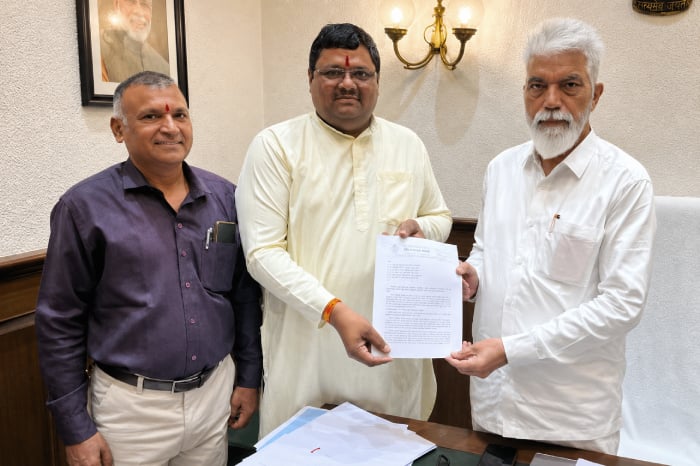
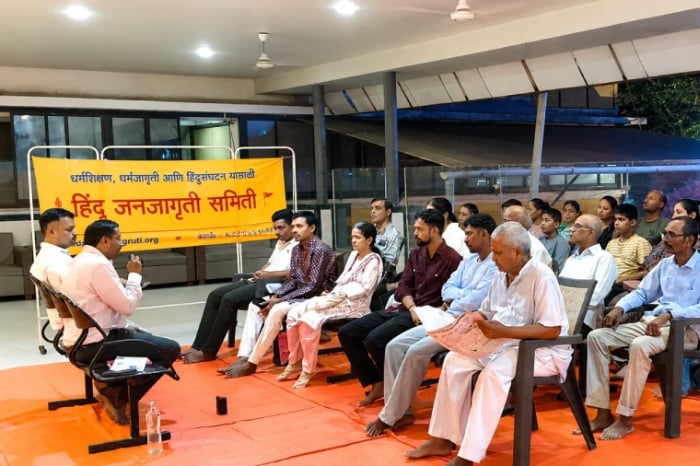
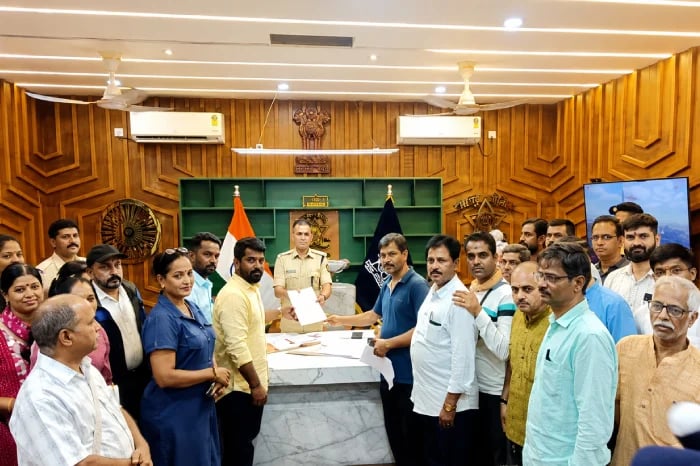
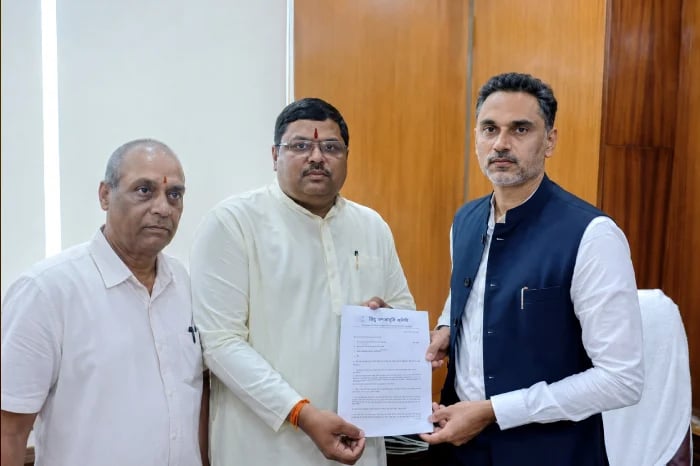
Organisations such as Hindu Janajagruti Samiti have framed the matter as a demand for restoration of Chhatrapati Shivaji Maharaj’s legacy in NCERT textbooks. Such demands must be evaluated through two lenses at once. The first is historical: whether textbook content accurately reflects the role of Shivaji Maharaj and the Maratha Empire. The second is educational: whether students are being given a balanced and meaningful account of Indian resistance, regional state formation, and the transition from medieval imperial structures to early modern political formations.
A serious curriculum cannot treat Indian history as a sequence dominated only by imperial capitals. The Deccan, the western coast, the hill forts of Maharashtra, the temple towns, the trade routes, the rural revenue networks, and the military households of the Maratha world all form part of the national story. When these spaces are neglected, the student’s imagination of India becomes too narrow. India’s history is not only the history of dynasties that ruled from major imperial centres; it is also the history of communities that defended autonomy, built institutions, and transmitted cultural memory through difficult times.
Chhatrapati Shivaji Maharaj’s relevance also lies in his model of leadership. His career shows the importance of strategic patience, local knowledge, institutional discipline, and moral legitimacy. He understood terrain, communication, fortification, sea power, diplomacy, and timing. His campaigns were not simply acts of battlefield courage; they reflected planning, intelligence, logistics, and a political idea of Swaraj. These are precisely the kinds of lessons that make history useful for students beyond memorisation.
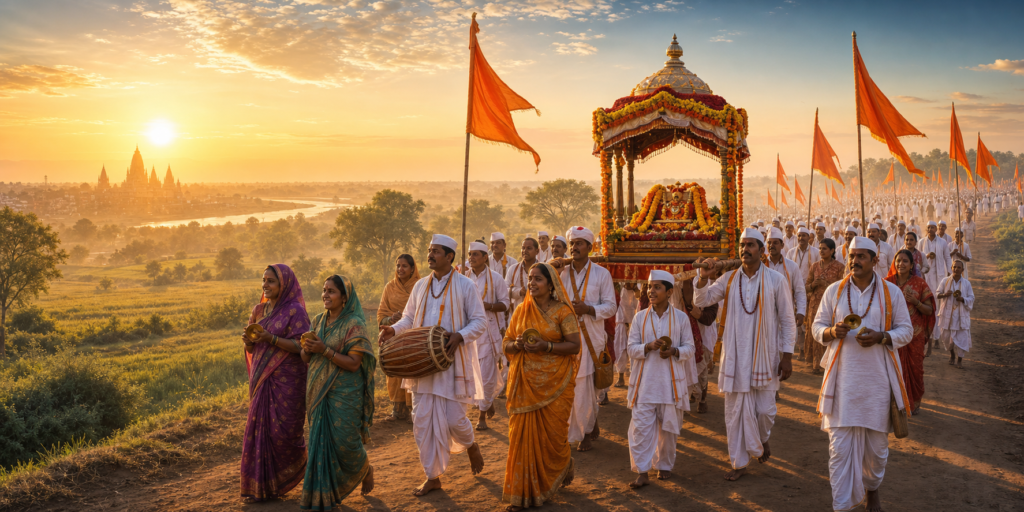
The emotional force of this issue should not be dismissed. For many families in Maharashtra and across India, Shivaji Maharaj is not merely a textbook personality. His name is connected with childhood stories, public processions, forts visited during school holidays, powadas, local memory, and a living culture of reverence. A child who has heard of Raigad, Pratapgad, Sinhagad, Jijabai, and Sambhaji Maharaj at home naturally expects school history to treat these memories with seriousness. When textbooks appear to reduce that inheritance, the reaction is not only political; it is also cultural and deeply personal.
At the same time, emotional attachment must be joined with scholarly discipline. The restoration of references to Shivaji Maharaj and the Maratha Empire should not mean uncritical glorification. It should mean better history. Textbooks should explain sources, chronology, contested interpretations, administrative structures, military methods, and the broader social context. Students should learn why historians debate the extent of Maratha influence in certain regions, how treaties and revenue arrangements worked, and why pre-modern political power cannot always be mapped through modern territorial assumptions.
Such an approach would also serve the broader dharmic objective of cultural unity. Shivaji Maharaj’s legacy can be taught in a way that honours Hindu civilisational resilience while respecting India’s wider plural inheritance, including Buddhist, Jain, Sikh, and other traditions that have shaped the subcontinent. A mature account of Indian history need not create hostility between communities. It can recognise conflict where conflict existed, honour resistance where resistance occurred, and still guide students toward civic responsibility rather than inherited resentment.
The restoration demand therefore offers an opportunity to improve Indian textbooks rather than merely reverse a deletion. NCERT could consult historians of the Maratha period, epigraphists, archivists, regional scholars, military historians, and educators from Maharashtra and other states. It could provide revised maps with legends that distinguish direct control, zones of influence, tributary arrangements, military campaigns, and disputed claims. It could include short source boxes using letters, treaties, inscriptions, court records, and contemporary accounts to help students see how history is constructed.
A technically stronger textbook would also place the Maratha Empire within the larger eighteenth-century transformation of India. After the decline of Mughal central authority, several powers shaped the subcontinent, including the Marathas, Sikhs, Rajputs, Jats, Mysore, Awadh, Bengal, Hyderabad, and others. The British East India Company did not enter an empty political landscape. It encountered powerful Indian states, complex alliances, and military resistance. The Maratha Confederacy was central to that story, especially through the Anglo-Maratha wars and the eventual consolidation of British power.
For this reason, the Maratha Empire should not be treated as a regional appendix to Mughal or British history. It belongs at the centre of any serious account of early modern and colonial transition in India. Students should understand that the British rise cannot be explained only through the decline of one empire. It must be studied through the competition, resilience, and eventual defeat of multiple Indian powers, among which the Marathas held a major place.
The controversy also raises a larger question about curriculum transparency. When textbook changes are made, the process should be clear enough for parents, teachers, scholars, and state governments to understand the reasons. If material is removed because it is inaccurate, the correction should be explained. If a map is revised, the evidence behind the revision should be documented. If a figure is restored, the pedagogical purpose should be stated. Transparency reduces suspicion and helps public debate move from accusation to evidence.
The most constructive outcome would be a restored and improved presentation of Chhatrapati Shivaji Maharaj and the Maratha Empire in NCERT textbooks. Such a presentation should be historically rigorous, emotionally intelligent, and nationally relevant. It should neither turn history into propaganda nor strip it of civilisational meaning. The life of Shivaji Maharaj deserves to be studied because it illuminates how courage becomes institution, how regional strength contributes to national memory, and how cultural confidence can coexist with disciplined scholarship.
In that sense, the demand for restoration is not simply about the past. It is about the intellectual formation of future citizens. When students encounter Shivaji Maharaj as a serious historical figure, they learn that Indian history contains examples of leadership rooted in duty, strategy, cultural self-respect, and public responsibility. Restoring that legacy in textbooks would therefore strengthen historical accuracy, deepen cultural literacy, and help young readers understand why the Maratha story remains indispensable to the story of India.
Inspired by this post on Hindu Jagruti Samiti.

Leave a Reply
You must be logged in to post a comment.