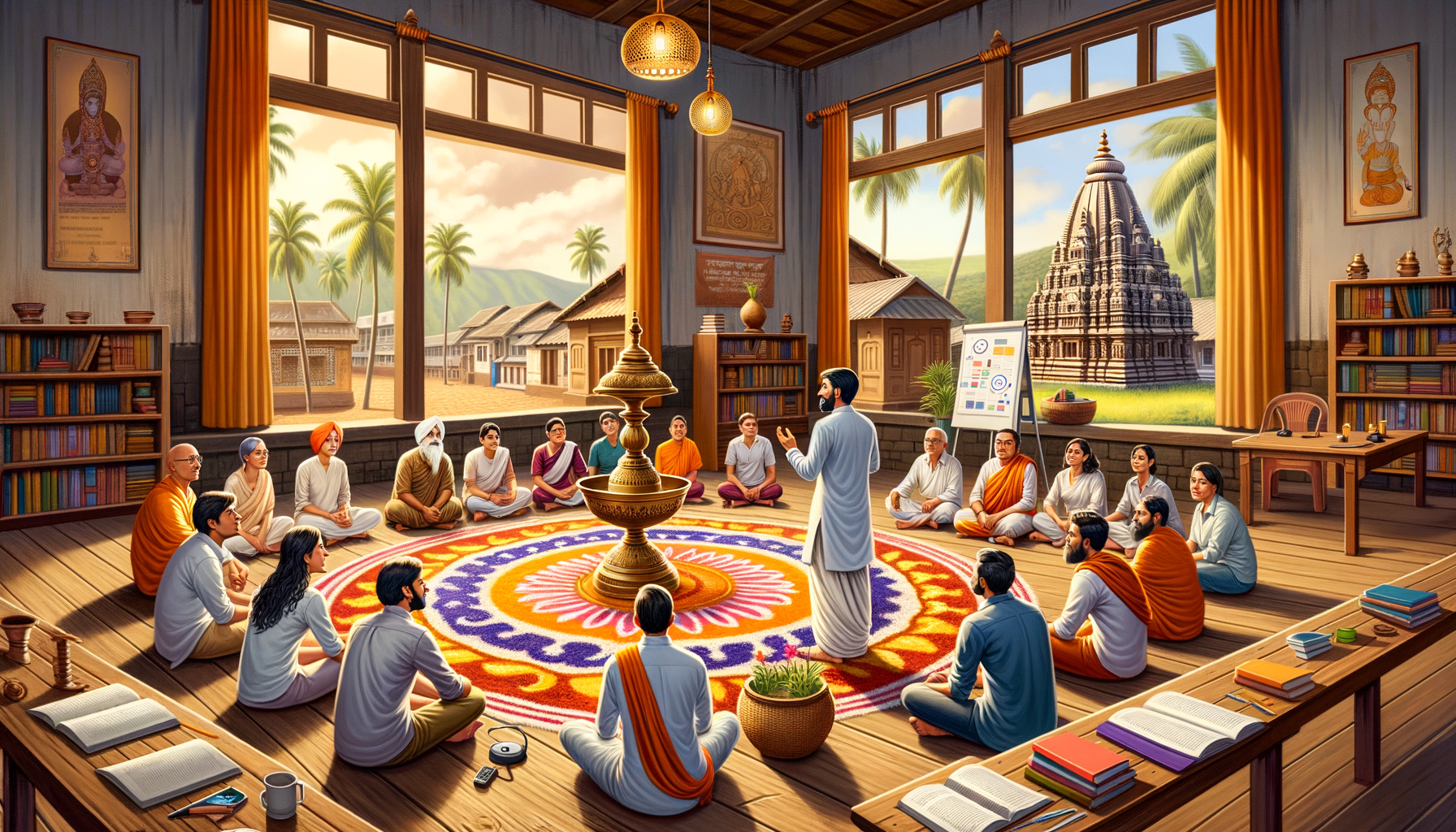
The Hindu Rashtra Sanghatak Workshop held at Oni (Rajapur) featured a focused address by Shri Sanjay Joshi of the Hindu Janajagruti Samiti (HJS), emphasizing the urgent need for unity to protect India’s cultural identity. The message drew on shared civilizational values and highlighted how collective awareness can strengthen social harmony and resilience.
Framed within the broader dharmic ethos, the appeal underscored that safeguarding cultural heritage is a responsibility shared by Hindus, Buddhists, Jains, and Sikhs. The emphasis on unity in diversity aligned with the pluralist foundations of the Hindu way of life, where respect for varied paths and practices contributes to societal cohesion.
Participants reflected on practical measures that reinforce cultural continuity: community engagement (seva), youth mentorship, documentation of local traditions, and intercommunity dialogue. These steps were presented not as exclusivist strategies, but as inclusive means to preserve living traditions while nurturing mutual respect and cooperation across dharmic communities.
The workshop highlighted the role of local initiatives in Oni (Rajapur) as a model for grassroots participation. By encouraging neighborhood study circles, temple-heritage stewardship, and cultural-literacy programs, the discussions pointed to scalable methods that deepen public understanding of history, ethics (dharma), and civic responsibility.
In academic terms, the intervention can be read as a call for cultural continuity through informed participationan approach that resists polarization and instead cultivates civic virtues: discipline, compassion, and dialogue. This positioning connects cultural identity with public ethics and community well-being, moving beyond rhetoric to constructive, measurable action.
Attendees noted that unified civic efforts reduce vulnerabilities to misinformation and social fragmentation. In doing so, they affirmed that unityexpressed through service, education, and shared celebrationoffers a sustainable pathway to protect heritage while fostering peace and inclusivity in contemporary India.
Ultimately, the workshop’s core insight was clear: cultural identity is strengthened when communities act together with humility, clarity, and purpose. Through collaborative initiatives and a commitment to pluralism, dharmic traditions can continue to flourish while contributing meaningfully to national harmony.
Inspired by this post on Hindu Jagruti Samiti.